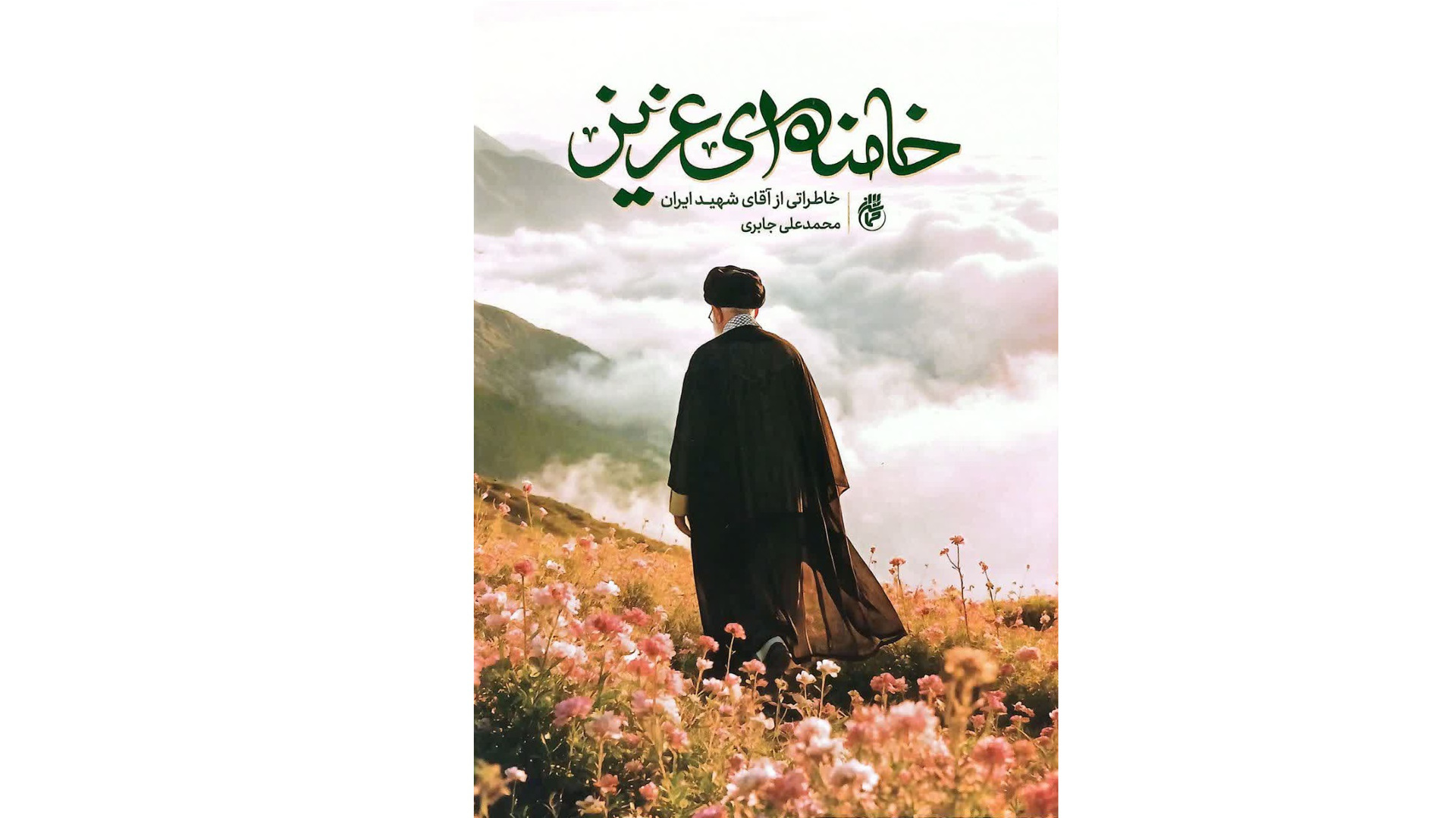
A new book, ‘Dear Khamenei’, presents more than 200 documented stories and personal recollections, offering insights into the life, character, and legacy of Ayatollah Seyyed Ali Khamenei.
“Dear Khamenei” is a collection of stories offering a glimpse into the life and legacy of Iran’s martyred Leader of the Islamic Revolution, Ayatollah Seyyed Ali Khamenei.
A new book featuring more than 200 documented stories and personal recollections about the life and character of the martyred Leader of the Islamic Revolution, Ayatollah Seyyed Ali Khamenei, has been published by Hamaseh Yaran Publications.
Titled Dear Khamenei (Khamenei-ye Aziz), the book is written by Mohammad Ali Jaberi and brings together accounts highlighting different aspects of Ayatollah Khamenei’s life.
The collection is the result of years of research and interviews.
According to the publisher, Jaberi selected more than 200 accounts from an archive of over 1,500 collected memories, rewriting and organizing them into a chronological narrative.
The stories cover Ayatollah Khamenei’s childhood and family life, his religious education at Iranian and Iraqi seminaries, his social and political activities, as well as his personal conduct, spiritual outlook, and relationship with the public.
Among the accounts featured in the book is one concerning the construction of the compound that would eventually serve as the Leader’s official residence, commonly known as the Leader’s Office, or Beit-e Rahbari.
According to the story, several locations were considered for the construction, including the Abbasabad hills in northern Tehran.
Security officials reportedly favored the area, believing that it would be easier to protect. The Leader, however, rejected the proposal, saying: “Somewhere south of Enghelab Street. I want to be among the people.”
Another recollection describes an encounter between Ayatollah Khamenei’s wife and a doctor who was examining their son. Noticing the boy’s resemblance to the Leader and becoming suspicious after asking about his family, the doctor asked the mother whether she was related to Ayatollah Khamenei.
“Yes,” she replied, “I am his wife, but please don’t tell anyone.”
Surprised, the doctor asked why the family did not have a private physician. She explained that the Leader did not allow such arrangements, insisting that family members visit doctors and receive medical examinations just like everyone else.
A third account takes readers back to the aftermath of the 2003 US-led invasion of Iraq, when the fall of Saddam Hussein’s regime opened the way for many Iraqi exiles living in Iran to return home.
Among them was Ayatollah Seyyed Mohammad Baqir al-Hakim, a prominent Iraqi Shia cleric and political figure who had spent years in exile in Iran opposing Saddam Hussein’s rule.
Before returning to Iraq, al-Hakim visited Ayatollah Khamenei to discuss the country’s uncertain future.
As he prepared to leave, the Leader encouraged him not to be intimidated by the American military presence, saying that US forces had occupied Iraq by force and would eventually have to leave.
“Do not be afraid of American equipment. They are insignificant, and they must leave Iraq. Return to your country with a strong spirit,” Ayatollah Khamenei told him.
He then added: “It is not that we do not know what America is or what it is capable of, nor that we are unaware of its brutality. We know all of that. But we have placed our trust in God.”
According to the publisher, the book is intended as a small window into the life of the martyred Leader, rather than a comprehensive biography.
Its subtitle, Pages from the Memories of the Life of the Martyred Leader of Iran, reflects its focus on selected personal recollections arranged in chronological order.
About the author
Mohammad Ali Jaberi is an Iranian author specializing in children’s and young adult literature, particularly historical and biographical stories about figures associated with Iran’s Islamic Revolution and the 1980s Holy Defense.
His best-selling works include Uncle Qassem, about Iranian anti-terror commander Major General Qassem Soleimani, and Brother Ebrahim, about Iranian commander Ebrahim Hadi.
His book Uncle Qassem was selected in the children’s book category of the second White Hoopoe (Hodhod-e Sefid) Biennial, a literary award recognizing works for young readers.
Through accessible storytelling and illustrated narratives, Jaberi has sought to introduce historical, religious, and revolutionary figures to younger generations.
His books have also been featured in reading programs organized by public libraries and in educational and cultural activities associated with Iran’s education system.