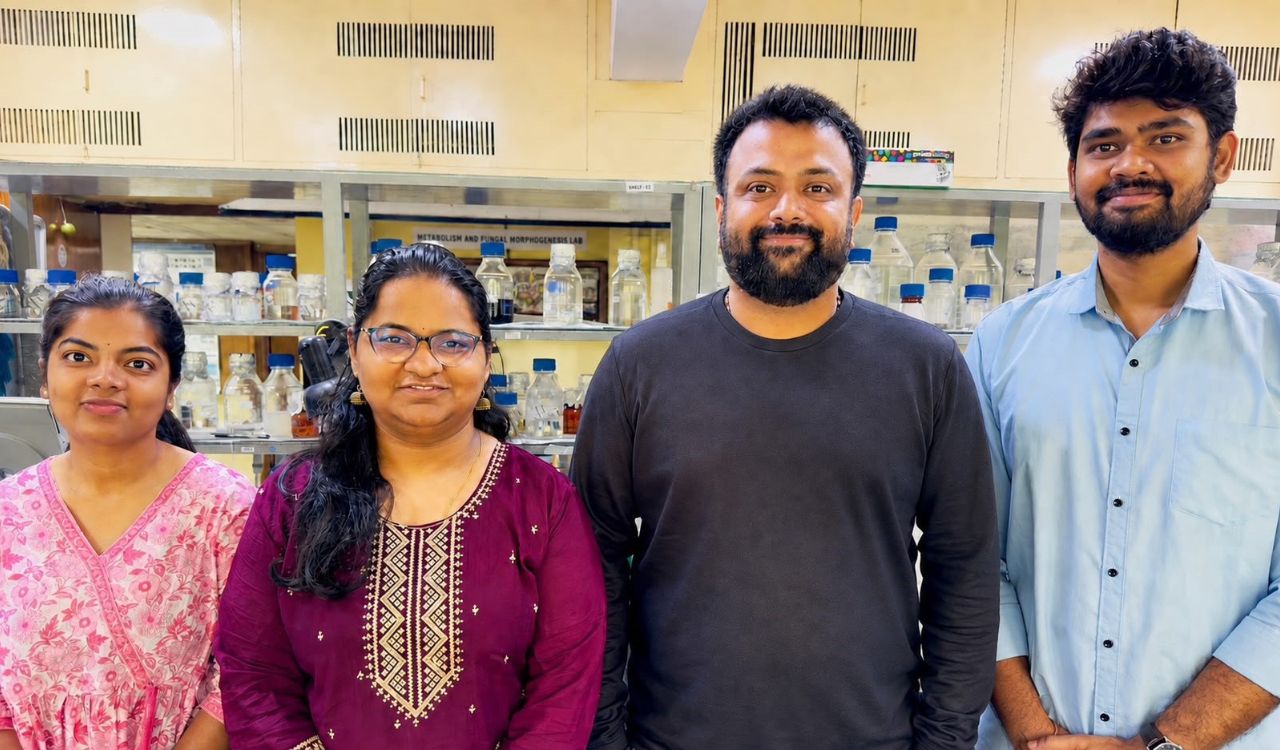
Hyderabad’s CSIR-CCMB researchers have uncovered a biological circuit that enables Cryptococcus neoformans to form giant Titan cells and evade immunity. The discovery links fungal metabolism, calcium signalling and calcineurin activation, potentially opening new approaches to combating cryptococcal disease
Published Date – 21 August 2026, 03:48 PM
Hyderabad: Researchers from the Hyderabad-based Centre for Cellular and Molecular Biology (CSIR-CCMB) have solved a two-decade-old biological mystery on how Cryptococcus neoformans, a deadly fungus responsible for nearly one in five AIDS-related deaths globally, transforms into giant ‘Titan cells’ to evade the immune system and cause lethal brain infections.
The researchers identified a previously unknown biological circuit in their study, published in the prestigious Oxford Academic Genetics (August, 2026), that enables the deadly fungus to form Titan Cells by linking the fungus’s energy metabolism to one of its most important cellular signalling systems.
Traditionally, metabolism is defined as the process that provides cells with energy. The CCMB study, however, reveals that metabolism also acts as a powerful decision-making system that determines whether the fungus can become more dangerous.
“We uncovered an unexpected biological connection between the fungus’s energy hub and one of its most important survival pathways. Our findings show that metabolism is not merely supplying fuel, it is actively controlling the cellular signals that allow the fungus to transform into titan cells,” said lead scientist, Dr. Sriram Varahan.
The researchers discovered that efficient glucose metabolism helps the fungal cell maintain a proper balance of intracellular calcium. Inside living cells, calcium acts as a tiny molecular messenger that carries information from one part of the cell to another.
When calcium levels are maintained, they activate ‘Calcineurin’, a master signalling pathway that enables the fungus to survive stressful conditions inside the human body and ultimately grow into giant titan cells.
The discovery establishes, for the first time, a direct connection between the fungus’s energy metabolism, calcium signalling, and calcineurin activation in controlling Titan cell formation. Rather than acting as independent processes, these systems work together as a coordinated biological network that allows the pathogen to adapt and survive within its host, they said.
By identifying this hidden vulnerability, the study suggests an entirely new strategy for combating cryptococcal disease and instead of simply trying to kill the fungus, future therapies may be designed to prevent it from ever producing titan cells.