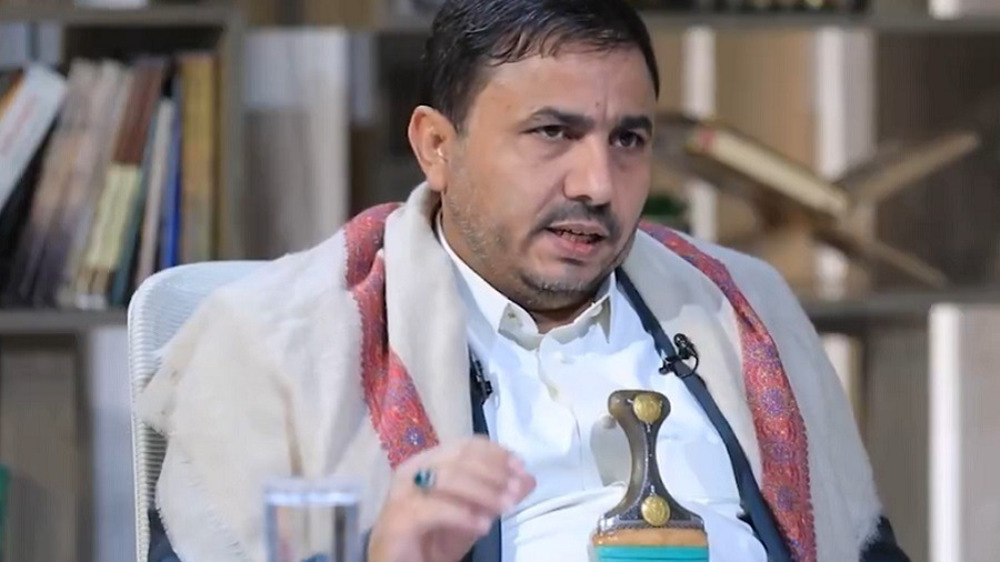
A senior member of Yemen’s Ansarullah resistance movement says Saudi Arabia is paying social influencers to wage a psychological war against Yemen, amid desperation following Yemeni armed forces’ operations in response to the ongoing aggression and blockage against their homeland.
Mohammed al-Farah, a member of Ansarullah’s political bureau, wrote in a post published on his personal account on X that the move is aimed at distorting facts, poisoning the world public opinion, and weakening the internal front through media and digital tools.
Farah stated that certain content creators had consented to act as instruments for foreign interests in return for monetary rewards.
He stated that the association of certain influencers with the aggressive Saudi regime has resulted in a decrease in their popularity and a considerable erosion of their credibility.
Farah further noted that audiences have progressively begun to perceive them as instruments used in media campaigns, despite having previously held a position of widespread trust among their followers.
The member of the Ansarullah political bureau stated that past experiences have shown that numerous individuals who previously held significant influence in the digital realm diminished their status after altering their positions and engaging in media campaigns that support Saudi Arabia.
He stated that the alteration had negatively influenced their reputations and deprived them of the power they once wielded in society.
Farah stated that utilizing influencers in these campaigns does not represent a true benefit for them; rather, it harms their reputation and status, putting them at odds with public opinion, which scrutinizes their actions and evaluates them based on how well they align with national interests.
He called upon content creators to maintain their status and the respect they have earned.
The Ansarullah official emphasized that a reputation founded on ethical principles holds greater worth than any temporary financial benefits, as regaining lost public trust can prove challenging in the future.
On July 20, the Sana’a government announced a maritime blockade against Saudi Arabia, asserting that its authorities have imposed “an unjust and oppressive siege” on Yemen for nearly 12 years, “plundering our resources and implementing a complete blockade.”
Subsequently, the Yemeni Armed Forces stated that they have begun targeting Saudi commercial vessels in the Red Sea.
Since March 2015, Saudi Arabia and its Arab allies have imposed a blockade on Yemen, initiating a comprehensive war, supported militarily, politically, and logistically by the United States and various Western nations.
The war has resulted in the deaths of tens of thousands of Yemenis, while persistently failing to achieve its primary goal of reinstating Yemen’s previous regime that was aligned with Riyadh.
After a tenuous ceasefire brokered by the UN in 2022, the United States, Britain, and the Israeli regime launched multiple acts of aggression against Yemen. These assaults aimed to undermine Sana’a’s ability to conduct solidarity strikes against Israeli targets in retaliation for Tel Aviv’s genocidal campaign in the Gaza Strip.