As IndiGo completes 20 years, co-founder Rahul Bhatia outlines the airline’s ambitious international expansion plans, focusing on connecting the global Indian diaspora, expanding its fleet with A321 XLRs and A350s, strengthening India as an aviation hub, and maintaining cost leadership
Updated On – 2 August 2026, 04:16 PM
New Delhi: As IndiGo marks 20 years of operations, the airline that transformed air travel in India is preparing for what its co-founder calls a “longer leap of flying” as it charts an ambitious international expansion to connect the global Indian diaspora to their homeland, recapture international traffic now flowing through Gulf hubs and, over the longer term, carry passengers between foreign countries via India.
The country’s largest airline, which has a domestic market share of more than 66 per cent, is set to induct Airbus A321 XLR aircraft before taking delivery of wide-body A350s from 2028.
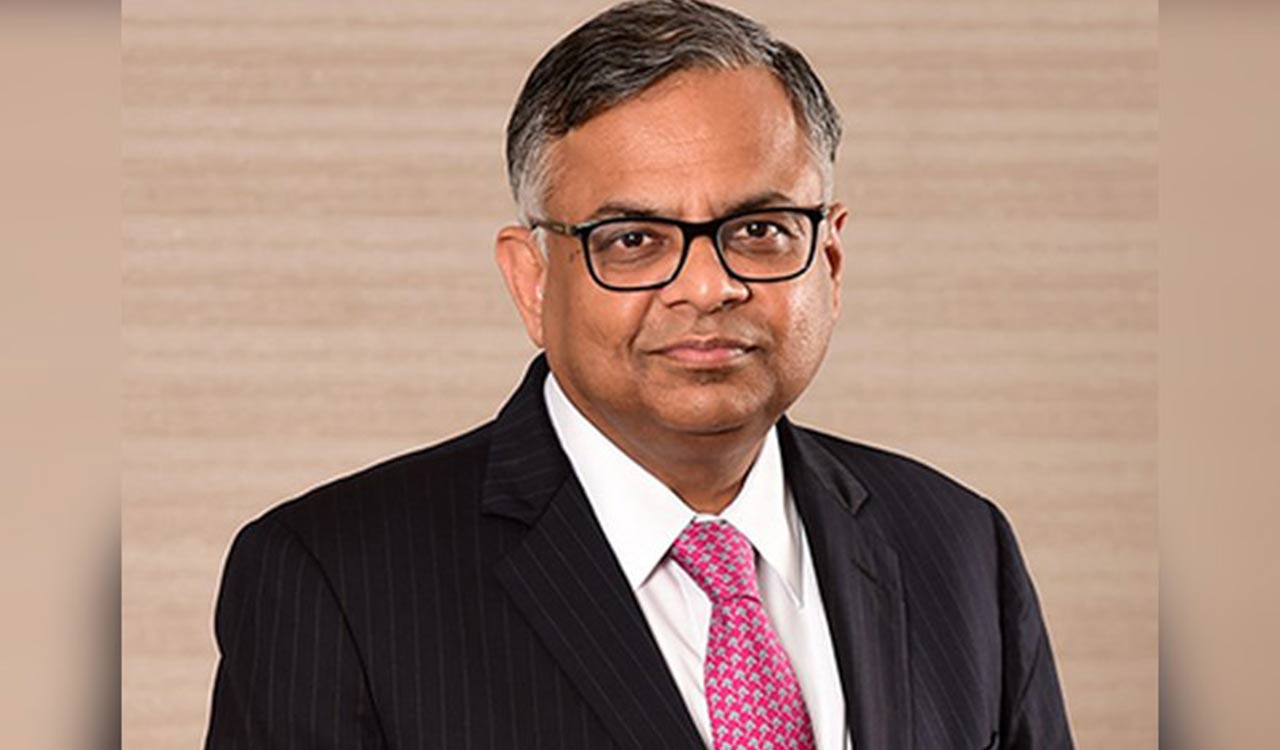
With an extensive domestic network, IndiGo is prepared to take a “longer leap of flying”, IndiGo Managing Director Rahul Bhatia said in an interview to PTI, adding that the airline will connect more overseas destinations with the A321 XLR and later with the A350.
However, Bhatia, also IndiGo’s co-founder, said the airline was still far from being a global carrier as it approaches its 20th anniversary of operations on August 4.
“Do we want to get there? Yes, we aspire to get there. But we are still… I mean, the heart of the company is really the domestic network we have.
“We do a little bit of experimenting with larger planes, but I think to call us global is kind of extending your imagination,” he said.
IndiGo has expanded its overseas network in recent years and is operating leased Boeing 787 aircraft from Norse Atlantic Airways, although some international services have been curtailed due to the West Asia conflict and airspace restrictions.
Citing a challenging operating environment because of ongoing geopolitical tensions, the airline last week said it would discontinue wide-body operations from October 25 and conclude its damp lease agreement for the Boeing 787 aircraft from October 31.
Bhatia said IndiGo’s long-haul strategy would primarily focus on serving Indian travellers and the global Indian diaspora.
“When the airline does longer lengths of flying, it will be about taking Indians to markets around the world and bringing the large Indian diaspora living around the world to India,” he said.
He said Gulf carriers had captured much of the international traffic from India over the past decade by funnelling passengers through their hubs, resulting in Indian economic value flowing overseas.
“The onus lies with airlines like IndiGo and Air India to bring all that economic wealth back and truly have Indian carriers fly Indian customers to the world,” Bhatia said.
“We have an extensive network in India. We can connect into a hub and fly people to the world and, vice versa, bring people from geographies where we have a large Indian population to India,” he added.
Asked whether IndiGo was looking to emulate Emirates’ hub model, Bhatia said connecting international passengers through India would remain a non-core business for the airline, unlike the Gulf carrier, as India still has significant untapped domestic demand.
Asked whether IndiGo could connect countries with the largest Indian diaspora over the next decade, Bhatia replied: “Absolutely, without a question.”
TWO DECADES IN THE MAKING
The ambition traces back to a simple premise. IndiGo commenced operations on August 4, 2006, with a handful of Airbus A320 aircraft, launching services between Delhi, Guwahati and Imphal before expanding to 13 destinations within its first year.
The airline built its model around four pillars: low fares, on-time performance, courteous and hassle-free service, and a clean flying experience, betting that a single-aircraft-type strategy would keep costs down and reliability high.
That discipline compounded quickly. By FY16, IndiGo had become India’s largest airline by market share, with 35 domestic and five international destinations.
Between 2016 and 2023, the network expanded from 35 to more than 85 domestic destinations, while international routes grew across the Middle East, Southeast Asia and the SAARC region. Annual passenger traffic crossed 100 million during the period.
In 2023, the airline placed what it describes as the world’s largest single aircraft order, comprising 500 Airbus A320 Family jets, and announced its ambition to double in size by FY30, laying the groundwork for the long-haul push now underway.
It is an ambitious pivot for a carrier that built its identity on domestic dominance. IndiGo controls more than 66 per cent of India’s domestic market, operates a fleet of over 430 aircraft and serves more than 95 domestic and over 40 international destinations.
Its order book, already the envy of the industry, stands at more than 900 aircraft, including wide-body Airbus A350s due from 2028 and long-range A321 XLRs arriving earlier.
Yet, despite its scale, Bhatia was careful not to overstate where the airline stands today.
A DIFFERENT KIND OF GLOBAL AMBITION
Where some rivals have built their international strategy around funnelling the world’s passengers through a single mega hub, Bhatia made it clear that IndiGo’s ambitions are different, rooted in serving India’s diaspora rather than competing directly for global connecting traffic.
“When the airline does longer lengths of flying, it will be about taking Indians to markets around the world and bringing the large Indian diaspora living around the world to India,” he said.
He described this as more of a correction than an expansion, pointing to the way Gulf carriers have, in his view, captured the economic value of Indian travel by routing passengers through their own hubs over the past decade.
“We have an extensive network in India. We can connect into a hub and fly people to the world and, vice versa, bring people from geographies where we have a large Indian population to India,” he added.
Looking further ahead, Bhatia outlined a future in which IndiGo’s international network becomes large enough to carry travellers between two foreign countries via India, citing the example of a passenger flying from the UK to Australia through India.
That aspiration aligns with the airline’s Vision 2030, which positions India as a preferred global aviation hub connecting Europe, Asia, Africa and the Middle East. Under the vision, international capacity is targeted to rise from around 30 per cent of the network today to 40 per cent by the end of the decade.
THE DISCIPLINE BEHIND THE GROWTH
For all the talk of global reach, Bhatia repeatedly returned to the principle he credits for IndiGo’s rise in the first place: an unwavering focus on cost.
“Because the day you lose control of that, in my mind at least, is the start of the beginning of the end,” he said.
He traced the philosophy back to the airline’s founding, when its first aircraft, ordered in 2005, was delivered in 2006.
“The whole premise of the airline was, and is, built around cost leadership… then being able to extend that cost advantage to consumers by offering them affordable fares. Then you open up a whole new market.
“So customers come on board, you fill up planes, then you order more planes. It’s like a flywheel that just keeps going,” he said.
A NEW CAPTAIN FOR THE NEXT CHAPTER
The anniversary also marks a leadership transition. Willie Walsh, the veteran aviation executive who stepped down as Director General of the International Air Transport Association on July 31, takes over as IndiGo’s CEO on August 3.
Bhatia described Walsh, a trained pilot who went on to lead Aer Lingus, British Airways and IAG, as uniquely suited to the role.
“For Willie, this journey at IndiGo is not a stepping stone to something in the future,” Bhatia said. “I think he is genuinely motivated to make a difference. I can see that when I talk to him.”
He pointed to Walsh’s operational depth as a key strength.
“In Willie, we have somebody who is very deep operationally. I think that stems from the fact that he started his career as a pilot. He will add an immense amount of value. For us at IndiGo, culture is very important. The spirit and culture of a company differentiate it. That’s something we want Willie to hold on to fiercely,” Bhatia said.
Walsh’s experience leading both low-cost and full-service airlines, Bhatia added, makes him particularly well-positioned to help shape IndiGo’s international expansion.
“In our journey into the international arena, I think he will be invaluable in putting all of that together. For a company like IndiGo to bring in someone like Willie Walsh speaks not only about IndiGo but also about the opportunity India offers,” Bhatia said.
Bhatia also shared a small but telling detail from the hiring process, saying compensation was never a sticking point in their discussions.
“In fact, when we shook hands, he said to me, ‘I just want to assure you that it will never come in the way of us working together.’ I think that speaks volumes,” he said.
On the question of long-term succession and ownership structure, Bhatia struck a similarly steady note.
“Ownership has always had a soft touch. I don’t see that changing. So, I believe IndiGo will continue for a long time to be managed by the finest talent you can find on the planet. Shareholders will have some oversight, but that is where I think it is today,” he said.
BETTING ON THE NEXT GENERATION — PATIENTLY
Even as it builds its current fleet plan through 2035, IndiGo is holding its next major aircraft order in reserve, a decision Bhatia described not as hesitation but as strategic patience.
“The reason we have taken a pause right now is because we want to see what happens with the next-generation aircraft. Who will launch it and when? Whenever that new technology comes along, I think it will be our next bite of the cherry and decide the future of this company beyond the current generation of aircraft,” Bhatia said.
The airline has already doubled its A350-900 order from 30 to 60 aircraft, with options for 40 more, and deliveries beginning in 2028. Bhatia said the current order book gives IndiGo room to grow without rushing into a decision.
“We will see how things evolve over the next few years. My own view is that we are pretty well set till 2035,” he said.
He linked the eventual decision on new orders to the airline’s broader commitment to efficiency and environmental performance, a theme reflected in the fleet IndiGo already operates. More than four-fifths of its aircraft are next-generation models, roughly 15 per cent more fuel-efficient than the previous generation. The airline said its greenhouse gas emission intensity has fallen by nearly 19 per cent since the 2016 baseline, while the average fleet age is under five years.
“We want to be among the early adopters as new technology comes along. We want to embrace that, improve our cost structure and become a more environmentally friendly airline.”
On the timing of the next aircraft order, Bhatia said a decision could come in the early 2030s, with the existing options providing enough flexibility in the meantime.
“We have options for 40 A350s which we can convert. It will depend on how things evolve over time between now and when the new-generation aircraft enters service. Should we feel there is a need for a top-up order, we will do that,” Bhatia said.
Underscoring the logic behind the strategy, he added: “…what you don’t want to do is, as new technology comes along, be saddled with a large number of older-generation aircraft.”
REWRITING THE FINE PRINT OF GROWTH
Behind the headline fleet numbers, IndiGo is also restructuring the way it finances its aircraft, moving from operating leases to finance leases, a shift Bhatia said improves both cost efficiency and operational flexibility.
“(For) planes that you finance, should you decide at any point in the future to convert them into operating leases, you can. But you can’t do it the other way around. It simply provides optionality, and optionality in our business is critical,” he said.
That financial discipline has paid off in a way few global peers can claim. IndiGo has largely avoided the aircraft delivery delays that have affected airlines worldwide because of ongoing supply chain disruptions, allowing it to continue expanding both domestically and internationally as planned.
The airline said it has been the largest recipient of Airbus aircraft deliveries globally for two consecutive years, with more than 500 Airbus aircraft delivered since its inception.
A BROADER TRANSFORMATION
The international push is one part of a wider transformation as the airline approaches its third decade. IndiGo has introduced IndiGoStretch, a premium cabin now available on more than 25 routes with over 2,800 seats. The airline expects this to grow to more than 4,300 seats by March 2027.
It has also launched its first loyalty programme, IndiGo BluChip, which has enrolled more than 13 million members since its launch.
Cargo has also become an important growth segment, with the airline transporting more than 450,000 tonnes in FY26, up 26 per cent year-on-year. It also received recognition as India’s Airline of the Year for Cargo and aims to double cargo volumes by FY30.
The airline also highlighted its workforce diversity. Women account for 45.6 per cent of its employees, while 17.5 per cent of its pilots are women, among the highest proportions globally. The airline attributed this partly to its training arm, iFLY Academy, which trains more than 2,000 aviation professionals.
BY THE NUMBERS
Two decades after its first aircraft took to the skies, IndiGo has grown to operate more than 440 aircraft, serving over 140 destinations across more than 500 domestic and 150 international routes. The airline carried more than 123 million passengers in FY26 alone and has flown over 880 million customers since its inception.
It now operates more than 2,200 flights daily, making it the world’s eighth-largest airline by departures. Its average on-time performance over the past 20 years stands at 84 per cent.
Under its Vision 2030 targets, IndiGo aims to have a fleet of more than 550 aircraft, around 3,000 daily departures, nearly 200 million annual passengers and international capacity accounting for 40 per cent of its network.
As Willie Walsh steps into the cockpit next week, the airline he inherits remains, by its founder’s own account, a domestic powerhouse. At the same time, it is steadily building the infrastructure, fleet and leadership needed to become a carrier that not only serves India but also connects India with the world.