Dozens of civil rights and advocacy groups have called on the US congress to remove a “dangerous” bill provision that would strengthen military technology ties between the US and the Israeli regime.
In a letter, 56 civil rights and advocacy groups urged leaders of the House and Senate Armed Services Committees to scrap section 219 of the 2027 National Defense Authorization Act (NDAA).
The bill passed in the House of Representatives in July and is pending Senate approval.
Section 219 of the 2027 NDAA intends to institute frameworks for joint ventures, licensing agreements and US-based co-production partnerships.
“At a time in which American interests are increasingly diverging from those of Israel, and American public opinion is turning increasingly against unconditional support to Israel, creating new points of influence for Israel in the US defense-technology ecosystem is exceptionally dangerous,” read the letter.
Slamming Israel for its genocide in Gaza and settler violence in the occupied West Bank and its violations of international humanitarian law, the letter’s signatories emphasized that these developments should prevent any discussion of military ties.
This comes as a memorandum of understanding that secures $3.8 billion in annual US military aid to Israel is scheduled to expire in 2028, prompting conversations on how Washington’s assistance to Israel will evolve.
Several members of Congress have tried to scrap the provision from the fiscal 2027 NDAA. Republican Representative Thomas Massie of Kentucky and Democratic Representative Ro Khanna of California introduced an amendment seeking to remove it, but the amendment was not included in the House version of the bill.
In the Senate version of the NDAA, Section 219 is labeled as Section 1217, with some notable differences.
While the House version would require the US Secretary of War to appoint an “executive agent” to coordinate efforts between the US and Israel, the Senate version goes further by spelling out that the Israeli minister of military affairs would be consulted on an ongoing basis.
After the House and Senate draft their separate versions of the NDAA, members of both chambers will negotiate a compromise version. Both chambers must approve the final version at the end of the year, before it is sent to the White House for President Donald Trump to sign or veto.
If the Senate’s wording for the provision is approved later this year, lawmakers will have to discuss and agree on one set of rules to guide the “United States–Israel Defense Technology Cooperation Initiative”.
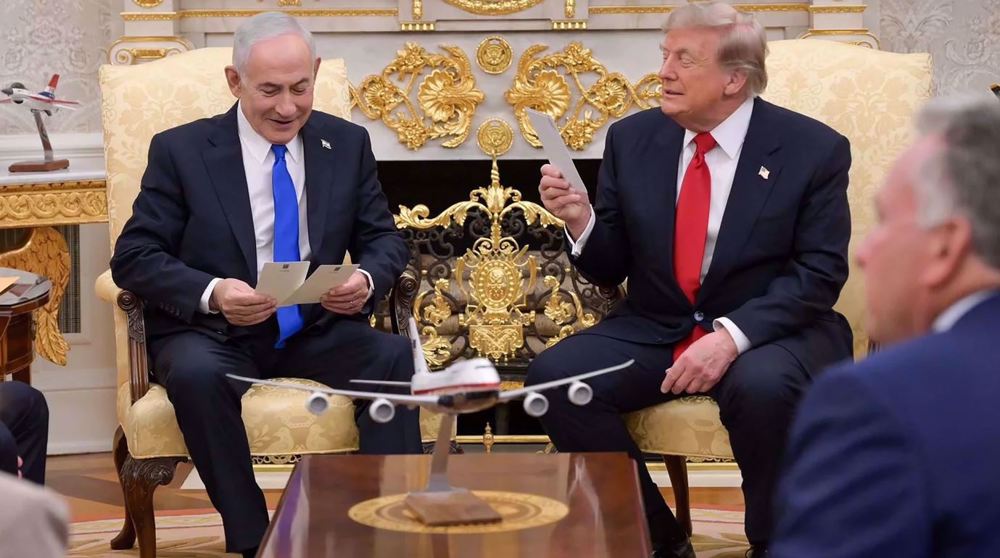
Israeli prime minister Benjamin Netanyahu has hailed the controversial provision, saying it will turn Israel from a foreign aid recipient to a full-scale partner.
If the provision is approved, future presidents could not easily end the project that would permanently integrate US and Israeli military tech advancements.
Collaboration being proposed under Section 219 would allow Israel to have a say in US defense and national security mechanisms.
A New Policy, a lobbying group co-founded by whistleblower Josh Paul, strongly advocated for voting against the US-Israel Defense Technology Cooperation Initiative, noting that it would harm US national security.
“This approach exposes sensitive US capabilities to counterintelligence risk, normalizes technologies developed in contexts of occupation and civilian harm, disadvantages US defense companies ability to compete with Israeli competitors, deepens US legal and reputational exposure without clear strategic necessity, and aims to hide continuing US military support to Israel from Congressional and public transparency,” it said in a policy brief.