Iranian Foreign Ministry spokesman has called on the Persian Gulf Cooperation Council (GCC) to clarify its position on US allegations about its member states’ participation in the aggression against Iran.
Esmaeil Baghaei made the remarks after commander of terrorist US Central Command Admiral Brad Cooper called Kuwait, Saudi Arabia, the UAE, Qatar and Bahrain, as well as Jordan as “the most prominent countries that have been most helpful and served side by side” in the aggression.
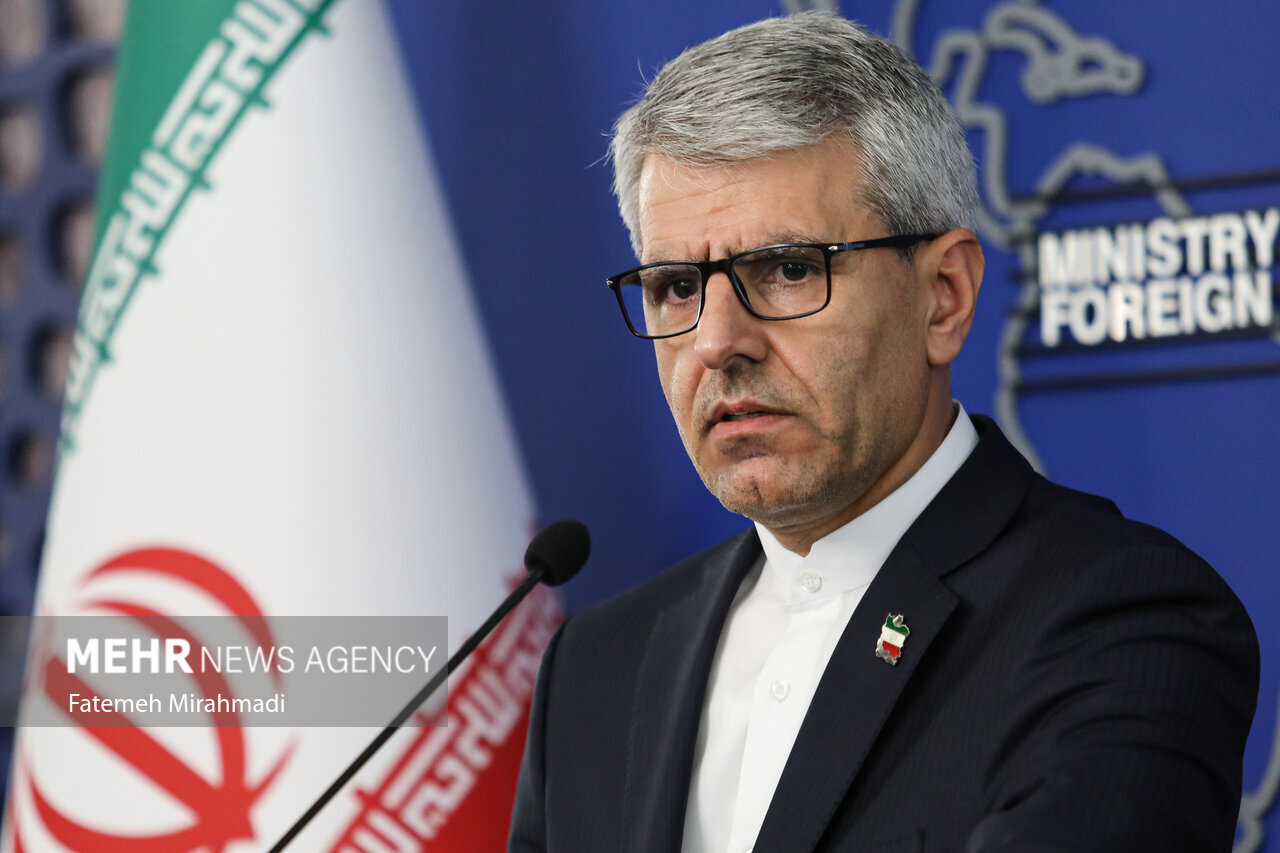
Publishing footage showing Cooper’s remarks, Baghaei said, “If this claim by the American official is not true, the mentioned governments should officially and transparently reject it.”
The spokesman stressed the Islamic Republic’s “inherent and legitimate” right of self-defense as well as its right to attack hostile targets in countries used as launch pads for anti-Iran offensives.
“In such circumstances, when the Islamic Republic of Iran, within the framework of its inherent and legitimate right of self-defense, targets bases as well as military and logistic assets of the US on the territory of these countries, raising the question, ‘Why has Iran done this?’ is irrelevant,” he said.
Baghaei emphasized that the main source of insecurity and conflict in the region is the US-Israeli aggression against Iran.
“Any participation in this aggression, including by providing a platform for military operations, is considered a manifestation of an aggressive act and a violation of the principle of good-neighborliness and Article 2 (4) of the United Nations Charter, based on the UN General Assembly Resolution 3314 on the definition of aggression.”
The spokesman stressed that “the Islamic Republic of Iran’s self-defense is carried out in order to restore security and stability for the entire region.”
Over the past days, the terrorist US military has conducted waves of deadly strikes on southern Iran and reinstated a blockade of Iranian ports in flagrant violation of a war-termination deal.
In response, Iranian armed forces have launched heavy reprisal attacks against strategic American targets across the region, declaring the Strait of Hormuz closed “until further notice” and at least until “the end of US interference in the region.”
The US and Israel launched an aggression against Iran on February 28, some eight months after carrying out unprovoked attacks on the country.
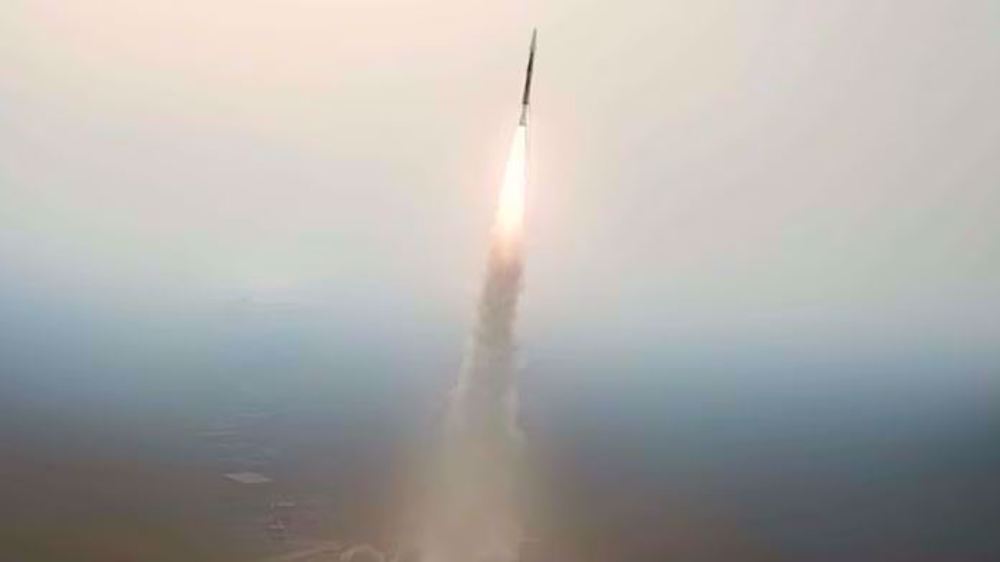
Iran swiftly retaliated by launching barrages of missiles and drones at the Israeli-occupied territories, as well as US bases and interests across the region.
Since then, the war has increasingly centered on the Strait of Hormuz, a vital shipping channel for about a fifth of the world’s oil.