Head of Iran Fisheries Organization highlights record shrimp harvest and massive private sector investment.
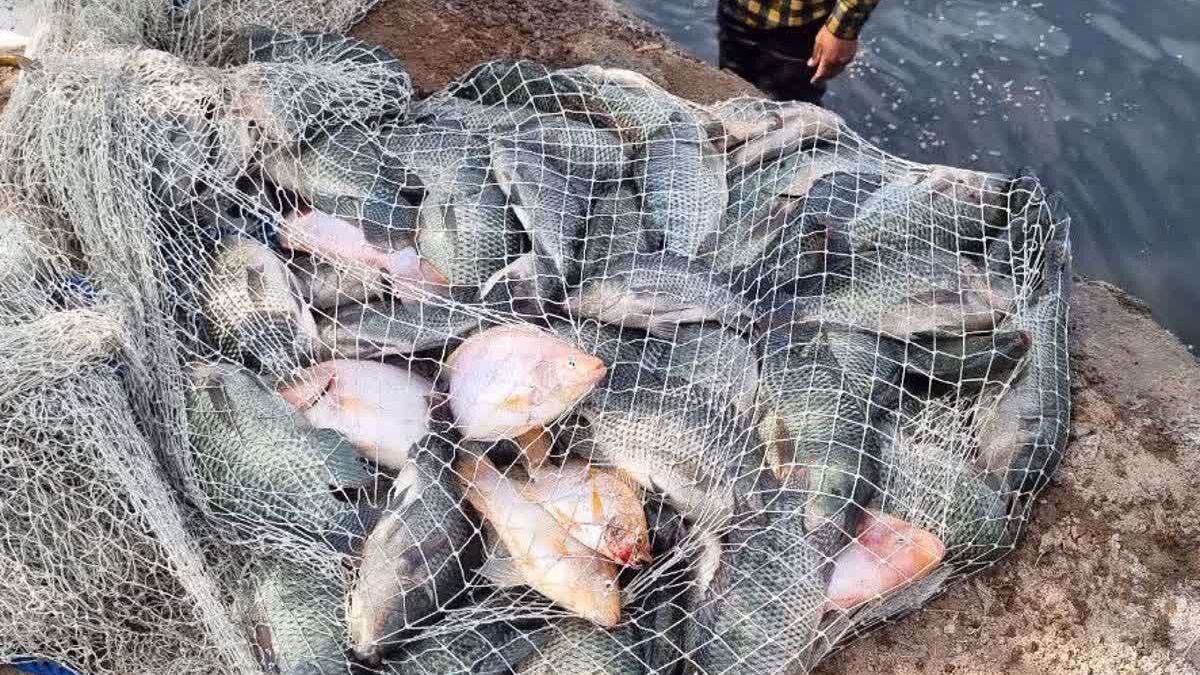
Freshly caught fish are displayed at a fishing port in Bushehr province, southern Iran. (Photo by IRNA)
Iran’s fisheries exports have surged by more than 50 percent compared to pre-war levels, demonstrating the sector’s resilience and the uninterrupted operation of its production chains in spite of military aggression and attempts to sabotage infrastructure, a senior official said.
Hamzeh Rostampour, head of the Iran Fisheries Organization, made the remarks on Friday at the 10th International Fisheries, Aquaculture, and Seafood Industries Exhibition in Tehran.
“Despite the country navigating complex wartime conditions, the production and export chains have not only remained intact but expanded,” Rostampour said.
He reported that over 40,000 tons of shrimp have been harvested from domestic farms so far this year, with an additional 60,000 tons remaining for the season.
Furthermore, deep-sea fishing operations, conducted in compliance with the Indian Ocean Tuna Commission (IOTC) regulations, have seen a 35 percent increase this year.
A major driver of this growth is a massive influx of domestic capital, largely bypassing state reliance.
Rostampour revealed that investments in the sector have nearly doubled in recent years.
“Prior to the war, 34 trillion tomans were invested in fisheries. This figure reached 67 trillion tomans last year, and so far this year, it has exceeded 40 trillion tomans,” he said.
Crucially, the official noted that 90 percent of this capital is supplied by the private sector, with significant concentrations in southern coastal provinces such as Sirik and Qeshm, directly supporting the government’s mandate to develop the Makran coast.
Supply chains withstand sabotage
The sector has faced direct threats during the 40-day US-Israeli war of aggression, which began in late February.
Rostampour noted that the industry has mourned the loss of over 40 fishermen and workers since the war of aggression escalated.
In spite of these losses and deliberate attempts to disrupt logistics, the supply chain remained unbroken.
“Even when the enemy targeted bridges around Hormozgan province, trucks transporting aquaculture feed continued their routes uninterrupted,” Rostampour said, highlighting the robustness of the domestic network against logistical sabotage.
Rostampour emphasized that the fisheries sector must be viewed as a strategic pillar for national food security, job creation, and facilitating “reverse migration” to develop the country’s southern coastal regions, rather than just a traditional production unit.
The 10th International Fisheries Exhibition in Tehran serves as a primary platform for domestic companies to showcase advancements in aquaculture technology, processing, and export capabilities.
The Iranian government has heavily prioritized the development of the “sea-based economy,” particularly along the Makran coast in the southeast.
This strategy aims to reduce reliance on oil revenues, boost non-oil exports, and create sustainable employment in historically less-developed regions.
The recent military escalations, referred to domestically as the Ramadan War, targeted various infrastructure and logistical routes in southern Iran.
However, state data indicates that critical food production and export sectors, including fisheries and agriculture, have maintained and in some cases expanded their output despite the war.