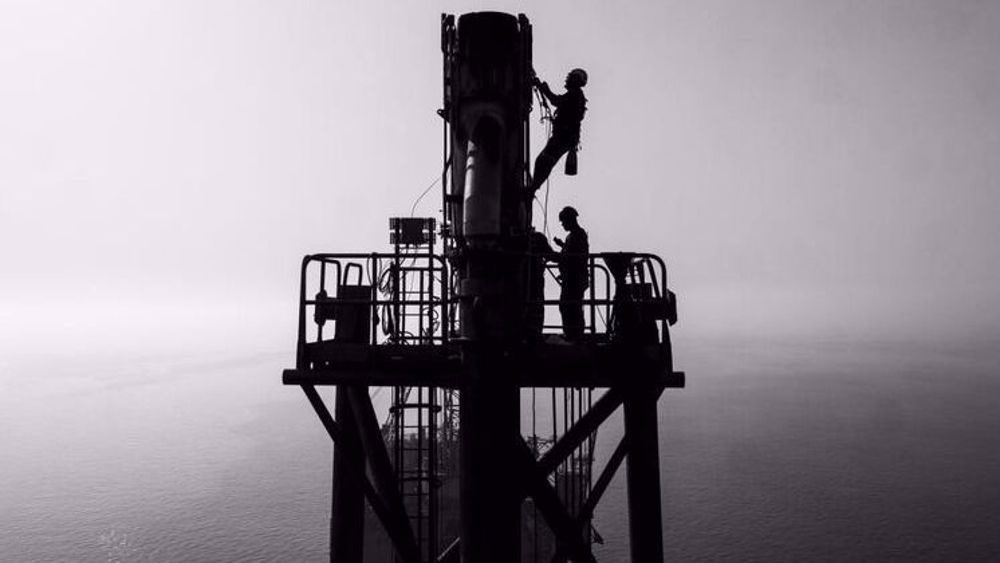
Iran has launched reconstruction of South Pars refinery facilities damaged in terrorist US-Israeli strikes, ushering in a new phase of petrochemical development powered by domestic expertise.
Farshad Moghimi, head of the Industrial Development and Renovation Organization of Iran (IDRO), on Wednesday announced the start of reconstruction and overhaul work at the damaged South Pars refinery’s Phases 4 and 5 by a consortium of domestic companies.
The project differs fundamentally from the original construction phase of South Pars because it will be executed entirely through Iranian technical expertise, designers, contractors and equipment manufacturers without the participation of foreign companies.
Although the full completion of the project will require approximately two years, production will gradually resume before the end of the entire reconstruction process, with operational trains returning to service in phases.
Beyond Phases 4 and 5, the reconstruction of Phase 14 is also advancing. One of its gas trains, damaged during the 12-day war, is currently being rebuilt by domestic engineers.
Officials report that the operation is in its final stages and is anticipated to be completed before the end of the current Iranian year, at which point it will also be reconnected to the national grid.
This parallel progress across multiple damaged phases demonstrates that Iran’s reconstruction capability is not confined to one project but can be applied across its entire energy complex.
The CEO of the National Iranian Oil Company (NIOC) personally visited the damaged sites in Asaluyeh and Kangan, inspecting the progress of debris clearance, safety operations, and reconstruction.
He emphasized that the swiftest possible return of these facilities to full operation must be pursued with seriousness, while strictly adhering to safety requirements and quality standards.
He also called for maximum utilization of domestic contractors and manufacturers at every stage, reinforcing the policy of self-reliance.
The attacks on Iran’s petrochemical infrastructure raised initial concerns about production continuity. However, the response has turned that concern into a testament of resilience.
Decades of petrochemical experience and the capabilities of domestic firms, manufacturers and specialists have turned the attacks into an opportunity to demonstrate Iran’s industrial independence rather than weaken its industry.
According to Moghimi, operational work and workshop preparation at the third refinery site have already begun, with representatives of the employer, Pars Oil and Gas Company, and consortium members present at the site.
The rapid mobilization of domestic capabilities reflects a broader transformation that has taken place in Iran’s petrochemical sector over several decades.
An industry that once depended heavily on foreign technology and expertise has gradually developed an extensive domestic network of engineering companies, equipment manufacturers and specialized human resources.
Today, this industrial capacity has become one of Iran’s most important advantages in responding to crises and maintaining economic continuity.
Damaged units are being rebuilt with upgraded technologies, improved energy efficiency, and enhanced safety standards. In many cases, the restarted facilities are expected to operate at higher performance levels than before the attacks.
This forward-looking perspective transforms the reconstruction from a defensive repair into an offensive upgrade.
The financial and logistical dimensions of the effort are also managed domestically. With funding sourced from an Iranian bank, the project avoids the delays and conditionalities that often accompany foreign financing.
The supply chain for equipment and parts is being routed through local manufacturers, many of whom have already proven their capability during the original development of South Pars decades ago.
This interconnected chain of domestic design, production, and execution creates a self-sustaining model of industrial recovery.
The reconstruction effort has opened a new phase of revival, modernization, and growth for the industry at a time when oil-producing nations are seeking to reduce dependence on crude exports and transition toward higher value-added industries.
South Pars is Iran’s largest gas field and one of the most important sources of feedstock for its petrochemical industry – a main pillar of the country’s non-oil economy and a key instrument for generating added value.
Petrochemicals account for about one-quarter of Iran’s non-oil exports and nearly one-fifth of industrial value added, with 79 complexes currently operating nationwide.
After more than six decades of development, Iran’s petrochemical production capacity has surpassed 100 million tonnes annually, making it the second-largest petrochemical producer in West Asia.
Asaluyeh, with 28 complexes and annual capacity of 48.4 million tonnes, remains the country’s largest petrochemical hub, while Mahshahr, with 21 complexes and capacity of 25.8 million tonnes, ranks second.
Reconstruction is proceeding alongside one of the largest development programs in the industry’s history. Under the Seventh Development Plan, 61 projects with combined capacity of 32.1 million tonnes and investment of $24.3 billion are planned.
The Eighth Development Plan targets another 46 projects with capacity of 51.3 million tonnes and investment of $44 billion. Few countries can match Iran’s combination of vast energy reserves, strategic geography, and cost-competitive production.
What distinguishes Iran’s reconstruction approach is its focus on self-sufficiency, as major energy projects now rely more on domestic expertise, equipment and engineering capabilities rather than foreign partners and technology.
Today, the entire chain from design and engineering to procurement, construction, and commissioning is handled by Iranian firms. This marks a structural shift in how Iran approaches its energy sector, particularly in times of crisis.
Phase 14’s reconstruction timeline is promising, with completion expected before year’s end, allowing Iran to restore a significant share of its damaged gas processing capacity in a short period.
This success feeds back into the broader reconstruction effort, providing operational lessons, logistical templates, and morale for the larger Phases 4 and 5 project.
The reconstruction also signals to both domestic stakeholders and international observers that Iran’s energy infrastructure is not easily paralyzed.
Despite targeted attacks, the country’s engineering and industrial base has proven agile enough to assess damage, mobilize resources, and execute complex repairs in a compressed timeframe.
This resilience reinforces Iran’s standing as a regional energy power capable of weathering external shocks.