By Mina Mosallanejad
False reports claiming that an Iranian woman was killed during protests in the central Iranian city of Isfahan following the execution of two convicted murderers have been circulating at a dizzying pace on social media networks.
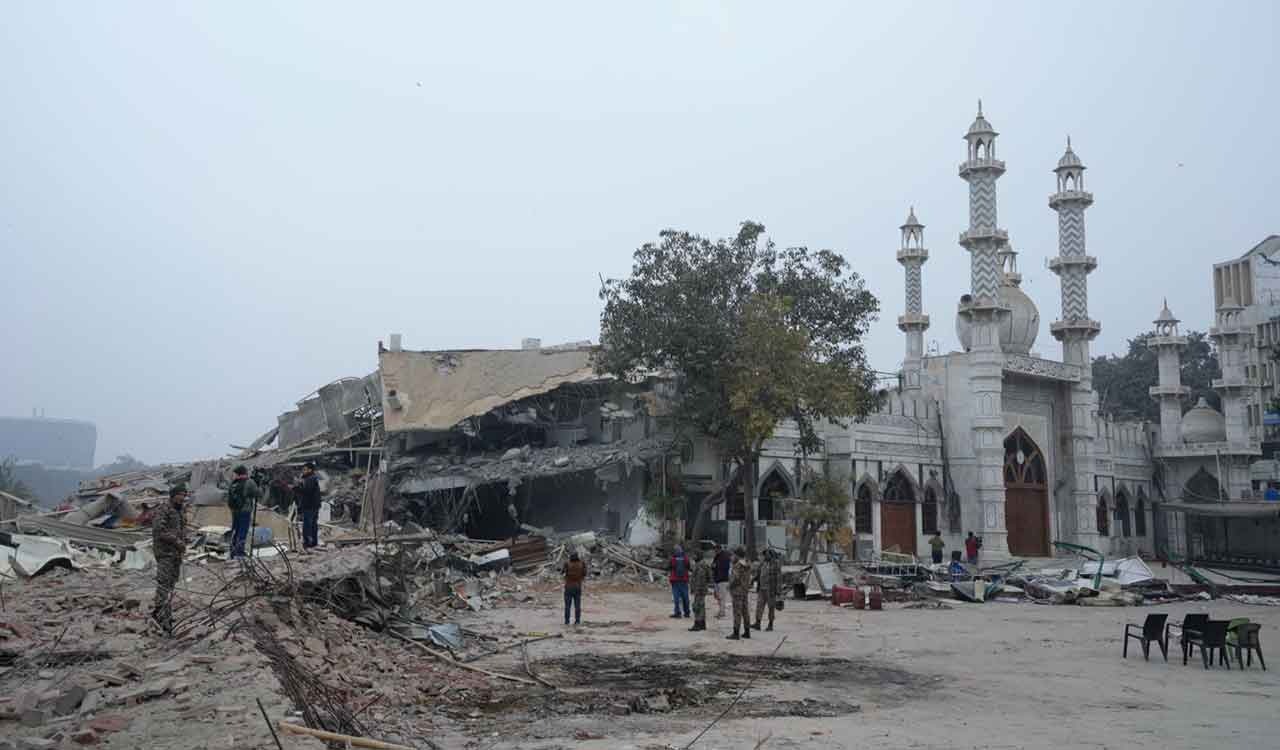
In the early hours of Tuesday, following the execution of Abolfazl Sepahi Badjani and Amirhossein Safari Hosseinabadi, who had been convicted of the brutal murder of four Iranian police officers during the January riots in Isfahan, disturbances broke out near the site as groups incited by foreign-backed operatives sought to stir unrest.
Amid the ensuing chaos, several social media accounts and some non-Iranian Persian media outlets began circulating claims that a woman identified as Anita Azarshah had been shot dead.
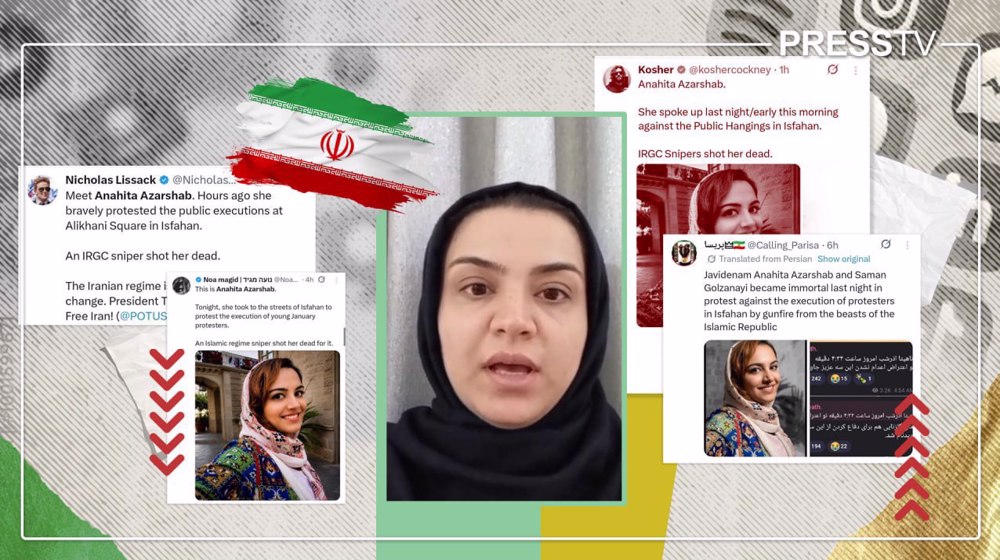
The allegation, however, collapsed within hours when Azarshah appeared in a video confirming that she was alive and vowing to pursue legal action against those who had spread the false and defamatory news.
The claims were rapidly amplified by anti-Iran Persian-language media outlets and pro-Israel social media accounts. Iranian authorities also dismissed the reports, saying no such incident had occurred and describing the concocted claims as part of a coordinated disinformation campaign aimed at creating public disturbance in Isfahan.
The incident is the latest in a series of online influence operations that have become a recurring tactic employed by foreign-backed media networks and hostile actors in recent years.
According to officials, such campaigns frequently rely on fabricated casualty reports, recycled images, manipulated videos, and coordinated social media amplification to fuel unrest and shape international narratives about events inside Iran.
Who were the two convicted killers?
Sepahi and Safari had been convicted of playing direct roles in one of the deadliest attacks on Iranian law enforcement personnel during the foreign-instigated January riots in Iran.
According to judicial documents, on January 8, a violent mob armed with firearms, machetes, knives, axes, swords, and Molotov cocktails attacked public property in Isfahan’s Malekshahr district, setting fire to buildings, a police station, vehicles, and roadblocks across the area.
Authorities said four unarmed police officers dispatched to restore order were overwhelmed by the attackers, brutally assaulted, burned alive, and subjected to further desecration of their bodies.
Court records identified Sepahi as one of the principal instigators of the violence. Investigators said he arrived at the scene carrying an axe and a knife, encouraged rioters to continue their attacks, helped block roads, set fires, damaged public property, and threw Molotov cocktails at a police station.
Witnesses testified that he urged others to bring gasoline to burn police officers alive. According to prosecutors, Sepahi knocked one officer from his motorcycle, stabbed him, dragged him alongside other attackers, and helped set him on fire while he was still alive.
Court documents further stated that Sepahi participated in burning a second officer after the victim had been dragged into a nearby green area.
Safari, according to the case file, concealed his identity with a mask, carried a large blade, and joined the riots from the outset. During court proceedings, he admitted accompanying the rioters, vandalizing public property, and attacking police officers with a sword-like weapon.
Prosecutors said Safari continued attacking one officer after he had already been critically wounded, repeatedly striking him with a machete before stabbing him in the abdomen. Court documents also stated that he celebrated over the body of one of the slain officers after the fatal attack.
Iranian authorities have maintained that while the demonstrations initially began as peaceful protests over economic hardships aggravated by years of Western sanctions, they were subsequently hijacked by organized rioters backed by hostile foreign regimes seeking to turn legitimate public grievances into a violent campaign of sabotage and terrorism.
Officials have said that some of those involved were armed, trained, and supported by intelligence agencies linked to the United States and the Israeli regime.
According to Iran’s Foundation of Martyrs and Veterans Affairs, 3,117 people lost their lives during the unrest, including 2,427 civilians and security personnel, many of whom officials said were killed by organized terrorist groups.
False death narrative spreads within hours
Following Tuesday’s events, authorities said attempts were made to provoke unrest around the site where Sepahi and Safari were being sentenced, by individuals encouraged by foreign-backed elements and Persian-language media outlets hostile to Iran.
Shortly afterward, social media was flooded with claims that a woman identified as Anahita Azarshab had been shot and killed near Alikhani Square in Isfahan.
The false claim quickly spread across Persian-language media platforms, with outlets including Iran International, a UK-based network critical of the Iranian government, amplifying it before any official confirmation was issued.
The story was then aggressively amplified by dozens of Persian- and English-language X accounts, many of which openly displayed pro-Israel affiliations or advocated foreign intervention in Iran.
The accounts claimed that Iranian security forces had shot Azarshab after protesting the executions, portraying her as the latest victim of what they described as a government crackdown on demonstrators. Several posts went a step further, calling for international action against Iran and urging the United States and Israel to increase pressure on Tehran.
Among the first to circulate the claim was X user Noa Magid, who describes herself as a journalist. She wrote: “This is Anahita Azarshab. Tonight, she took to the streets of Isfahan to protest the execution of young January protesters. An Islamic regime sniper shot her dead for it.”
A verified X account operating under the name “Kosher” similarly claimed that Azarshab had been killed by “IRGC snipers” after speaking out against the executions.
“Anahita Azarshab. She spoke up last night/early this morning against the Public Hangings in Isfahan. IRGC Snipers shot her dead,” the user wrote.
Nicolas Lissack, a UK-based activist whose X profile prominently features Israeli and Pahlavi flags, also repeated the allegation, describing Azarshab as a protester killed by an “IRGC sniper” before calling on US President Donald Trump to take action against Iran.
“Meet Anahita Azarshab. Hours ago she bravely protested the public executions at Alikhani Square in Isfahan. An IRGC sniper shot her dead. The Iranian regime is pure evil and will never change. President Trump: stop talking and act! Free Iran!”
The posts were widely shared across social media before any evidence supporting the allegations had emerged.
✍️ Investigation – Iran riots and info war: When the ‘dead’ came back to debunk their own death stories
By Yousef Ramazanihttps://t.co/f2JD5MDyh4
— Press TV 🔻 (@PressTV) February 7, 2026
Woman appears alive and rejects report
Only hours after the claims began circulating online, Azarshab released a video categorically rejecting the reports and vowing to sue those spreading the false claim.
“Unfortunately, news has been circulated claiming that I was killed in Isfahan province,” she said.
“I completely deny this report, and I have filed a legal complaint against the individual or individuals who published this false news.”
Her appearance immediately undermined the central claim that had been promoted across numerous anti-Iran social media networks.
Iran’s Isfahan Provincial Police Information Center also issued a detailed statement rejecting the allegations.
The statement said no report had been registered concerning the killing of a woman in the vicinity of Alikhani Square and described the claims as entirely fabricated.
“Since earlier today, certain hostile media outlets and social media channels have circulated false reports claiming that a woman with an identified identity was killed near Alikhani Square in Isfahan,” the statement said.
“Comprehensive police investigations and inquiries with the relevant authorities show that no report or case matching these claims has been registered with the provincial police command, and the allegations are completely false and unsupported by any evidence.”
Police said the reports were intended to create psychological insecurity and influence public opinion amid the ongoing war against the country.
The statement noted that Azarshab herself had publicly confirmed that she was alive and announced legal action against those responsible for spreading the false story.
The provincial police warned that individuals responsible for publishing fabricated reports intended to disrupt public security would be identified through continued monitoring of cyberspace and prosecuted in accordance with the law.
A familiar pattern of information warfare
The latest false death claim closely resembles previous online disinformation campaigns that have accompanied externally backed unrest inside Iran.
Following the failure of the violent January riots to achieve their objectives, foreign-backed networks increasingly shifted toward coordinated online influence operations aimed at manufacturing public outrage through fabricated death reports, manipulated images, AI-generated videos, and misleading narratives.
Western-backed media organizations have already dramatically inflated casualty figures during the unrest, with some claiming that tens of thousands of people were killed.
Iranian authorities later released an official list of verified victims that was substantially lower than those figures, while several individuals who had been falsely reported dead subsequently appeared in public to confirm that they were alive.
According to Iranian officials, after peaceful demonstrations over economic grievances in January were infiltrated by organized violent groups, foreign intelligence agencies and affiliated media outlets attempted to reshape the narrative by portraying violent armed rioters as peaceful protesters while downplaying or concealing attacks against civilians and security personnel.
As security forces restored order and arrested key organizers of the violence, the campaign increasingly shifted online.
Israeli-linked accounts began circulating photographs they claimed depicted victims allegedly killed by Iranian security forces. Many of the images were later identified by users on X as belonging to actors, models, and public figures who had no connection to the events in Iran.
In one widely circulated case, a post falsely claimed that a 28-year-old protester named Negin Ghadimi had been killed “in her father’s arms demanding freedom.” Social media users quickly established that the accompanying photograph actually depicted renowned Turkish actress Tuba Büyüküstün, prompting the original post to be deleted.
In another case, Noa Magid published a photograph she falsely identified as Nasrin Zaremanesh, alleging that she had been fatally shot in Tehran and died while being transported to a hospital. Online users subsequently established that the image instead belonged to Pakistani actress and model Asma Kamran.
Other accounts recycled photographs of American actress Jenna Ortega and other well-known public figures, falsely portraying them as Iranian victims.
The disinformation campaign also extended beyond still images.
AI aiding anti-Iran hostile activities
Israeli-linked accounts circulated AI-generated videos purporting to show Iranian security forces violently dispersing protesters with water cannons.
Other posts falsely claimed that Iraqi armed groups had entered northern Iran to assist Iranian security forces, despite Arabic-language signs visible in the footage identifying the location as an Iraqi government facility. Iraqi officials subsequently rejected the allegation as misleading and harmful to Iran-Iraq relations.
Researchers have also documented organized online influence operations designed to amplify such narratives.
Last year, the University of Toronto’s Citizen Lab reported on a coordinated network of Israeli-backed fake X accounts known as “PRISONBREAK,” which it said used artificial intelligence and coordinated messaging to spread disinformation and encourage unrest inside Iran.
Around the same period, Israel’s Haaretz newspaper reported on another covert campaign involving fake accounts and AI-generated content promoting exiled opposition figure Reza Pahlavi, the son of Iran’s deposed shah.
An extensive analysis later published by Al Jazeera concluded that much of the online activity surrounding the engineered unrest did not originate organically from inside Iran but was instead driven primarily by networks linked to Israel or openly pro-Israel circles.
The report found that 94 percent of more than 4,300 posts examined were reposts, while fewer than 170 accounts generated original content that ultimately reached more than 18 million users.
Researchers characterized the pattern as indicative of coordinated “astroturfing,” in which a relatively small number of organized actors create the appearance of widespread public consensus.
Iranian officials warn that these recurring campaigns form part of a broader strategy pursued by Israel and allied Persian-language media outlets funded by regimes hostile to Iran.
They note that when military aggression and direct confrontation fail to produce political change, external actors increasingly turn to psychological operations, online propaganda, fabricated casualty reports, coordinated social media amplification, and misinformation campaigns in an effort to fuel domestic unrest and advance long-standing “regime-change” objectives.
The rapid collapse of the latest claim involving Azarshab, officials say, once again illustrates how quickly unverified claims can spread across coordinated online networks before being contradicted by firsthand evidence and official investigations.