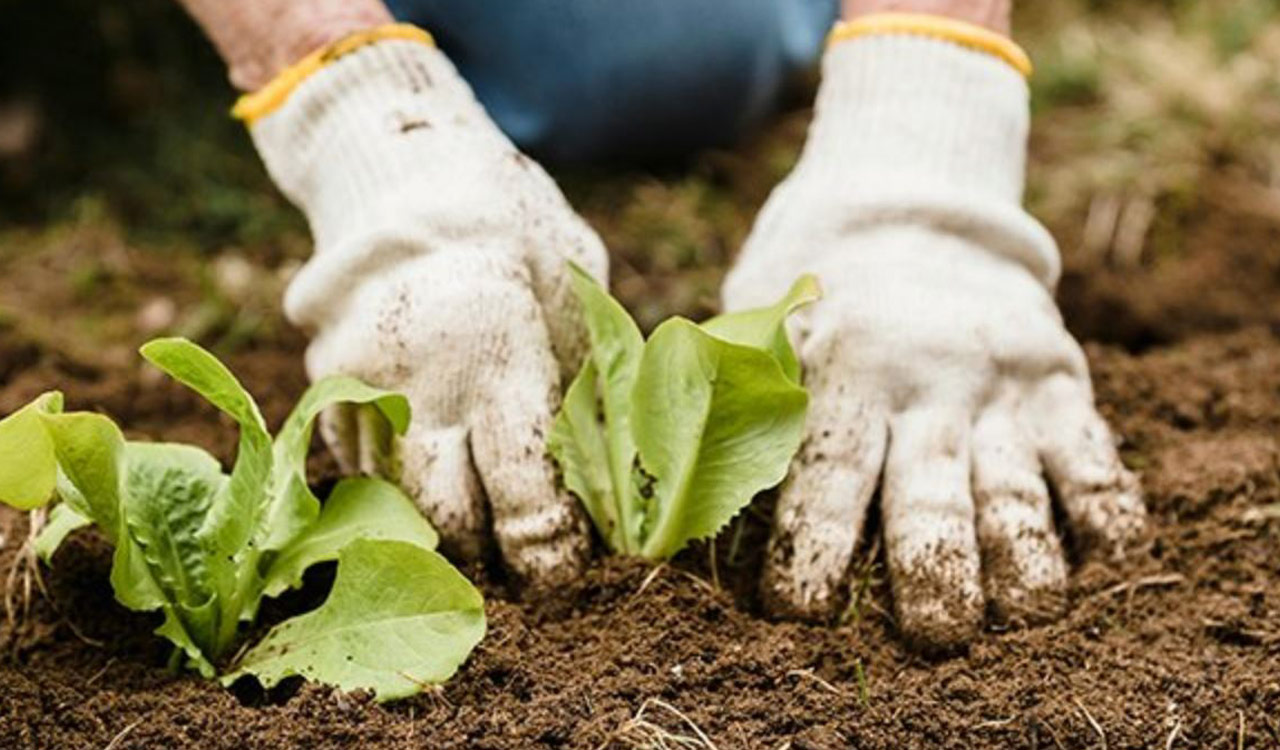
Farmers and agricultural experts have urged the Telangana government to strengthen support for vegetable cultivation as El Nino concerns grow. They warn that heavy dependence on imported vegetables, rising cultivation costs and inadequate infrastructure could lead to shortages and higher consumer prices
Published Date – 26 June 2026, 02:06 PM
Hyderabad: With concerns mounting over the impact of El Nino on the ongoing agricultural season, particularly vegetable cultivation, farmers and experts are questioning whether the Telangana government is extending adequate support to encourage large-scale vegetable farming and reduce the state’s dependence on imports.
Telangana continues to rely heavily on neighbouring states to meet its demand for several vegetables, including lady’s finger, green chillies, gourds, beans, capsicum, potatoes, colocasia, yam, onions and leafy vegetables.
The state imports vegetables worth nearly Rs 4,000 crore annually from Maharashtra, Karnataka, Tamil Nadu and a few northern states.
Farmers fear that if El Nino affects vegetable production in these supplying states as well, Telangana could face shortages, triggering a sharp increase in prices for consumers.
While acknowledging the need for crop diversification, farmers and agricultural experts argue that vegetable cultivation remains financially risky without stronger government support.
According to the Agriculture and Farmers Commission, the area under vegetable cultivation in Telangana has declined from 5.5 lakh acres to just 1.02 lakh acres. Government policies apart, this was mainly due to rapid urbanisation, conversion of farmland for real estate, high cultivation costs, labour shortages, low productivity and inadequate market linkages.
Pointing to successful policy interventions elsewhere, a senior Horticulture department official cited Punjab’s example. Despite being one of the country’s largest paddy producers, Punjab introduced additional incentives and input subsidies for farmers who shifted away from paddy cultivation to reduce groundwater depletion.
“Can Telangana adopt a similar policy to promote vegetable cultivation?” the official asked.
Farmers maintain that merely supplying quality seeds is insufficient.
“The input cost for paddy cultivation is around Rs 30,000 per acre, whereas vegetable cultivation requires Rs 45,000 to Rs 50,000 per acre, depending on the crop. Many farmers simply cannot afford such investments,” a member of the Telangana Farmers Federation said.
Unlike paddy, vegetable cultivation is labour-intensive and involves greater risks due to perishability, uncertain markets and volatile prices. Crop losses caused by monkeys, deer and wild boars further discourage farmers from taking up horticulture.
Many farmers have suggested that the government provide financial assistance for solar fencing to protect crops from wild animals.
“Installing solar fencing costs around Rs 35,000 per acre. How can a farmer bear both the cultivation cost of nearly Rs 50,000 per acre and an additional Rs 35,000 for fencing without substantial government support?” the Telangana Farmers Federation member asked.
Challenges flagged by farmers
* Low productivity.
* High cultivation costs due to labour-intensive operations such as weeding, harvesting, sorting and grading.
* Heavy post-harvest losses because vegetables are highly perishable.
* Inadequate market linkages.
* Frequent price fluctuations.
* Lack of cold storage and transportation infrastructure to move produce from farms to markets.
* Crop damage caused by monkeys, deer and wild boars.