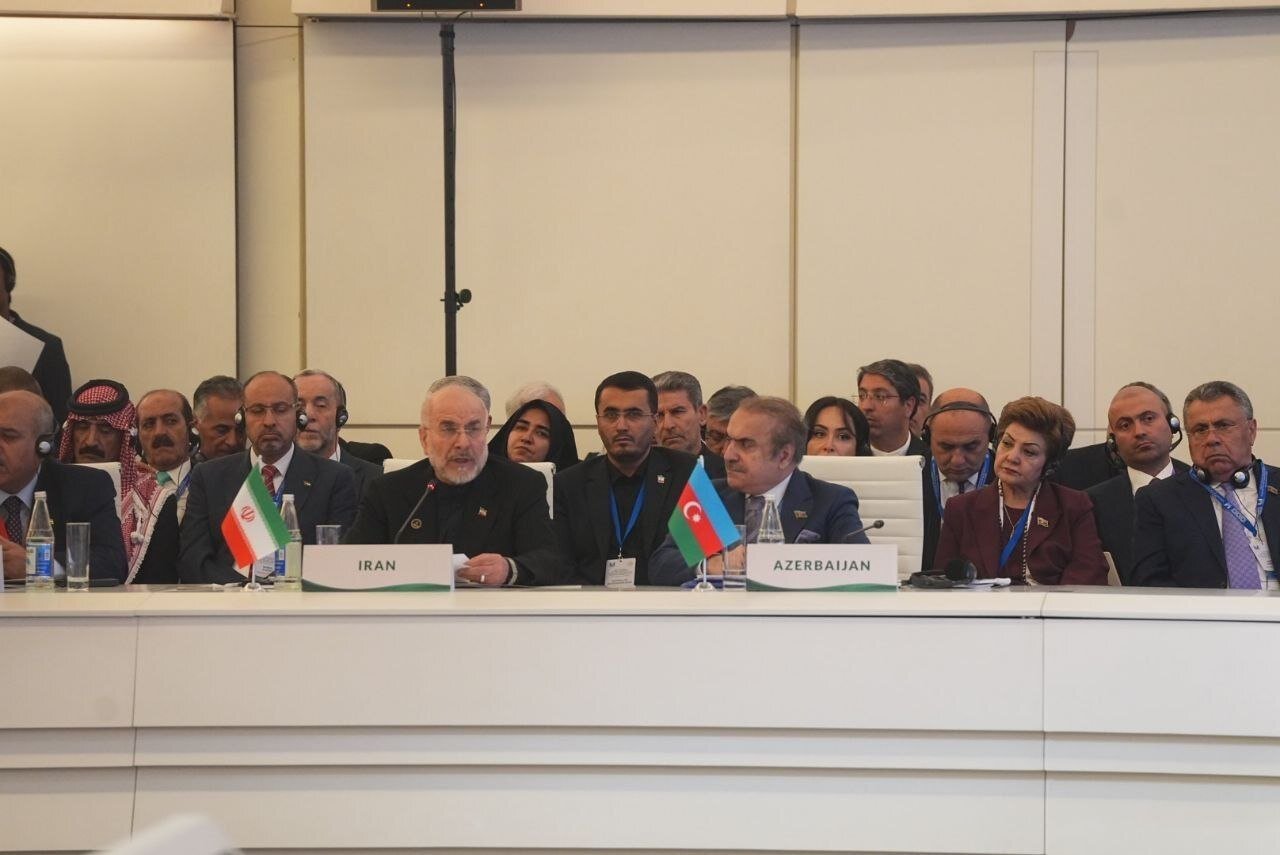
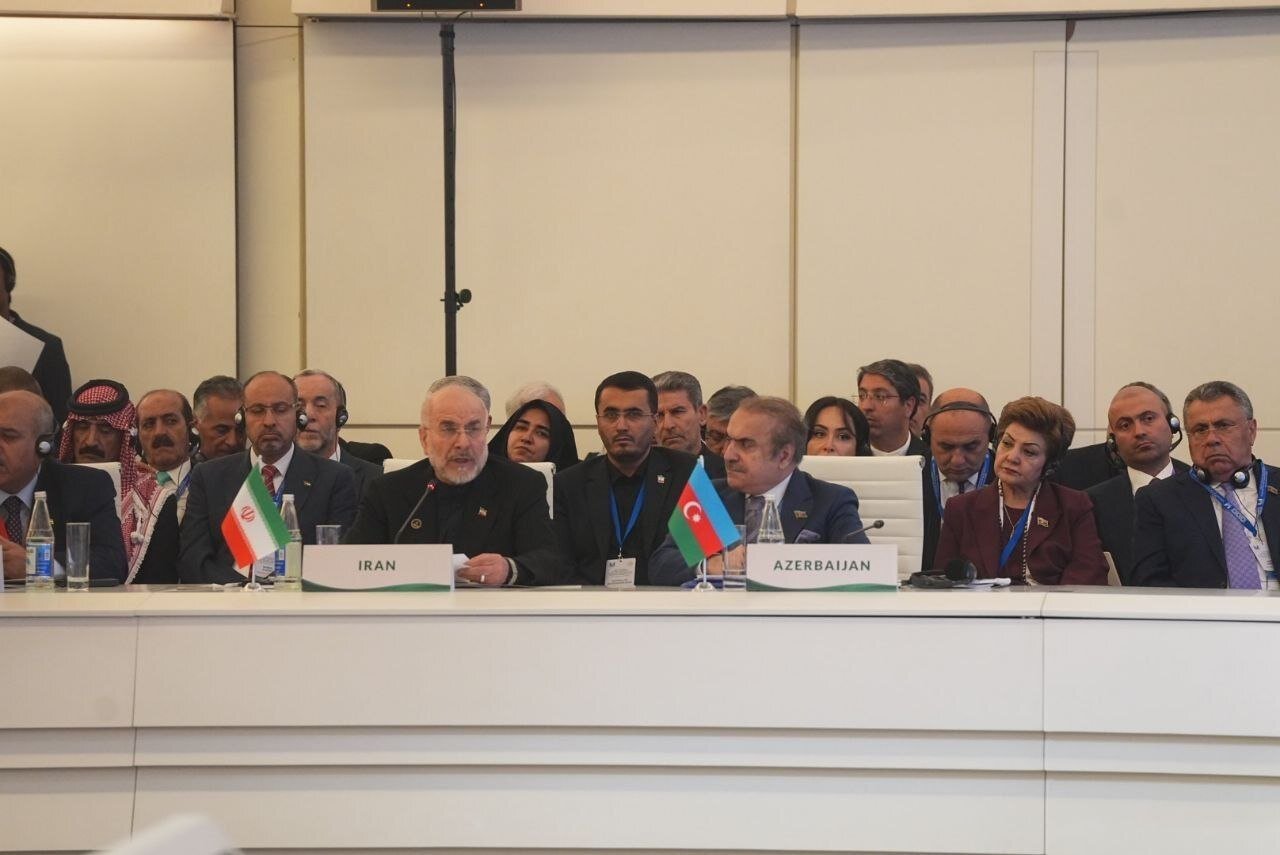
Addressing the 20th Conference of the Parliamentary Union of the OIC Member States (PUIC) in Baku, Azerbaijan, Ghalibaf said the agreement demonstrated that dialogue produces results only when the other side abandons attempts to impose its will on a civilized nation and accepts its rights.
“The Islamabad MoU was not the result of pressure and coercion, but rather the product of the resistance and strength of the brave Iranian nation, an understanding that showed dialogue reaches a result when the other side refrains from imposing its will on a civilized nation and accepts our rights. For this reason, the Islamabad memorandum turned into a declaration of US defeat,” he said.
Ghalibaf told delegates that the summit was taking place after a major act of aggression against the Islamic Republic.
“The 40-day imposed war by the United States and the Zionist regime against Iran was a criminal act,” he said.
According to the parliament speaker, the war resulted in the martyrdom of the Leader of the Islamic Revolution, Ayatollah Seyyed Ali Khamenei, a number of senior military and political officials, and more than 3,000 Iranian citizens, most of them women and children.
More than 30,000 people were injured and industrial, medical, educational, energy and transportation infrastructure, along with thousands of residential and service units, were targeted, he added.
Ghalibaf said the steadfastness of Iran’s Armed Forces and the resistance of the Iranian people had imposed heavy costs on the United States and “the fake Israeli regime.”
“This resistance, born of faith, caused the enemy to lose hope of achieving its objectives and forced it to surrender both on the battlefield and at the negotiating table,” he said.
He argued that the war was not merely a military confrontation but a coordinated effort to alter the region’s strategic balance and impose external will on an independent nation.
The planners of the aggression, he went on, believed military pressure, blockade, psychological operations and terrorist actions could force Iran to retreat and reshape regional equations in their favor.
“What happened was completely contrary to the calculations of the architects of the war. The Iranian nation showed that the era of imposing one’s will on independent nations has come to an end, and you witnessed how the world admired this perseverance and victory,” he said.
Ghalibaf also said that Iran sees the future of the region “not in confrontation, but in interaction; not in elimination, but in coexistence; not in imported security, but in indigenous and shared security.”
He said Iran is ready to expand cooperation with all Islamic countries on the basis of mutual respect, non-interference in internal affairs, good neighborliness and shared interests, and supports initiatives aimed at creating joint economic, trade, financial, scientific and collective security mechanisms.
The speaker also thanked the people and parliament of Azerbaijan and the PUIC secretariat for hosting the conference and facilitating dialogue among representatives of Muslim nations.
The 20th PUIC conference is being hosted by Azerbaijan under the theme “Promoting Sustainable and Inclusive Economic Development in OIC Member States through Parliamentary Cooperation.”
On the sidelines of the summit, Ghalibaf is also scheduled to hold meetings and talks with a number of parliamentary delegations and officials from Islamic countries.
MNA/IRNA