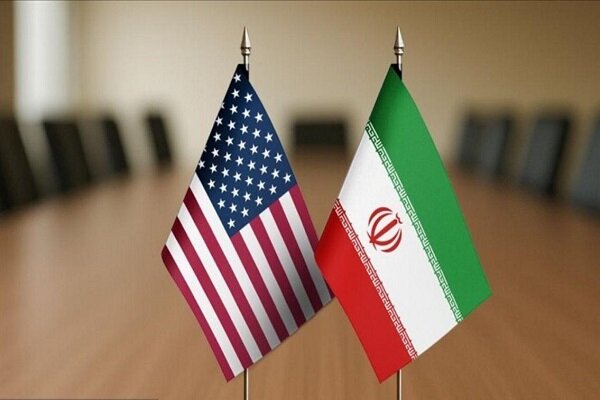
In an audio file detailing the 14-point draft agreement, Mohammadi stated that the Islamic Republic of Iran currently provides services in the Strait of Hormuz, including safety, navigation, and security services, for which fees are collected.
“The right to collect these fees belongs exclusively to Iran and Oman, and no other party has the authority to make decisions regarding them,” Mohammadi emphasized.
He went on to say that this this arrangement is already in place and will remain unchanged under any future agreement.
According to Mohammadi, the first article of the draft text stipulates that the current war must cease on all fronts, including Iran and Lebanon. Following that, the opposing side must commit not to initiate any new wars or military operations.
The United States would provide this commitment both on its own behalf and on behalf of Israel, he said, adding that once the agreement is signed, the other side will be obligated to end the war immediately.
This is an extraordinarily important achievement and a sign of the opposing side’s failure in the war, because they did not enter this conflict with the intention of ending it, he continued.
Mohammadi added that, for the first time in history, the Islamic Republic of Iran has compelled the United States to provide guarantees on behalf of Israel.
“Until now, the Americans have never accepted such an arrangement. The longstanding joint strategy of the United States and Israel has been for Washington to sign agreements while Israel remains outside them, preserving freedom of action. We have not allowed that in this text,” he stressed.
He further emphasized that Iran’s commitments would be reciprocal.
“If they do not fulfill their obligations, neither will we. The Strait will remain closed, we will not proceed to the next phase of negotiations, and if necessary, we will enter a war. They are fully aware of this,” he said.
Addressing the issue of the naval blockade, Mohammadi said that the lifting of maritime restrictions and the prevention of any interference with Iranian shipping must begin immediately upon signing the agreement. This process must, within 30 days, restore shipping activity to the level that existed before the blockade was imposed,” he said.
Mohammadi also referred to a proposed $300 billion development and reconstruction fund. The text uses the term ‘reconstruction,’ which means rebuilding damages caused by war, he said.
“Although the word ‘compensation’ is not explicitly mentioned, it is clear that when the other side speaks of reconstruction, it is referring to compensation for damages inflicted on Iran during the war.”
He further stated that, for the first time, the United States has committed in a final agreement to lifting primary sanctions as well.“Such a commitment has never existed before,” he said.
At the same time, Mohammadi noted that no comprehensive sanctions relief would occur until the second phase of negotiations is reached.
He also emphasized that the other side’s demands regarding Iran’s nuclear program are now limited solely to highly enriched nuclear material, with no discussion taking place regarding other aspects of Iran’s nuclear activities.
“There is a sentence in the text allowing discussions on other nuclear issues, but only if both parties agree,” he said.
“If the other side wishes to introduce a new issue, it must first obtain our agreement to discuss it. Clearly, the Islamic Republic will not accept every subject. Without mutual agreement, there will be no negotiations.”
Mohammadi added that even if a final agreement is reached, Iran’s obligations would be limited to a commitment not to build a nuclear weapon and to resolving the issue of its 60-percent enriched uranium stockpile through a formula proposed by Tehran.
In this context, dilution is being discussed,” he said. “When the material is diluted, it remains inside the country and, if necessary, can be restored to higher enrichment levels within a short period of time.”
He argued that under the memorandum of understanding, Iran would not undertake any immediate nuclear measures.
“Everything has been deferred to the future. First, we must see whether the other side lifts the blockade, releases our frozen assets, suspends oil sanctions, and ends the war in Lebanon. If these things happen, then we can think about the next stage,” he said.
Mohammadi also noted that the agreement requires US forces to withdraw from areas surrounding Iran within 30 days.
“Just imagine the significance of the United States putting in writing and signing a commitment to remove its forces from Iran’s vicinity. That achievement is beyond price,” he said.
Turning to sanctions, Mohammadi said the draft includes a US commitment to lift not only secondary sanctions but also primary sanctions in a final agreement.
He explained that previous agreements, including the 2015 nuclear deal, did not involve negotiations over many categories of sanctions. In contrast, the current draft discusses the removal of all sanctions.
At the same time, he noted that implementation of such measures would depend on reaching a final agreement regarding nuclear issues.
Mohammadi also referred to a provision requiring US forces to withdraw from areas surrounding Iran’s borders within 30 days.
He described this as one of the most significant elements of the draft, saying Washington has never before offered such a commitment in a comparable agreement.
According to Mohammadi, the provision reflects changing military and political realities influencing the negotiations.
Mohammadi further stated that one proposal under discussion would require the release of half of Iran’s frozen assets at the beginning of the agreement’s implementation.
He said Iran considers this one of the most important achievements of the first phase and remains committed to securing it.
MNA/FNA1781422796937165902