Diplomacy must match its ambitions with stronger institutions, energy resilience, and coalition-building to turn strategic autonomy into lasting global influence
Published Date – 23 May 2026, 12:18 AM
By Dr Shreya Upadhyay
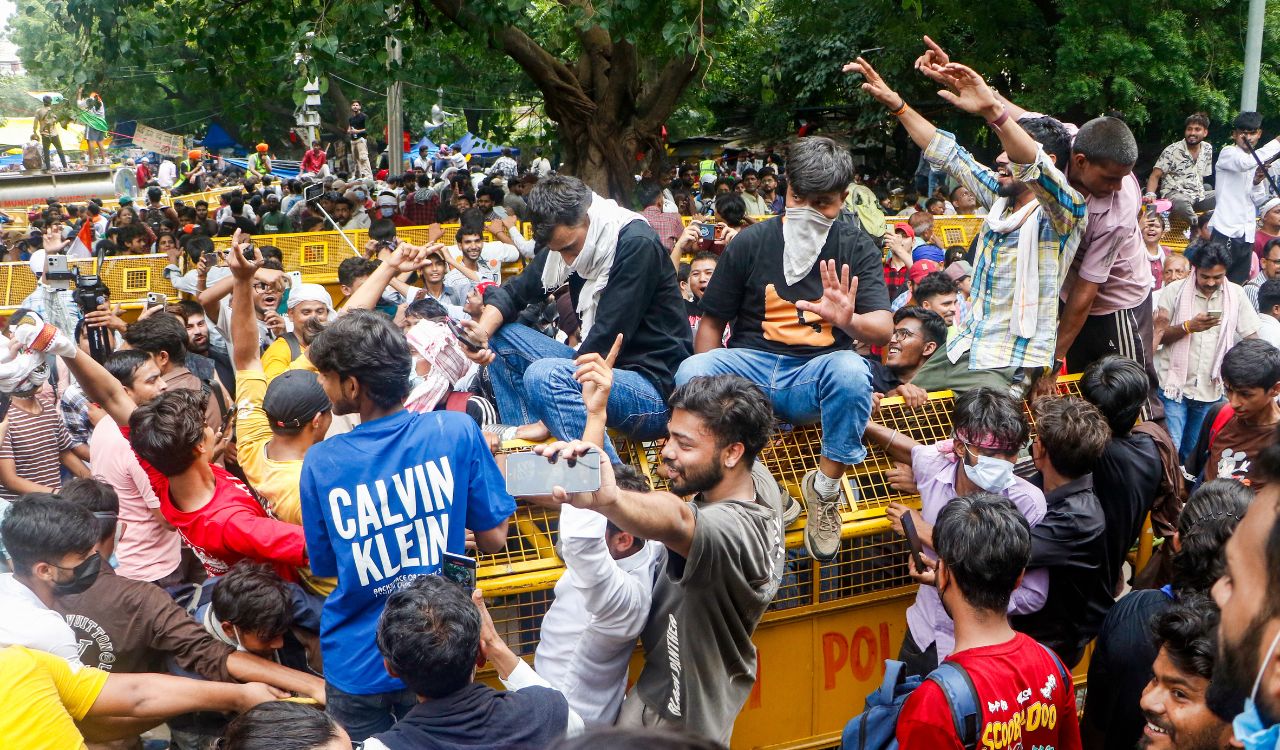
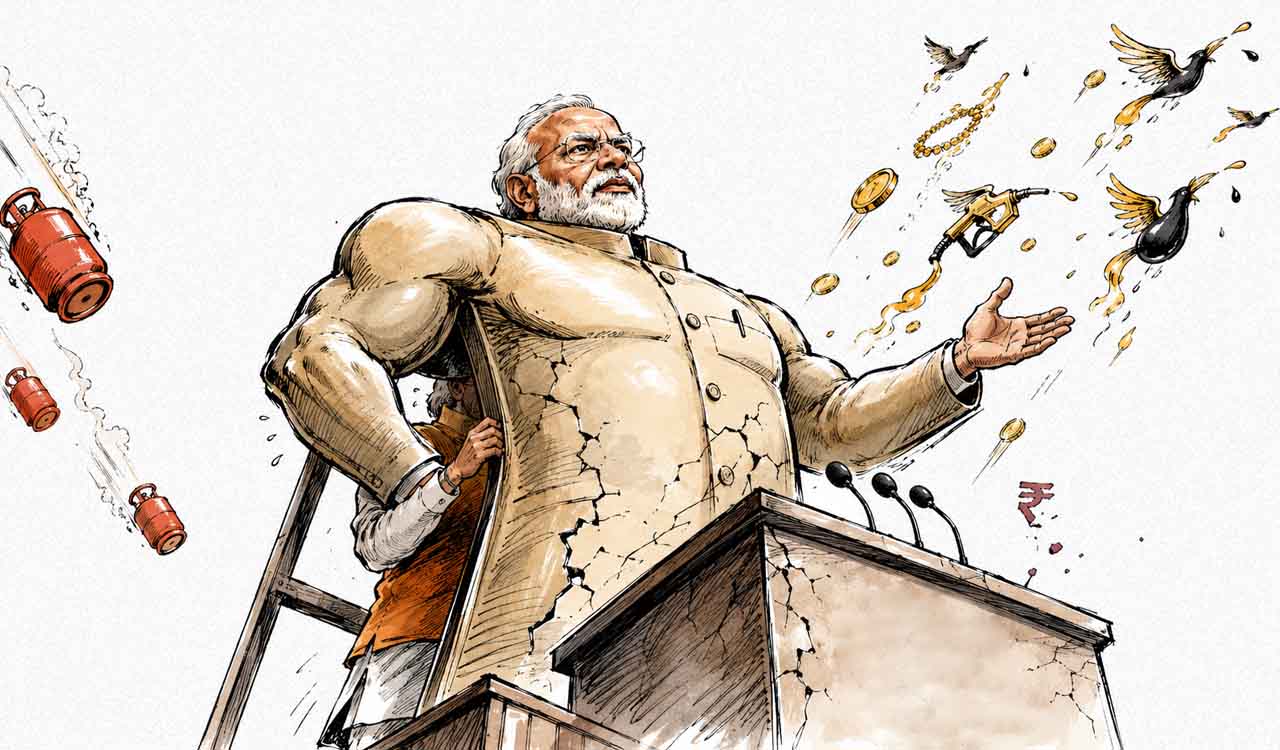
On May 11, 2026, Prime Minister Narendra Modi, speaking at a public event in Hyderabad, asked 1.4 billion Indians to carpool, work from home, and stop buying gold. The image is striking. Riding high on a historic electoral sweep in West Bengal after 46 years, a landslide victory in Assam, and continuing on the path of quietly increasing vote share in Kerala, the Prime Minister is in a position of rare domestic strength. He can now appeal to citizens to conserve cooking oil and cut back on foreign travel without the political cushioning. But this is a moment of exposure where foreign policy has a bearing on domestic economic realities.
Has India’s strategic ambiguity stopped being a diplomatic asset and quietly become a liability?
Diplomatic Asset
A recent US-based think tank’s report observed that India resists binding commitments that subordinate its autonomy. This worked for India for decades, allowing it to maintain relationships with Washington, Moscow, and Tehran simultaneously. This was an achievement that even big powers could not replicate. Strategic autonomy was seen as a reasonable stance for a pluralist democracy operating on its own terms. But now this is being tested by circumstances that do not wait for principled positions.
The Council on Foreign Relations report comes at a time when the world is facing several crises simultaneously. The Russia-Ukraine war has entered its fourth year, while the Israel-Gaza conflict has dragged into its third. In addition, 2026 has brought the US-Iran conflict, which has shut the Strait of Hormuz to global shipping.
For India, the consequences have been grave. The rupee has fallen to a record low of 95.63 against the US dollar. Brent crude has risen sharply, with India holding roughly 60 days of crude oil stock. Moody’s has slashed India’s growth forecast to 6 per cent.
Strategic autonomy was built for a more flexible world. In 2026, India is balancing ties with Moscow, Washington, and Tehran as geopolitical divisions deepen
Changing Geopolitics
Strategic autonomy was designed to work for a world with some room to breathe. The world in 2026 has very little. India is dependent on Moscow, Washington, and Tehran, all of which are currently standing at opposite ends of the geopolitical spectrum. India imports $134.7 billion of crude petroleum. Roughly 45 per cent of those come from the Strait of Hormuz.
When the supply shock hit, India secured Russian crude under the US waiver and negotiated direct transit rights from Tehran. Under Operation Sankalp, the Indian Navy evacuated India-flagged LPG and oil tankers. That was a quiet, effective diplomacy.
However, the American asterisk struck. India does not want to antagonise the US. And the US blockaded the Strait of Hormuz to arm-twist Iran. India realised that it was deeply reliant on a region it could not influence! New Delhi has been in strategic stress with the US since the April 2025 Pahalgam terror attack. India launched Operation Sindoor, demonstrating real military capability and political resolve.
However, US President Donald Trump repeatedly claimed the credit for the ceasefire between the two countries, much to India’s irritation. Pakistan, on the other hand, rather than being diplomatically isolated, expanded its regional footprint. It has been playing a role in US-Iran mediation efforts.
Binding Alliances
While India has deepened its security ties with the US over the last decade, it does not want to form binding alliances. Pakistan, on the other hand, has seen ups and downs in its relationship with Washington. However, over the last year, it has nominated Trump for the Nobel Peace Prize, joined his Board of Peace and launched a collaboration with his World Liberty Financial crypto platform.
India today aims to be an indispensable voice of the Global South. It has a strong government at the Centre with a clear domestic mandate, which positions it to take swifter, difficult decisions even at the international level. The current elections have provided that political security. However, how can the electoral strength be converted into international credibility?
The most important way is to attain sovereignty. Whether in data, defence or most urgently, energy. India needs to accelerate domestic energy alternatives at a speed that matches its strategic exposure. Energy security is the economic foundation of a nation. It needs to transition from a non-renewable export-oriented energy to making progress on solar power and ethanol blending. While a lot of developments are underway in this regard, India is still not in a position to absorb the oil shock without significant fiscal strain and a direct impact on citizens’ purchasing power.
Alongside this, it is imperative for India to invest heavily in building partnerships and coalitions that give strategic autonomy its substance and credibility. It requires India to lead visibly on Global South concerns, climate finance architecture, and multilateral reform.
India’s diplomacy needs to find its place. It arguably holds significant power but has not yet written the playbook on how to use that. The task ahead is to match capability with institutional depth, energy independence, and coalition-building that can transform India’s autonomy into lasting global influence.

(The author is Assistant Professor, Christ University, Bengaluru)