Despite expanding health insurance coverage, the government’s promise of a financial safety net is eroding due to spiralling medical costs and persistently low public health spending
Published Date – 24 April 2026, 11:00 PM
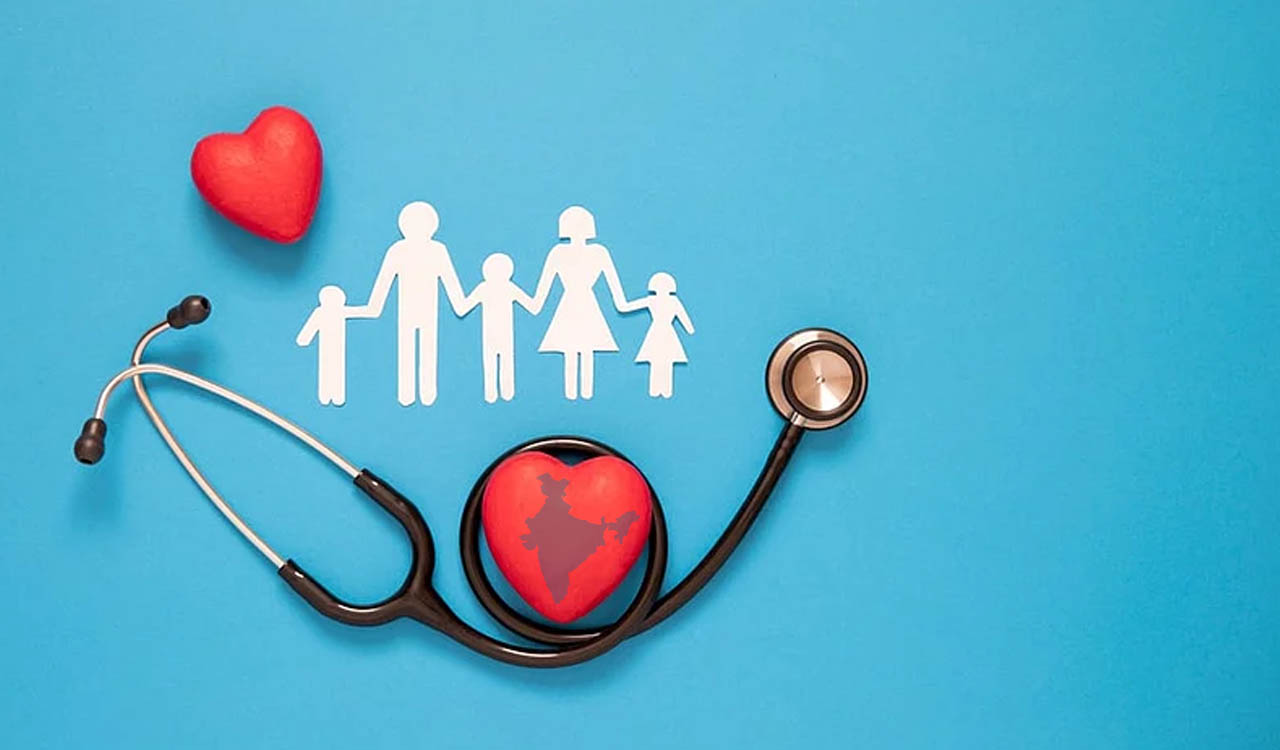
India’s health insurance sector is caught in a curious paradox: On the one hand, there has been a substantial expansion in insurance coverage over the last decade, while on the other, out-of-pocket medical expenses have soared to unsustainable levels. Nearly half the country’s population now has some form of health insurance, largely driven by government-sponsored schemes. However, hospital visits in India push nearly 5.5 crore people below the poverty line every year. Out-of-pocket expenses dominate costs and often cripple families financially. A recent survey by the Ministry of Statistics and Programme Implementation has highlighted the fault lines in current policies and the challenges before the authorities in formulating a transparent and less burdensome insurance policy framework. India’s expenditure on healthcare accounts for just over 1.17% of the GDP, one of the lowest in the world. Unless public expenditure on healthcare, particularly in semi-urban and rural areas, is increased significantly, ground realities will not change much. Medical costs are spiralling at rates that outpace both inflation and income growth. On the other hand, public health spending remains modest. As a result, out-of-pocket health expenditure dominates household spending. The survey revealed that an average out-of-pocket bill for each case of hospitalisation is over Rs 34,000, more than what the majority of the households in India can afford. Even as the insurance umbrella gets bigger, the economic burden of medical treatment continues to rise, often outpacing inflation.
Experts have warned that, though initially projected as a protective buffer, India’s health insurance system is now transforming into a profit-driven, stratified market. Despite growth in policies and capital, the original promise of a safety net is eroding due to spiralling medical costs and modest public health spending. Government-backed schemes have spurred the expansion of coverage, especially in villages, where it is now higher than in urban areas. However, for crores of families, falling ill still carries the risk of acute financial distress. A key factor is the growing dominance of private healthcare. More Indians are preferring private hospitals, where the costs are far above those in government-run institutions. With public healthcare’s share in hospitalisation declining, patients are increasingly pushed towards more expensive options, diluting the benefits of the insurance safety net. A situation has been created where access to quality healthcare depends on income, raising questions over the state’s role in universal health coverage. The lacunae in implementing flagship schemes such as Ayushman Bharat Yojana are complicating matters further. The survey holds a lesson that insurance coverage alone is not enough. India must strengthen its public healthcare infrastructure, regulate expenses in the private sector and ensure timely payments under government schemes. Without these reforms, the expansion of insurance will just be a statistical achievement rather than a meaningful safeguard.