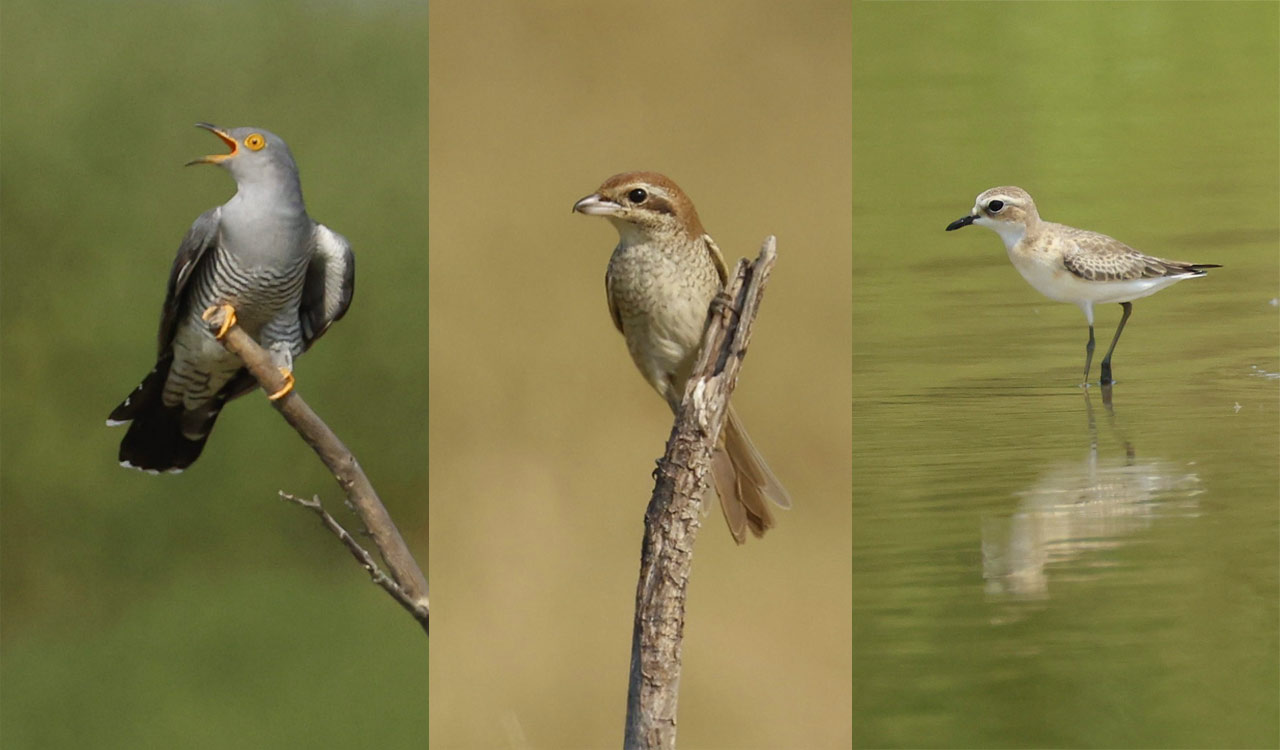
The declining water level at Singur reservoir in Telangana has drawn winter migratory birds, including flamingos, back to the area. A four-member birdwatching team recorded 23 migratory species in one day, while eBird lists 221 species at the reservoir.
Updated On – 11 October 2026, 12:30 PM
Brown Shrike(C)
Tibetan Sand Plover
(R)
Sangareddy: As the says goes “every dark cloud has a silver lining”, the depleting Singur reservoir, which hardly had 3.8 TMCft of water against its full capacity 29.91 TMCft now, had started attracting the winter migratory birds.
The drying up of the Singur project, which pushed the farming community in its ayacut area into trouble had attracted many avian species after many years.
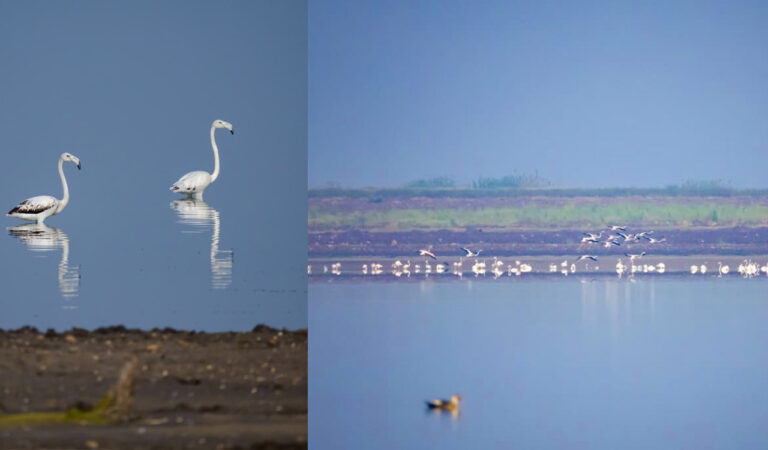
Greater Flamingos
Since most of these migratory birds would love to search for food in shallow waters, the birds, particulalry, the beautiful Flamingos, which had stayed away from these parts of Telangana for the last few years, had returned to Singur project. Not only Flamingos, a bird watching team comprising Sriram Reddy, Gopalakrishna R, Keshava Srinivasan and Pannaga Sri G have recorded 23 species of migratory birds on a single day during their visit to Singur on Saturday. The four member team had recorded a total of 99 bird species including 66 native birds.
According to data uploaded on eBird, a global online bird observation platform, the bird watchers have recorded a total of 221 bird species at Singur reservoir until now in which 68 were migratory birds. However, the winter migratory birds had shunned the project for a few years since it remained full for last few years.
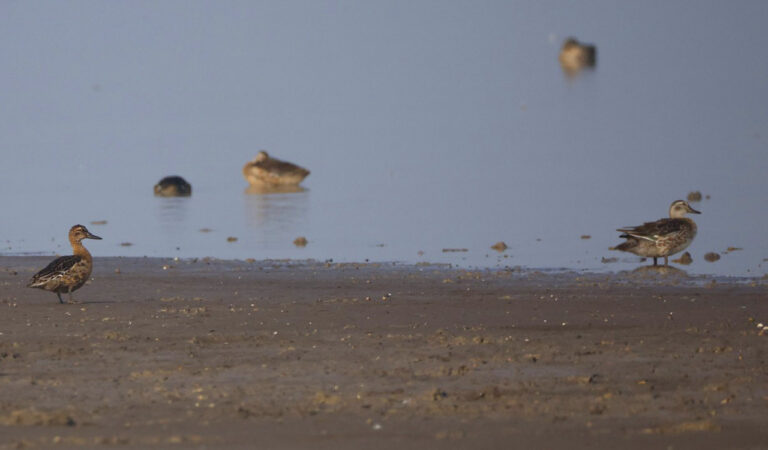
Garganeys
As most of the water bodies in these parts of Telangana remained full during the winter owing to abundant rains, the avians preferred to visit to other parts of the India until last year. Surely, the multipurpose project would attract scores of birdwacthers during the winter season as they would be eager to capture the beautiful migratory birds.
Speaking to ‘Telangana Today’, Sriram Reddy said that these birds would prefer to wade through shallow waters since the water would have abundant weeds, alage and small prey that moves underneath the weeds at bottom of water body.