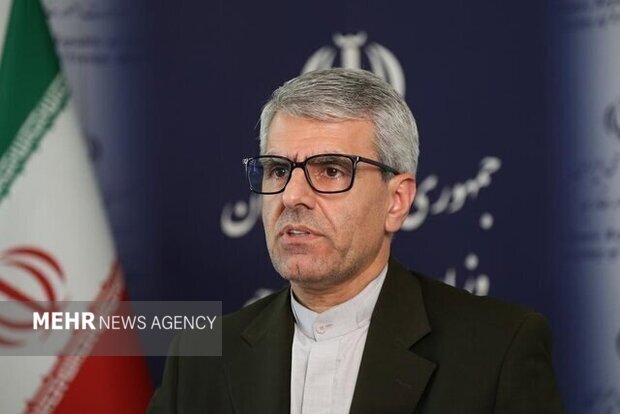
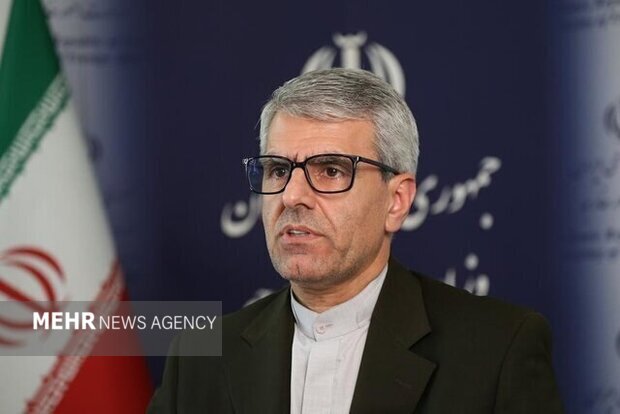
Esmail Baghaei said that discussions between Iran and Oman, as the two coastal states of the Strait of Hormuz, have been ongoing over the past two months, with technical, legal, security and environmental aspects of the issue being examined by relevant Iranian authorities.
He described the negotiations as “professional and forward-moving,” saying that the geographical coordinates of the proposed route had been agreed upon by both sides. Baghaei added that if third parties do not obstruct the process, the joint statement between Iran and Oman, containing the main points and considerations agreed upon by the two sides, will be finalized.
The Iranian Foreign Ministry spokesman also stressed that the Iran-Oman understanding alone does not mean that full security has been established for vessels passing through the Strait of Hormuz, arguing that factors contributing to insecurity in the waterway remain in place.
Baghaei said the closure of the Strait of Hormuz was a result of the military attacks by the United States and Israel against Iran and the security consequences that followed. He added that what Iran describes as a naval blockade and other threatening actions against Iran and its interests continue to pose security concerns.
Elsewhere in his remarks, the spokesman said there is currently no plan for Iran’s foreign minister or parliament speaker to travel to Pakistan or Qatar at the end of this week. He added that Islamabad and Doha are continuing their efforts to reduce tensions and that Iran remains in contact and consultation with both countries.
MNA