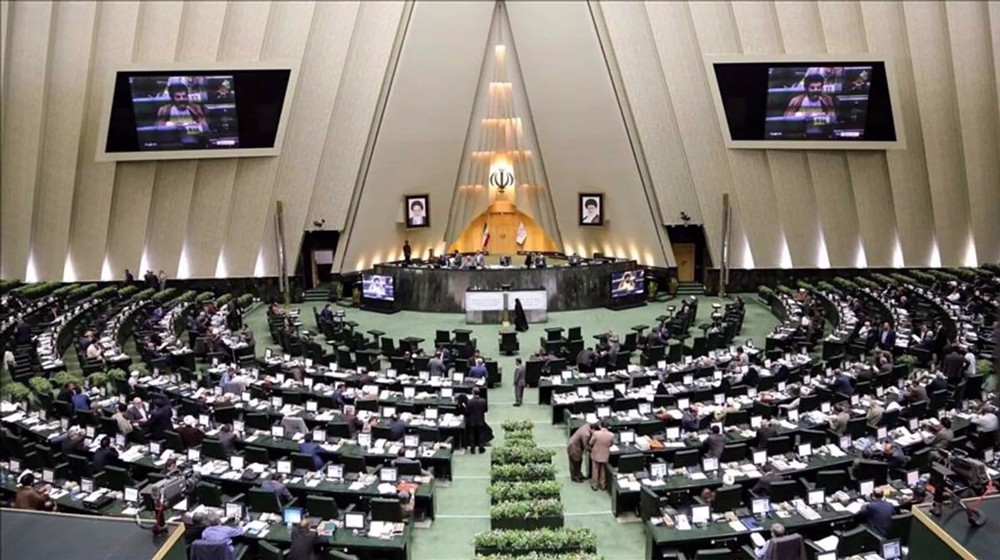
Nearly 180 Iranian lawmakers have issued a statement declaring the Islamabad Memorandum of Understanding (MoU) with the United States effectively terminated, vowing to pursue revenge for the martyred Leader of the Islamic Revolution and demanding a parliamentary committee to oversee the collapse of the agreement.
The statement, signed by approximately 180 members of parliament, comes after a week of escalating US military strikes on Iranian territory and President Donald Trump’s declaration that the ceasefire is “over”.
“We pledge in the parliamentary trench not to neglect for a moment the efforts, planning and practical measures in the path of blood revenge,” the statement read, according to Iranian media reports.
The lawmakers called on the parliamentary presidium to immediately form a special committee to review the negotiations and agreements and to monitor the implementation of the conditions set by Leader Ayatollah Seyyed Mojtaba Khamenei.
The statement also called for the formation of a special committee to review the negotiations and agreements and to monitor the implementation of the conditions set by the Leader.
The lawmakers also vowed to prioritize legislation to enhance the defense doctrine and approve a law governing the management and governance of the Strait of Hormuz, signaling Tehran’s determination to maintain control over the strategic waterway.
US violations and Trump’s declaration
The parliamentary move follows multiple US violations of the 14-point MoU signed on June 17.
On July 7, Washington revoked a license authorizing Iranian oil sales and launched airstrikes targeting Iranian military positions after attacks on commercial ships in the Strait of Hormuz.
The US Central Command said it had struck more than 80 Iranian targets, including over 60 small boats of the Islamic Revolution Guards Corps (IRGC).
Iranian Foreign Minister Abbas Araghchi accused the US of a “flagrant violation” of the MoU, stating that the strikes, reinstatement of oil sanctions, and Israel’s ongoing war on Lebanon had rendered “important and fundamental parts of the understanding on the cessation of the war ineffective”.
Speaking at the NATO summit in Ankara on Wednesday, Trump declared the ceasefire “over”.
“I don’t want to deal with them anymore,” Trump said. “As far as I’m concerned, it’s over”.
In response to the US strikes, Iran’s IRGC Navy and Aerospace Force launched attacks on 85 US military facilities in Bahrain and Kuwait. Iranian officials have warned that any country allowing its territory to be used for attacks on Iran could become a legitimate target.
Iranian Parliamentary Speaker Mohammad Baqer Qalibaf, who serves as Tehran’s chief negotiator, has accused the US of “major” violations, including “violating Iranian adjustments in the Strait,” persistent threats of further strikes, reinstating oil sanctions, and continued Israeli aggression on Lebanon.
“The era of bullying and extortion is over,” Qalibaf said, warning that attempts at blackmailing Iran would go nowhere.
The Islamabad Memorandum of Understanding was signed in June after months of Pakistani-mediated diplomacy, following the 40-day US-Israeli war of aggression against Iran that began on February 28.
The 14-point agreement committed both sides to ending military operations “on all fronts” and provided for the suspension of wartime restrictions placed by Iran on the Strait of Hormuz, the lifting of the US naval blockade, and the release of frozen Iranian assets.
However, the US has repeatedly violated the agreement, including through military strikes, the revocation of oil sale licenses, and continued Israeli attacks against Lebanon.
Iran’s Foreign Ministry spokesman Esmaeil Baghaei declared on Monday that the MoU had entered a crisis, accusing Washington of “systematically dismantling” the agreement.
Iranian officials have stated that the United States failed to allow the 30-day implementation period for Article Five of the MoU, which concerns the management of the Strait of Hormuz, to run its course.
Baghaei said Iran would no longer fulfill its obligations unless Washington returned to a policy of reciprocal compliance.