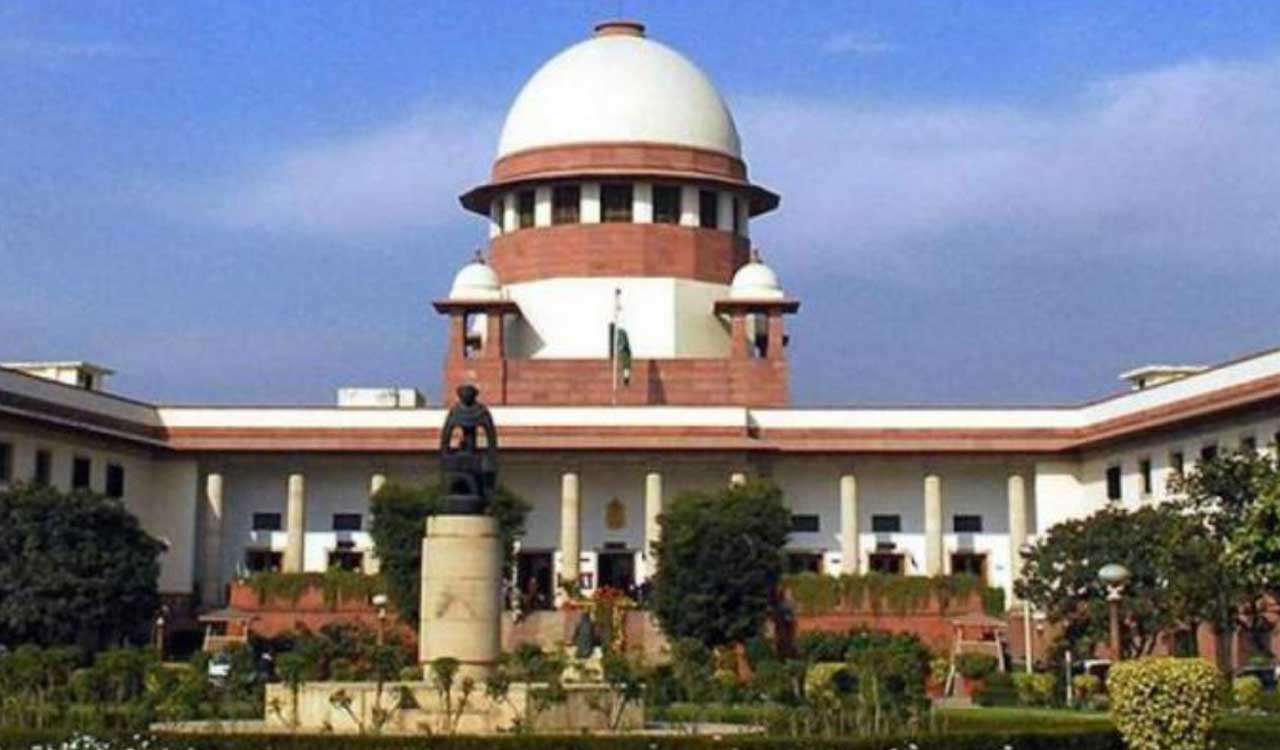
The Supreme Court of India dismissed lawyer Nilesh Ojha’s plea against contempt proceedings over allegations against a judge in the Disha Salian case. It stressed judicial integrity, warning that reckless public accusations undermine public trust in the justice system
Published Date – 20 April 2026, 07:45 PM
New Delhi: Observing that holding a press conference and publicly voicing allegations against a judge cannot be viewed lightly, the Supreme Court on Monday dismissed lawyer Nilesh Ojha’s plea challenging the contempt proceedings initiated against him by the Bombay High Court for his “scandalous and defamatory” remarks targeting a judge during a press briefing on the Disha Salian death case.
Salian, the former manager of actor Sushant Singh Rajput, was found dead in June 2020. Salian’s father had moved the high court, seeking a fresh probe into the mysterious circumstances under which his daughter was found dead. At the press conference on April 1, Ojha, Salian’s lawyer, levelled allegations of corruption against the high court judge before whom the plea was listed for hearing.
A top-court bench of Justices Vikram Nath and Sandeep Mehta said any attempt to scandalise or sensationalise judicial proceedings undermines the very foundation of the institution, while upholding the high court order that initiated suo-motu (on its own) contempt proceedings against Ojha. “We are, therefore, not inclined to interdict the proceedings at this stage. We request the high court to proceed with the matter expeditiously and to adjudicate upon all issues arising therein independently and on their own merits,” the bench said.
The top court said judicial independence forms a foundational and non-derogable feature of the constitutional scheme.
“It ensures that courts are able to discharge their adjudicatory functions free from external influence, fear, favour or pressure, thereby safeguarding the rule of law and securing the effective dispensation of justice.
“The strength and legitimacy of the judiciary lie not in any capacity to command or compel, but in the confidence of the people in its integrity, neutrality and institutional independence,” the bench said. The apex court said any unfounded or intemperate allegations impugning the integrity, motives or impartiality of the judiciary, whether directed against the institution or an individual judge, assume serious significance.
“Such imputations, when made without substantiated basis and in a manner calculated to erode public faith, have the potential to diminish the credibility of the justice-delivery system. While fair, reasoned and bona-fide criticism of judicial decisions remains a legitimate facet of democratic discourse, reckless aspersions strike at the very foundation of judicial independence by undermining the trust upon which the authority of the judiciary ultimately rests,” the bench said.
Observing that a litigant aggrieved by a judicial order is undoubtedly entitled to question its correctness before a higher forum, the top court said the legitimacy of such a challenge rests upon a civilised and temperate criticism of the judicial determination and not upon insinuations directed at the integrity or neutrality of the judge.
“A clear distinction must be maintained between assailing the correctness of a judicial decision and personalising the grievance by attributing motives to the judge concerned,” it said.
The apex court said the appellant-contemnor, being a member of the Bar and an officer of the court, was under a heightened obligation to conduct himself in a manner befitting the dignity of the legal profession and the institutional sanctity of the judicial process.
“Members of the Bar occupy a position of privilege and responsibility in the administration of justice, and their conduct, both within and outside the courtroom, must reflect restraint, sobriety and fidelity to the ethical standards governing the profession.
“In this backdrop, the course adopted by the appellant-contemnor in addressing a press conference and publicly voicing allegations against a sitting judge cannot be viewed lightly. The act of carrying a pending judicial controversy into the public domain in a manner that tends to sensationalise the proceedings or scandalise the institution or its constitutional component, i.e., the judges, is wholly inconsistent with the discipline expected of an advocate,” the bench said.
It said professional ethics require that grievances against judicial orders must be ventilated through established legal remedies before appropriate judicial forums, rather than through public commentary capable of influencing the perception about the fairness or integrity of the judicial process.
“The manner in which the press conference was convened and the allegations were projected is, prima facie, unbecoming of a member of the legal profession and falls short of the standards of propriety, restraint, professional and ethical responsibility which the legal profession demands.
“An advocate, more than any other stakeholder in the justice-delivery system, bears a heightened duty to uphold the dignity of the institution and to act with circumspection in matters touching upon the administration of justice,” the bench said.
It said assertions of this nature, particularly when directed against a high court judge, require a degree of responsibility and substantiation commensurate with their seriousness.
“The tenor and sweep of the allegations, therefore, raise concerns that go beyond the immediate lis between the parties. In our considered view, allegations of this character, if left unchecked, possess an inherent tendency to erode public confidence in the administration of justice,” the bench said.