He described the current phase as a pivotal one in Washington’s economic campaign against Iran.
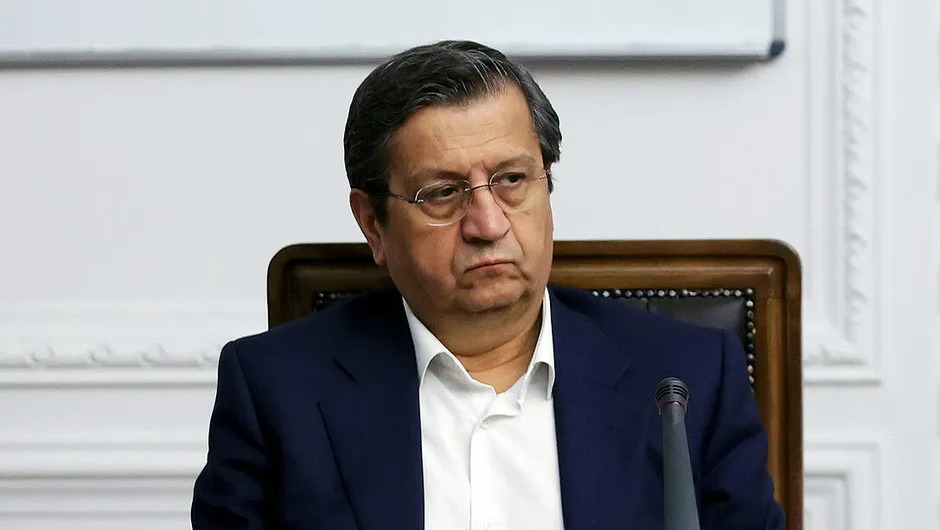
Iran’s Central Bank Governor Abdolnaser Hemmati. (File photo)
Central Bank of Iran Governor Abdolnaser Hemmati says the bank will keep up its targeted interventions to steady the currency market, days after Washington sanctioned Iran’s currency and gold exchange and US-linked outlets amplified claims about targeting Iran’s network of “shadow banking.”
In remarks on Thursday, Hemmati said the free-market rate came under pressure after the US Treasury announced sanctions on the Iran Currency and Gold Exchange Centre, alongside a media campaign by outlets affiliated with the United States and Israel and a sudden jump in the price of Tether on unlicensed crypto exchanges.
“Over the past two months, despite the existing pressures, the currency market enjoyed relative stability thanks to the central bank’s measures and its transparent and targeted interventions,” Hemmati said.
He described the current phase as a pivotal one in Washington’s economic campaign against Iran.
“America’s economic war against Iran has reached a sensitive stage in recent days,” he said. “Unlike a military war, this war is silent, but its aim is to disrupt currency stability and deepen inflation, and it is being pursued using the full range of sanctions, psychological and propaganda tools.”
Hemmati said the central bank was fully aware of the difficult economic and livelihood conditions facing Iranians, and that it had deployed all available means to contain market volatility.
“Our targeted currency interventions will continue with strength, as they did over the past two months, with the aim of preserving market stability,” he said.
The latest pressure comes as part of a broader economic campaign that US President Donald Trump revived after returning to office, built on sanctions designations, secondary penalties on banks and shipping companies dealing with Iran, and, since April, a naval blockade of Iranian ports that US Central Command has described as having cut off commercial traffic by sea.
US Treasury Secretary Scott Bessent has become the most visible face of that campaign, making a series of controversial predictions about Iranian economic collapse.
In a late-October interview with the anti-Iran outlet Iran International, he urged Iranian citizens directly to stop paying their taxes and to stock up on heating fuel and gasoline ahead of what he said would be a shortage.
In late September, he said Iran would have no oil “left to trade for anything” within two weeks, a deadline that passed without the prediction materializing, as Iranian crude exports continued to flow to the market.
Washington has paired its sanctions with what Iranian officials describe as psychological operations: designations on financial infrastructure, leaks and briefings to media about Iranian banking and oil networks, and pressure on third-country banks and exchanges to cut ties with Tehran.
Iranian officials have consistently rejected the legality of unilateral US sanctions and argue that the measures, rather than collapsing the economy, have accelerated domestic production, alternative trade corridors and self-sufficiency in fuel, petrochemicals and power generation.
The central bank has pointed to continued export flows, restored gas and refining capacity and relative currency stability as evidence that the campaign has not achieved its stated objectives.