
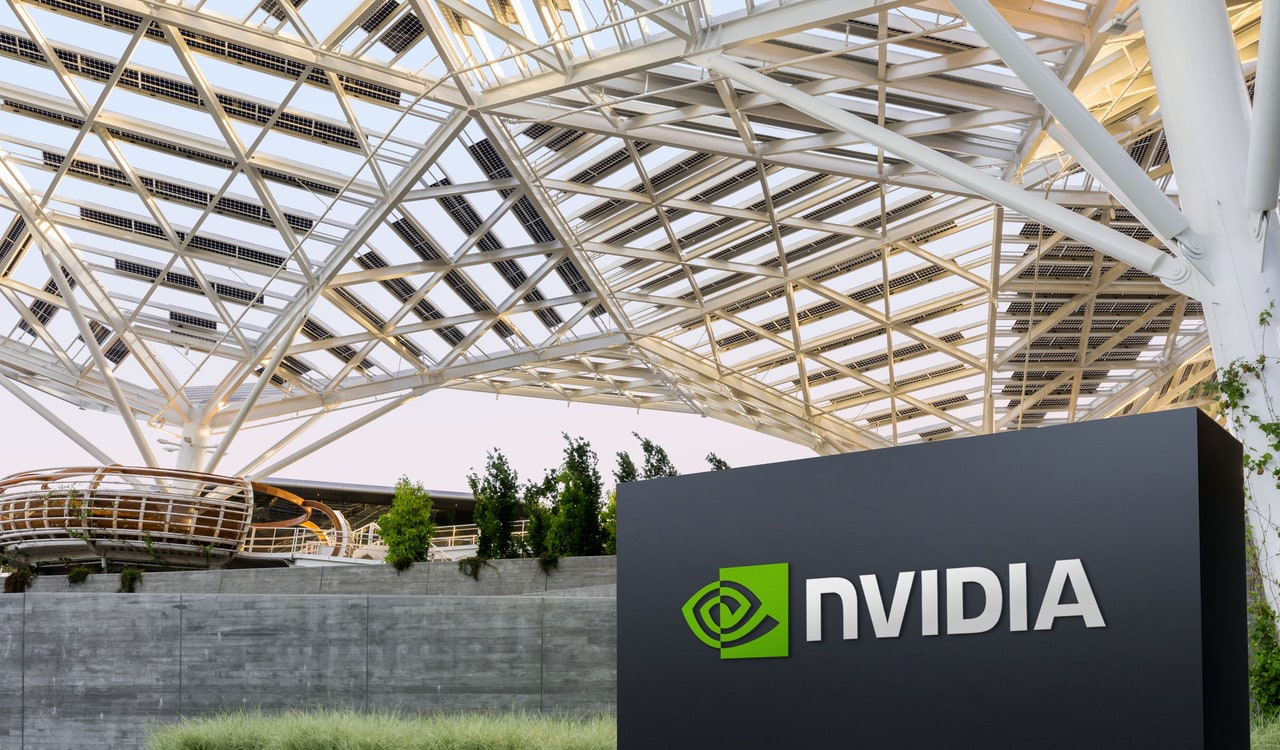
Nvidia’s GPUs became central to generative AI through CUDA software, AlexNet’s breakthrough and transformer-model growth, enabling large-scale calculations for chatbots and image generators while facing competition and supply pressures.
Updated On – 29 November 2026, 11:13 AM
Georgia: Nvidia’s graphics processing units (GPUs), once add-on cards for video games and video rendering, now power major advances in generative artificial intelligence (AI), according to an analysis published by The Conversation.
The analysis said the commotion surrounding Nvidia Chief Executive Officer Jensen Huang’s ouster and reinstatement, the company’s central role in the U.S.-China AI competition, and the U.S. economy’s reliance on the AI boom have raised questions about what makes Nvidia’s chips significant.
The answer lies in GPUs and how they have evolved from supporting computers’ main chips, called central processing units (CPUs). GPUs can now handle the vast mathematical calculations required for generative AI.
The analysis, written by a researcher of high-performance computing and computer processors, identified three factors behind the importance of GPUs and Nvidia’s dominance as a supplier: software that made GPUs useful beyond graphics, a research breakthrough that showed their potential for AI, and a global commercial and political race to build larger AI models.
GPUs versus CPUs
A CPU is designed to handle a wide range of complex tasks quickly, a few at a time. A GPU, in contrast, generally handles simpler mathematical tasks, such as multiplying two sets of numbers, but can perform many such operations simultaneously.
This design is suited to AI. Training a neural network, the type of AI model used in chatbots and image generators, mainly involves repeatedly multiplying enormous grids of numbers. The analysis said leading AI GPUs can perform more than a quadrillion, or 1,000 trillion, such operations every second.
From graphics to AI data centres
Early GPUs could only draw graphics. Programmers controlled them through small programmes called shaders, which calculate details such as the colour of each pixel and can be repeated across millions of pixels in parallel. Nvidia dominated the graphics-chip market in the late 1990s and 2000s.
In the early 2000s, Stanford University researchers developed software tools that enabled programmers to use GPUs for other calculations. The work formed the basis for Nvidia’s Compute Unified Device Architecture (CUDA), released in 2007. CUDA enabled scientists and engineers to run scientific and general-purpose programmes using the GPU’s parallel execution model.
The second major shift came when AlexNet, a neural network model developed and trained on GPUs, won the 2012 ImageNet challenge, an annual competition to identify objects in photographs with the greatest accuracy. AlexNet was trained on two Nvidia GPUs and made far fewer mistakes than any competitor, according to the analysis.
The result showed that GPUs made it practical to train neural networks large enough to outperform older techniques, leading AI researchers to adopt them. Nvidia was positioned to benefit because it had spent years developing CUDA and related software.
Competitors including Advanced Micro Devices (AMD), which also makes GPUs, and Google, which designs its own AI chips called tensor processing units, have since developed alternatives.
Nvidia and other chipmakers began redesigning GPUs for AI by adding hardware specialised for the matrix-multiplication calculations used by neural networks, using reduced-precision numbers to speed up neural-network training, and increasing fast-memory capacity to keep the chips supplied with data for AI workloads.
AI expands
In 2017, Google researchers introduced the transformer, a neural-network design initially built to translate between languages. The analysis said transformers performed remarkably well as model and dataset sizes grew, making the design the basis for current chatbots and many other generative AI systems.
The growth of transformer models has contributed to the generative AI boom involving U.S.-based companies OpenAI, Anthropic, Meta, Google and xAI, along with Chinese companies DeepSeek, Alibaba and Baidu. The analysis said these companies are focused on building large data centres with high-end GPUs to train next-generation foundation models.
Foundation models, including Google’s Gemini, Anthropic’s Claude Fable and OpenAI’s GPT Astra, are large neural networks that can reason, write software code and analyse information in response to plain-language instructions. Companies training foundation models are betting that the best models will automate much of the world’s information work and generate substantial economic returns, the analysis said.
AI competition
Nvidia trains some AI models, but most of its profit comes from selling chips and software used by other companies to build theirs. The AI boom has led to record profits for Nvidia, according to the analysis, while also drawing attention from the U.S. government over the extent of restrictions on advanced-chip sales to China.
The analysis said the Trump administration tightened export controls on advanced GPUs in the immediate aftermath of the scandal involving Huang’s relationship with an alleged Chinese spy.
Demand for AI chips is likely to continue rising as leading AI companies compete to build more capable models, though the boom faces limits, the analysis said. AI data centres require large amounts of electricity, raising concerns over power costs and environmental impacts on local communities.
The most advanced AI chips, including Nvidia’s, are fabricated largely by Taiwan Semiconductor Manufacturing Co. (TSMC), according to the analysis. Demand for AI hardware has also strained supplies of memory chips, resulting in shortages affecting gaming graphics cards and smartphones.
Nvidia also faces competition from AMD, cloud companies designing their own chips, and startups that promise to run AI more cheaply and with less power. Whether Nvidia’s software and hardware advantages can hold off these challengers remains one of the industry’s major questions, the analysis said.