
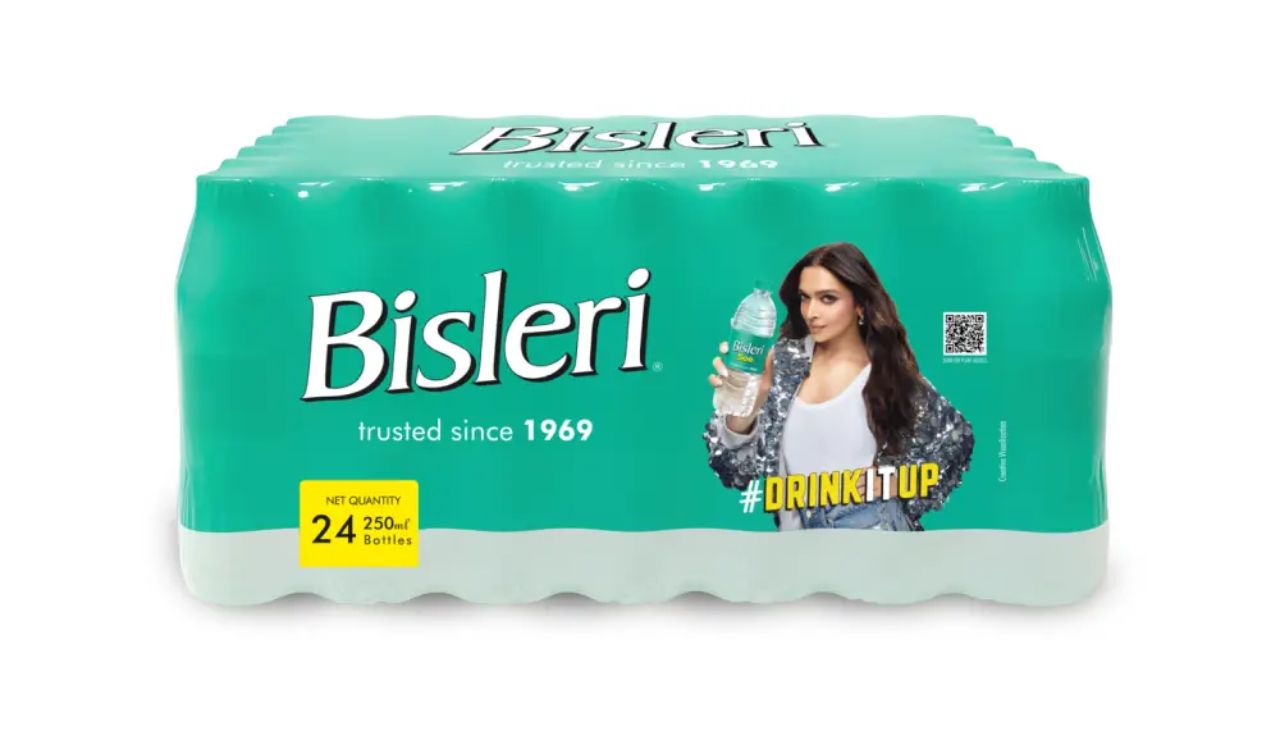
Bisleri International said the FSSAI prohibited the sale of only one batch of packaged drinking water manufactured at its Goa plant, with no stocks remaining in the market. The company also disputed laboratory findings and cited subsequent testing results
Published Date – 24 November 2026, 06:18 PM
New Delhi: Leading packaged drinking water maker Bisleri International on Tuesday said the FSSAI had prohibited the sale of only one batch of packaged drinking water manufactured at its Goa plant and that no stock from that batch was currently available in the market.
The FSSAI had not suspended operations at the Goa plant, Bisleri said, adding that subsequent samples from the facility met all quality standards.
“Bisleri produces more than 50,000 batches annually. The FSSAI’s sale prohibition applies only to one batch, GO 270, manufactured in Goa on September 27, 2025. There are currently no stocks of this batch in the market,” the company, promoted by the Chauhan family, said in a statement.
It further said the FSSAI had categorically clarified on November 23, 2026, that bromate levels were found to be below the permissible limit when the sample from the batch was retested.
On Sunday, the Food Safety and Standards Authority of India (FSSAI) had said it had sanctioned prosecution against Bisleri International after a sample of its packaged drinking water failed a laboratory test following the detection of bromate beyond permissible limits and, during subsequent testing, polynuclear aromatic hydrocarbons (PAHs).
Bisleri has questioned the laboratory findings, citing discrepancies between the test results, and said it had not received any formal notice of the reported regulatory action.
Later, in a statement, the FSSAI clarified that, under the law, the report of the referral laboratory should be considered final in the event of an appeal by food business operators (FBOs).
“The order prohibiting the sale was issued to Bisleri International for Batch No. GO 270. Only one batch was found to be non-compliant. The FBO (Bisleri) has been asked to conduct a root cause analysis,” the regulator said.
The FSSAI has stepped up its nationwide enforcement drive in the packaged drinking water sector, collecting samples of major brands and inspecting manufacturing facilities to assess compliance with prescribed food safety standards, according to sources.
The regulator is expected to initiate legal proceedings against companies whose products fail laboratory tests or are found to be violating norms, signalling broader scrutiny of an industry where consumer trust and product safety are critical.
Bromate can form as a by-product of certain water disinfection processes, including ozonation, and is subject to regulatory limits because of potential health risks associated with exposure. PAHs are a group of chemical compounds, some of which are associated with toxic and carcinogenic properties. The specific compounds and concentrations detected are important in assessing the potential health implications of any contamination.
On Monday, Bisleri said in a statement that the matter pertained to a batch manufactured in September 2025 at its Goa facility, one of 143 plants in its network.
The regulatory sampling exercise dated back more than 14 months, the company had said.
The FSSAI collected six samples from the facility on September 30, 2025.
Initial testing found that five samples complied with applicable standards, while the sixth recorded bromate levels of 12 micrograms per litre against the prescribed limit of 10 micrograms per litre, according to Bisleri.
Following an appeal by the company on November 22, 2025, the sample was sent to a referral laboratory for retesting. While the referral laboratory found bromate levels within the prescribed limit, it separately flagged the presence of PAHs, Bisleri said.