
He recalled that the adversaries subsequently predicted Iran’s political system would collapse within two weeks, but their expectations were not fulfilled.
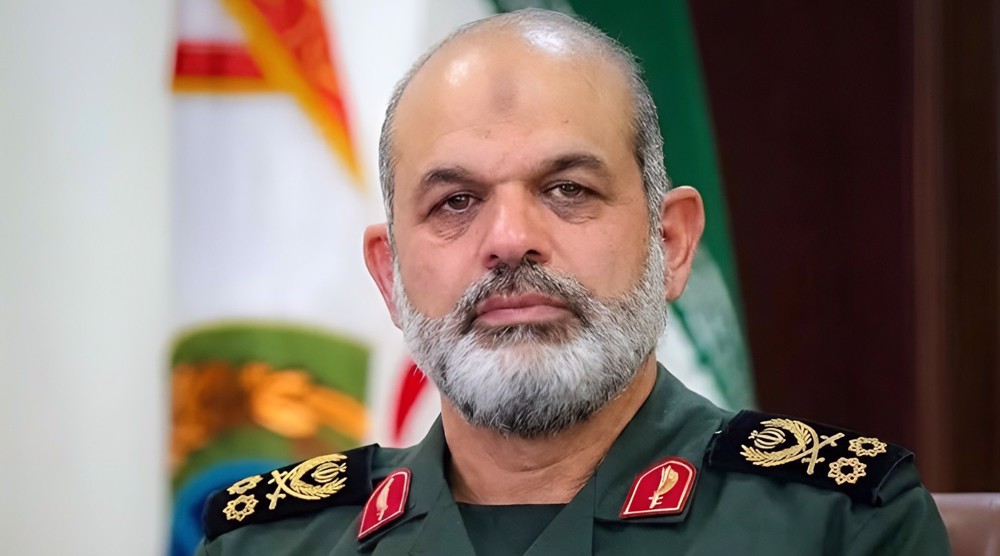
Chief Commander of the Islamic Revolution Guards Corps (IRGC), Major General Ahmad Vahidi. (File photo)
Chief Commander of the Islamic Revolution Guards Corps (IRGC), Major General Ahmad Vahidi, has warned that those responsible for crimes in Iran will find no safe haven anywhere in the world.
Addressing the closing ceremony of the “Pioneers of Liberation” conference in Tehran on Friday, Vahidi described the US-Israeli aggression against Iran since February 28 as a battle whose outcome has frustrated the aggressors.
“The world will no longer be a safe haven for the murderers and criminals who have committed crimes in Iran,” he said, referring to numerous crimes by the US-Israeli axis, including the assassination of the martyred Leader of the Islamic Revolution and the massacre of schoolchildren in Minab on the first day of the aggression.
“They must tremble with fear over the crimes they have committed, because… retribution is our right.”
“We have passed a large part of the battle and have a large part ahead of us,” he stated, adding, “What we have accomplished so far has resulted in a sense of defeat, hopelessness, despair, disarray, and confusion within the enemy camp.”
“The adversaries began the war arrogantly, believing they could bring Iran down within days,” Vahidi said, adding that they had initially promised Persian Gulf countries an assessment within 72 hours.
He recalled that the adversaries subsequently predicted Iran’s political system would collapse within two weeks, but their expectations were not fulfilled.
“They wanted to change the Islamic Republic, but they themselves changed,” the IRGC commander said, citing comments by intellectuals and media activists about the outcome of the war.
He also pointed to the extensive military resources deployed against Iran, including large quantities of ammunition, aircraft and aircraft carriers.
“The enemy suffered political and diplomatic setbacks, needing to seek assistance from European countries, regional states and other allies,” Vahidi said.
He maintained that their requests for support demonstrated that they had not been able to confront Iran on their own.
The IRGC chief also described Iran’s military reach as extending beyond the Persian Gulf and the Strait of Hormuz, saying the operational presence of Iran’s naval forces had expanded to 500 kilometers and farther into international waters.
“The reluctance of foreign forces to approach within 500 to 600 kilometers of Iran is due to the capabilities and deterrence of our naval units,” he added.
“Attempts to seize Iranian islands and coastal areas failed, while planned operations in the country’s northwest and southeast did not materialize because of the readiness of local communities and military forces,” added Vahidi.