
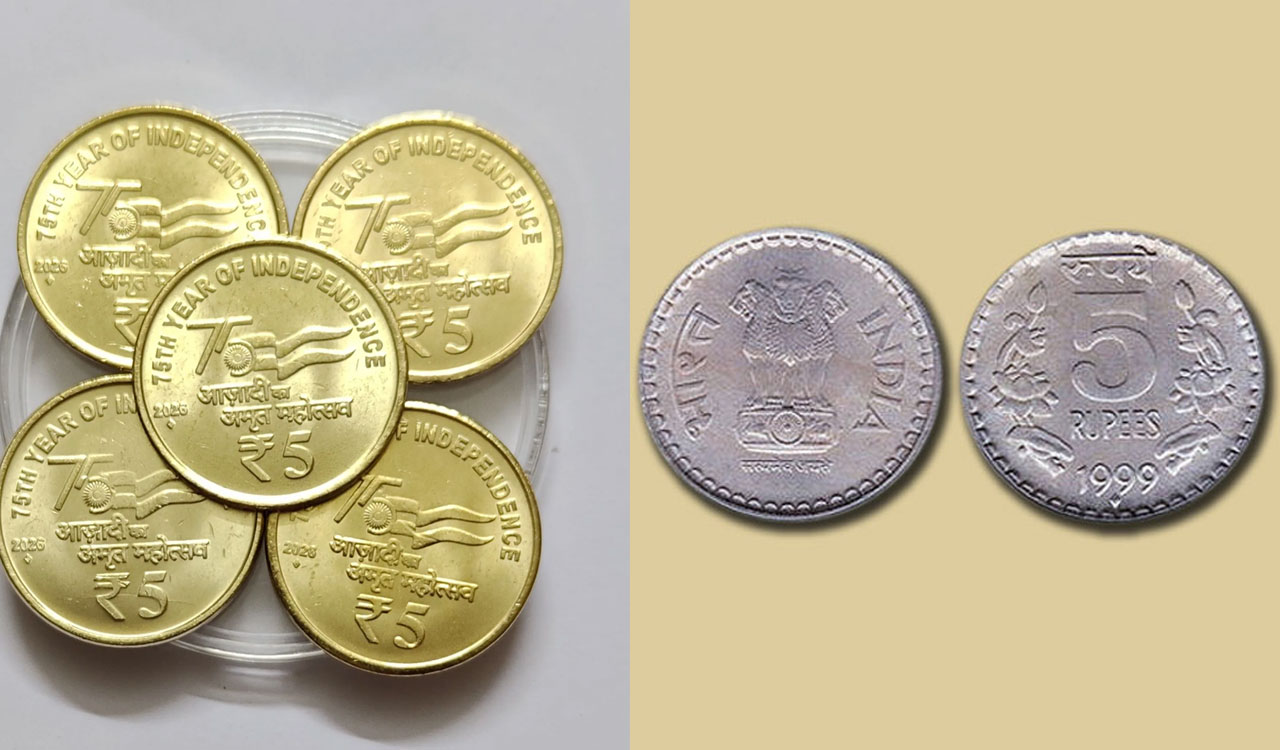
A viral claim that dentists are melting ₹5 coins to make dental crowns has been dismissed as misleading. The controversy originated in Maharashtra, where authorities acted against unauthorised technicians allegedly using uncertified scrap metal to manufacture cheap dental prosthetics.
Published Date – 19 November 2026, 03:15 PM
Hyderabad: A strange theory around the disappearance of Rs 5 coins from circulation, claiming that dentists are melting them down for tooth fillings and caps, has gained traction on social media.
What started as a local crackdown in Maharashtra has now become the talk of the town everywhere, sparking curiosity over the improbable theory that dental doctors are to be blamed for a short supply of Rs 5 coins.
That is simply not the case. The claim linking dentists and disappearance of Rs 5 coins stems from a November 6 resolution by the Medical Education department in Maharashtra after more than 350 complaints over a decade flagged unlicensed technicians making cheap metallic crowns using uncertified scrap, including melted Rs 5 coins.
While Maharashtra brought dental laboratories under Food and Drug Administration (FDA) scrutiny to curb illegal operators, the viral posts quickly turned into an indictment of dental surgeons across India.
“The theory has been blown out of proportion because metal-free crowns have long replaced conventional metal crowns. Modern technology has made biocompatible tooth-coloured restorations like zirconia, lithium disilicate (E-max), and advanced ceramics very affordable even in small cities. Modern dental fillings, meanwhile, rely on tooth-coloured composite resins rather than cast metal,” says Dr Ala Srikanth, Central Council Member, Indian Dental Association (IDA), Telangana.
A few years ago, a similar wave of unnecessary alarm broke out over silver amalgam fillings, even though the IDA-trained dentists had already switched to resin-based cosmetic fillings.
Clinically, modern Rs 5 coins are minted from nickel brass consisting of 75 per cent copper, 20 per cent zinc, and 5 per cent nickel, an uncertified alloy that is not at all suitable for oral procedures due to corrosion, metal-ion leaching, and gum inflammation.
Moreover, contemporary crowns are carved by computer-guided machines from solid ceramic blocks rather than cast from molten metal, leaving no place for melted coin metal in legitimate clinics, Dr Srikanth points out.
Senior dentists in Hyderabad point out that expensive machines and materials mean digital methods haven’t reached every town in Telangana and the country equally. As a result, a small, low-cost corner of the market, the kind where unauthorised dental technicians may indulge in making cheap metal caps without a doctor’s prescription.
Under the tightened rules, labs cannot fabricate any prosthetic without a registered dentist’s prescription and strict batch traceability. While unlicensed operators face a crackdown, well-known dental clinics are nowhere near melting your spare change.