Recalling the period before resistance forces liberated the area, they noted that it was used as a launchpad for rockets and a base for deploying vehicles packed with explosives.
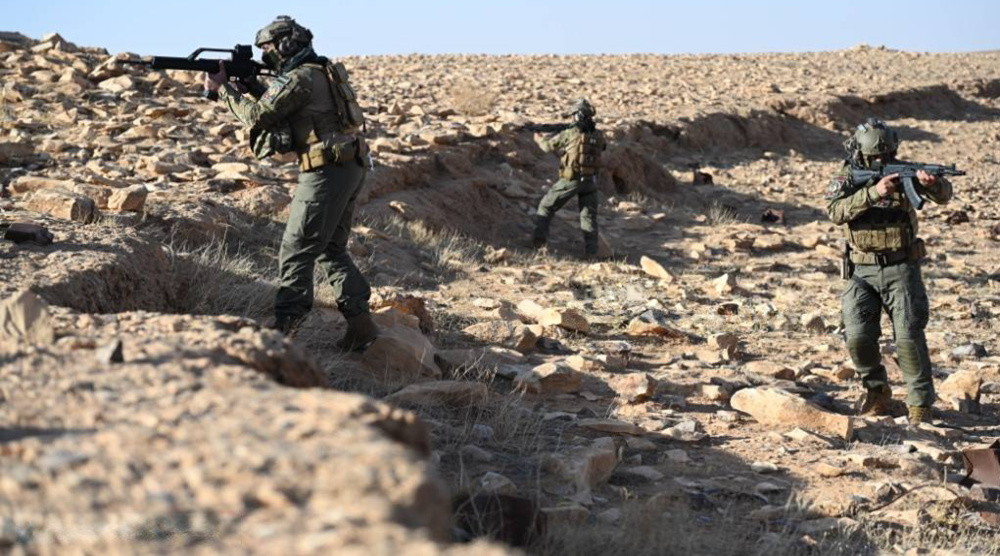
Members of the 72nd Popular Mobilization Units Brigade increase security measures along the Iraq-Syria border in Anbar, Iraq, January 26, 2026. (Photo by AFP)
Iraqi tribes have warned Prime Minister Ali al-Zaidi’s government against jeopardizing security in the Jurf al-Nasr region, rejecting any move that could weaken resistance forces and reopen the way for Takfiri groups.
In a statement outlining their position Thursday, the tribes declared, “We warn the government against putting the security of Jurf al-Nasr at risk, because this would once again pave the way for tragedies.”
They also rejected any attempt to use the return of Daesh-linked criminals as a political pressure tool or a means of implementing foreign, particularly American, dictates.
“We stress the need to preserve security control over Jurf al-Nasr; withdrawing from this area would be a betrayal of the blood of the martyrs,” the tribal representatives emphasized.
Recalling the period before resistance forces liberated the area, they noted that it was used as a launchpad for rockets and a base for deploying vehicles packed with explosives.
The tribes also rejected the prospect of internal conflict, affirming that the region has always been “a cradle of unity and brotherhood” and that they firmly opposed any confrontation among fellow Iraqis.
The tribes in neighboring Karbala also warned that any disruption to security in the area would directly threaten the holy shrines of Imam Hussein and al-Abbas, as well as the safety of their visitors.
Jurf al-Nasr became one of Daesh’s most important strongholds in central Iraq after the terrorist group seized the area, using it as a base for attacks on nearby cities and routes.
The group launched rocket attacks and deployed explosive-laden vehicles from the area, threatening Karbala and the pilgrims travelling through the region to visit its holy shrines.
In October 2014, Iraqi resistance groups launched a major offensive and drove Daesh out of the region after months of fighting.
Now, the government is preparing a new security arrangement for Jurf al-Nasr, with al-Zaidi ordering senior commanders to examine redeploying the army and federal police.
The plan includes establishing a joint command center, redistributing security responsibilities and placing the different formations under centralized supervision.
These moves come amid persistent US pressure on Baghdad to disarm resistance groups and reshape Iraq’s security arrangements.
Iraqi resistance group Kataib Hezbollah said in a statement that an agreement had been reached with the Iraqi government over the regulation of weapons, but al-Zaidi failed to honor its commitments.
The group also stressed that issues concerning Jurf al-Nasr and the resistance’s weapons must remain outside political disputes, and said it would not retreat from this fundamental position.
It added that it is currently facing the largest campaign of extortion aimed at forcing the resistance to surrender its weapons, carried out through the publication of false reports.