
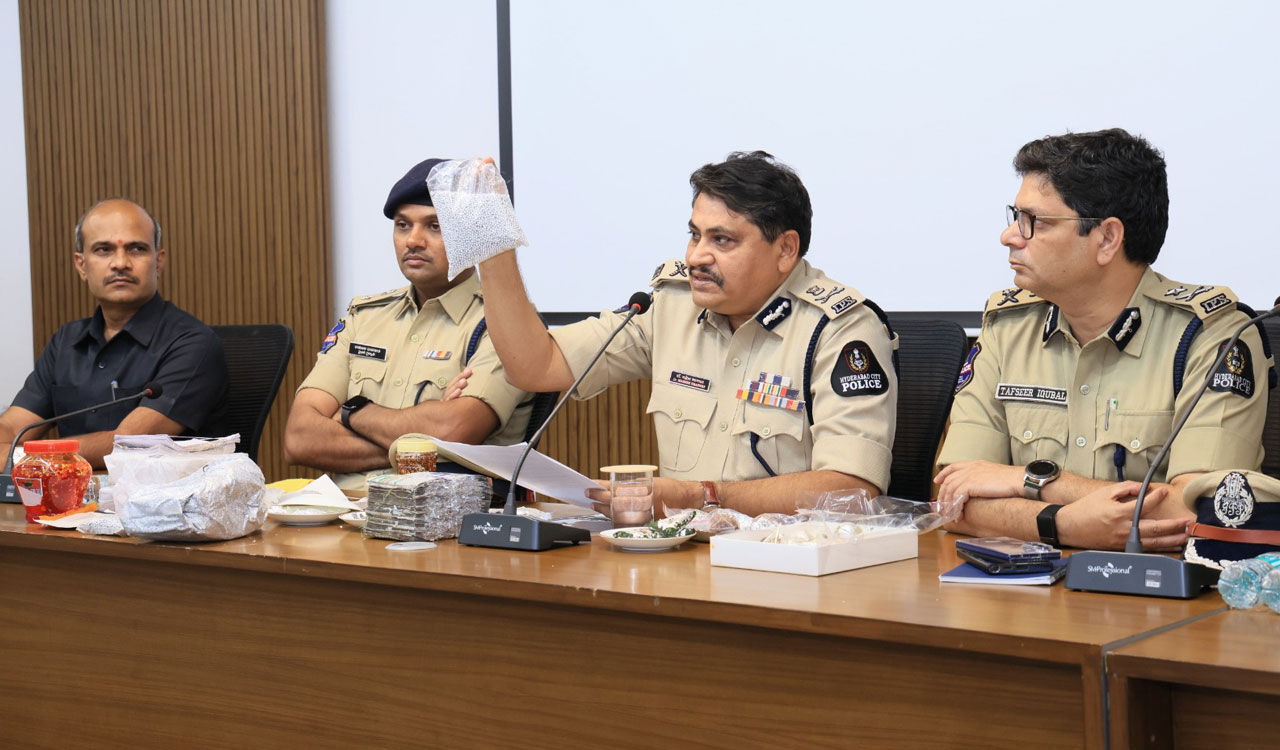
Hyderabad police raided four units allegedly manufacturing aluminium leaves and passing them off as edible silver waraq. The products were reportedly supplied to sweet manufacturers and bakeries, while officials seized aluminium leaves, flakes and other materials.
Published Date – 17 November 2026, 05:40 PM
HYDERABAD: The Hyderabad Commissioner’s Task Force on Tuesday raided four units in the city engaged in allegedly making edible silver waraqs using aluminium instead of genuine silver.
The police seized 49 bundles of aluminium leaves, 10 kg of aluminium flakes in cartons, fake silver-coated sugar balls, paan chutney, tobacco, maize starch and other raw materials.
According to Hyderabad Police Commissioner, MM Bhagwath, the four units — Waraq Shop owned by Mohammed Akber, UTC Silver Leafs owned by Mohammed Wali Uddin, M A Metro Waraq Shop of Mohammed Shareef, and Tara Unit owned by Mohammed Jaleel Khan — were manufacturing aluminium leaves and passing them off as genuine edible silver products.
“The fake waraqs were supplied to sweet manufacturers for use in Kaju Katli, Kaju Rolls and Cham Cham, while aluminium-coated sugar balls were supplied to bakeries for cake decorations. The suspects were also procuring aluminium flakes from Uttar Pradesh and using them in Zarda and flavoured paan preparations,” he said.
As per Food Safety and Standards regulations, edible silver leaf must have a minimum silver purity of 999 parts per thousand (99.9%). The units were allegedly operating without valid FSSAI licences and violating prescribed food safety standards, pointed out Bhagwath.
The police cautioned that prolonged consumption of food containing non-food-grade aluminium may pose health risks, including kidney damage, neurological problems, bone disorders and digestive irritation.
How to identify fake silver waraq
Two preliminary tests can help identify fake silver waraq, though laboratory analysis is essential for confirmation.
In the dilute hydrochloric acid test, aluminium reacts with the acid, producing hydrogen bubbles, while genuine silver normally does not. In the rubbing test, genuine silver breaks into fine particles, whereas aluminium tends to crumple, tear or form small ball-like pieces.
Chemical testing should be undertaken only by trained personnel with proper safety precautions. The use of aluminium foil in place of genuine silver waraq is a serious violation of food safety standards.



