
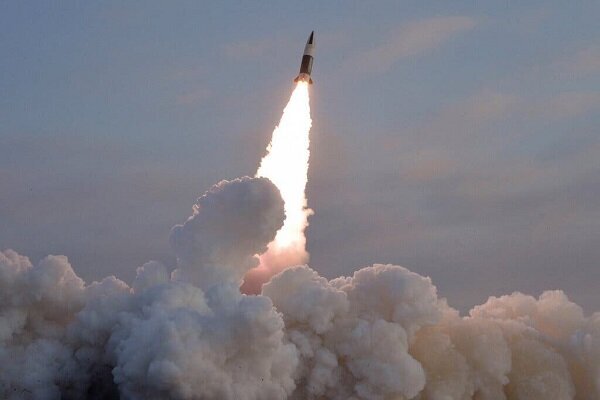
For years, the 2,000-kilometer range limit on Iran’s ballistic missiles has reflected strategic calculations and the Islamic Republic’s defense doctrine rather than technical or engineering constraints. Senior military commanders and former officials of the IRGC Aerospace Force have repeatedly addressed this issue. From Martyr Hassan Tehrani Moghaddam, the founder and father of Iran’s missile program, to Martyr Major General Amir Ali Hajizadeh, the former commander of the IRGC Aerospace Force, one point has consistently featured in the statements of the country’s defense officials: Iran’s missile capabilities should not be defined by the 2,000-kilometer figure.
Now, with changing regional security conditions, an expanding range of threats, and renewed discussions about revising the missile-range limit, the question has taken on greater significance: Does the Islamic Republic possess the scientific, industrial, and technological capabilities to go beyond this threshold?
2,000 Kilometers: A Technical Limitation or a Strategic Choice?
Answering this question requires first setting aside a common misconception: that the 2,000-kilometer range of Iran’s missiles necessarily reflects the country’s inability to design and manufacture longer-range systems.
Statements made by the Iranian military commanders over the years indicate that this limit has repeatedly been presented as a strategic choice based on the country’s defense requirements, rather than an unchangeable technological ceiling.
One of the earliest explicit statements on this issue came from Brigadier General Aziz Jafari, the then commander of the IRGC. In November 2017, he announced that Iran’s missiles had a range of 2,000 kilometers and that the country considered this sufficient to meet its defense needs, since most U.S. military forces and interests in the region were located within that range.

This statement was strategically significant because it demonstrated that decisions regarding missile range were not based solely on the technical capabilities of engineers and specialists. The geographical distance of potential threats, the location of enemy military bases, and the country’s operational requirements also played a role in determining the range.
A year later, Brigadier General Amir Ali Hajizadeh, then commander of the IRGC Aerospace Force, clarified the issue further during a speech at Iran University of Science and Technology. In December 2018, he stressed that the 2,000-kilometer range is not a matter of “divine revelation” and that Iran has the capability to build missiles with greater ranges.
Hajizadeh stated that Iran faced no technical or contractual restrictions on increasing the range of its missiles and that the existing limit had been established according to the country’s defense needs.

These remarks highlighted a fundamental distinction between the capability to develop a long-range missile and the decision to deploy and use one. A country may possess the scientific and industrial capacity to develop a particular system but, based on its security calculations and defense policy, may not consider it necessary to exceed a specific range.
Martyr Tehrani Moghaddam’s Legacy: 2,000 Kilometers Was Not the End of the Road
Understanding the logic behind Iran’s missile development requires examining the role of Martyr Hassan Tehrani Moghaddam. He was not merely responsible for establishing a missile unit within the IRGC; he laid the foundations for a broader effort aimed at transforming dependence on foreign weapons into indigenous defense capabilities.
During the early years of the first imposed war, Iran faced serious limitations in accessing missile systems needed to respond to missile attacks by the Iraqi Ba’athist regime. This experience underscored the necessity of developing an indigenous missile capability within the country’s armed forces.
In 1983, responsibility for establishing and organizing the IRGC’s surface-to-surface missile command was entrusted to Martyr Tehrani Moghaddam. In February 1985, Iran launched its first missile toward Kirkuk.

This event marked the beginning of the development of a strategic industry in the country, one that gradually evolved from assembling and operating existing systems to designing, developing, and manufacturing indigenous products.
However, Martyr Tehrani Moghaddam’s significance was not limited to initiating this process. An important account of his strategic vision was later shared by Major General Hajizadeh.
Explaining Tehrani Moghaddam’s plans, Hajizadeh stated that he had initially set a target of achieving a missile range of 2,000 kilometers. However, once that objective had been achieved, he had another plan: to revisit the systems within that range and address their quantitative and qualitative shortcomings.
This account highlights an important feature of the thinking behind Iran’s missile industry: development should not be measured solely by increases in range. Improving accuracy, reliability, and overall performance, as well as addressing the shortcomings of existing systems, should also remain priorities.
Iran’s missile achievements continued after Tehrani Moghaddam’s martyrdom. This demonstrated that the country’s missile program was no longer dependent on one individual or group but had evolved into a broader scientific, industrial, and organizational capability.
Iran’s Missiles With 2,000-Kilometer Range : What Have Been Developed So Far?
A realistic assessment of Iran’s ability to develop missiles with ranges exceeding 2,000 kilometers requires examining the achievements and systems publicly announced by the country’s missile industry.
Sejjil Missile
The Sejjil is one of Iran’s most significant achievements in the development of two-stage, solid-fuel ballistic missiles. Its declared range is approximately 2,000 kilometers.

Its significance lies in the development of solid-fuel technology for a long-range missile system, which has expanded the country’s missile operational capabilities.
Khorramshahr-4 (Kheibar) Ballistic Missile: Iran’s Latest Publicly Announced Missile Achievement
Unveiled in June 2023, the Khorramshahr-4, also known as Kheibar, represents one of Iran’s latest publicly announced missile achievements.

According to specifications released by the Ministry of Defense, the missile has a range of 2,000 kilometers and carries a warhead weighing approximately 1,500 kilograms. This system reflects progress in the development of long-range missiles equipped with heavy warheads.
Emad Missile
The Emad is another important Iranian ballistic missile, introduced with an emphasis on improving warhead guidance and accuracy. Its range has been reported at approximately 1,600 to 1,700 kilometers.

Fattah Missile
The Fattah was introduced as part of efforts to develop more advanced missile capabilities and improve the ability to counter defense systems. Its declared range is approximately 1,400 kilometers.
Taken together, these systems demonstrate Iran’s considerable progress across several areas of missile technology, from solid- and liquid-fuel propulsion to improved accuracy and the development of advanced warheads.

It is important to note that exceeding the 2,000-kilometer threshold would not necessarily mean abandoning these missile families. Rather, it could involve developing newer generations of systems based on the knowledge and experience accumulated through their development.
A Major Development: The Official Announcement That the 2,000-Kilometer Limit Has Been Lifted
Perhaps the most significant development in this regard came in November 2026, when the IRGC spokesman made remarks that could signal a change in one of the most important components of the country’s missile policy.
Following military developments and an increase in the level of threats against the Islamic Republic of Iran, the possibility of reviewing the missile-range limit once again became a subject of discussion in military and media circles.
On November 7, 2026, Brigadier General Hossein Mohebbi, the IRGC spokesman, responded to a question about the possibility of lifting the restriction on Iran’s missile range by announcing: “This limitation has been lifted for us.”
The statement came after the Leader of the Islamic Revolution, Ayatollah Seyyed Mojtaba Khamenei, had emphasized, during a meeting with senior military commanders, the need for an immediate and effective response to any threat, without geographical limitations.
The IRGC spokesman also stated that Iran must demonstrate its capabilities in practice rather than merely express its positions.
This announcement is significant in two respects. First, the previous 2,000-kilometer limit is no longer presented in the IRGC’s declared policy as a definitive ceiling. Second, the change in the missile-range limit has been linked to evolving threat assessments and the country’s deterrence requirements.
Nevertheless, it is important to distinguish between announcing the removal of a restriction and possessing an operational missile with a range exceeding 2,000 kilometers. In his remarks, the IRGC spokesman did not announce a new range or provide specifications for an operational missile.
Therefore, what can be established at this stage is a change in the officially declared position on the range restriction, not confirmation that an operational Iranian missile with a specific range exceeding 2,000 kilometers has been deployed.
Is It Technologically Possible to Exceed 2,000 Kilometers?
The answer to this question lies in a combination of advanced missile technologies.
Increasing the range of a ballistic missile is not simply a matter of enlarging its body or increasing its fuel capacity. It depends on a combination of scientific and industrial capabilities that, together, make it possible to design and manufacture a system with greater range.
These capabilities include propulsion technology, advanced materials, guidance and navigation systems, thermal management, warhead design, and improvements in overall reliability.
Over the past several decades, Iran has invested in various sectors of this industry. The development of solid- and liquid-fuel missiles, advances in precision guidance systems, and the production of indigenous satellite launch vehicles are among the indicators of progress in these fields.
Iran’s space program is also significant in this context. Satellite launch vehicles and ballistic missiles share certain engineering technologies, particularly in the areas of propulsion and advanced structural systems.
A report published by the U.S. Congressional Research Service on June 17, 2025, also addressed this issue. Citing an assessment by the U.S. Defense Intelligence Agency, the report stated that Iran could, if it decided to pursue such a course, use its satellite launch vehicle technology to develop a militarily capable intercontinental ballistic missile by 2035.
This assessment does not mean that Iran currently possesses such a missile. Rather, it indicates that U.S. research and defense institutions also consider the country’s space technology capabilities relevant to assessments of the future development of its missile program.
From an engineering perspective, therefore, extending missile range beyond 2,000 kilometers cannot be considered beyond the potential capabilities of Iran’s missile industry. However, demonstrating that such a capability has been translated into an operational system would require successful testing and independent evidence.
How Could Increasing Missile Range Change Deterrence Calculations?
The significance of this issue goes beyond increasing a numerical range or expanding the geographical reach of missiles.
One of the most important components of a country’s defense capabilities is its ability to impose substantial costs on an adversary in the event of military action. As the geographical scope of potential threats expands, deterrence capabilities must also be assessed in light of changing conditions.
In recent years, the 2,000-kilometer limit had been considered sufficient to address most threats in Iran’s immediate and regional surroundings. However, the expansion of the U.S. military presence across different regions, recent wars, and the increased possibility of confrontation with actors beyond the region have made the geographical distance of potential targets a more significant consideration.
Under such circumstances, increasing missile range could have several strategic implications:
First, expanding the depth of deterrence: Extending the geographical reach of potential threats to hostile military bases and installations could complicate an adversary’s calculations before initiating a conflict.
Second, reducing geographical constraints: A greater missile range would provide the armed forces with more options when developing their defense strategies, preventing certain threats from being excluded from consideration solely because of geographical distance.
Third, increasing the cost of military action: The greater the uncertainty an adversary faces regarding the scope and capabilities of Iran’s potential military response, the more difficult it becomes to calculate the costs of military action.
Fourth, strengthening strategic bargaining power: Credible defense capabilities are among the factors that influence international political and security interactions. Experience has shown that deterrence and diplomacy are not entirely separate matters.
Ovetall, greater range alone does not guarantee effective deterrence. Target identification, intelligence capabilities, operational readiness, accuracy, system reliability, and the ability to protect and maintain defense infrastructure are also essential components of this equation.
MNA
