
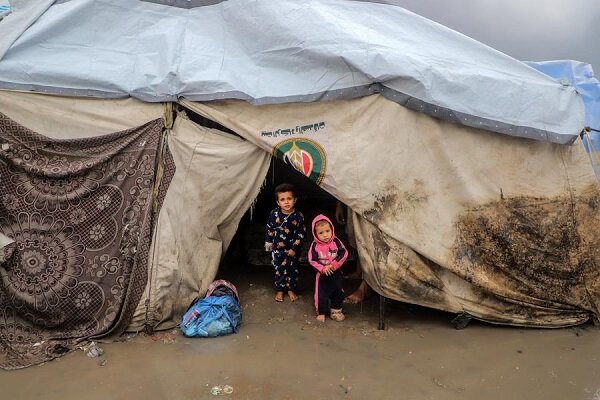
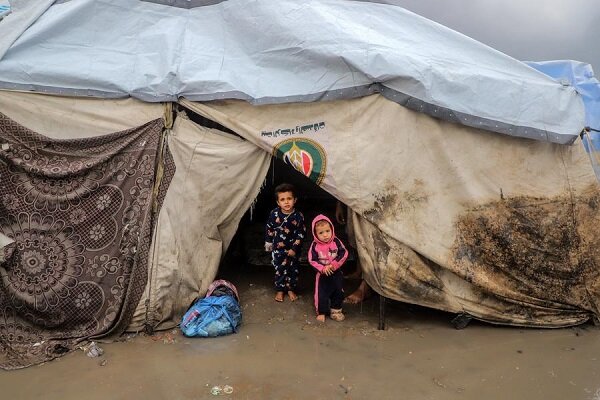
In a statement issued on Sunday, Iran’s High Council for Human Rights described Gaza as a test of humanity’s conscience and the credibility of the international human rights system, stressing that the time has come to end impunity and turn human rights rhetoric into practical action.
The full text of the statement is as follows:
In the Name of God
The Statement of the High Council for Human Rights of the Islamic Republic of Iran Condemning the Continued Crimes of the Zionist Regime in Gaza and the Silence of International Human Rights Bodies
The High Council for Human Rights of the Islamic Republic of Iran, expressing its revulsion and deep concern over the continuation of crimes and the widespread and systematic violations of the fundamental rights of the Palestinian people in the Gaza Strip, strongly condemns the silence and inaction of international bodies and institutions claiming to defend human rights in the face of this humanitarian catastrophe, and considers it a clear indication of the serious crisis of credibility and effectiveness of the international human rights protection system.
More than three years have passed since the beginning of the Zionist regime’s military attacks on the Gaza Strip on 17 October 2023; nevertheless, even the ceasefire has failed to put an end to the killing and suffering of the Palestinian people. According to the latest reports published by Palestinian sources on 10 November 2026, the death toll in this war has exceeded 74,000, while the number of injured has surpassed 175,000. Among the victims are thousands of children, more than 1,700 healthcare workers, and hundreds of journalists and media workers. Furthermore, thousands of people remain missing under the rubble, and access to many of them has not been possible.
These statistics are not merely figures and numbers in a statistical report; each number represents a human being whose right to life has been taken away, a child who has lost the opportunity to live and the prospect of a future, a mother who has lost her child, a physician who has lost their life while striving to save human lives, and a journalist who has been targeted for documenting the truth and conveying the voices of the victims. Behind each of these figures lies a grieving family, a destroyed home, and a shattered life.
The continuation of attacks, the killing of civilians, the destruction of vital infrastructure, the deprivation of the population of adequate access to food, water, medicine, and healthcare services, and the persistence of humanitarian restrictions even after the announcement of a ceasefire demonstrate that the crisis in Gaza is not merely a military conflict; rather, we are facing a series of serious and ongoing violations of international humanitarian law and international human rights law. According to published reports, since the establishment of the ceasefire in October 2025, more than 1,600 Palestinians have also lost their lives. This underscores, more than ever, the need for effective international monitoring and genuine guarantees for the cessation of attacks.
The High Council for Human Rights of the Islamic Republic of Iran recalls that the actions reported in Gaza are in serious violation of the fundamental principles of international humanitarian law, including the principle of distinction between civilians and military objectives, the principle of proportionality, and the principle of taking precautionary measures in attacks. Under the Fourth Geneva Convention, the civilian population must be protected against the effects of armed conflicts, and collective punishment and reprisals against protected persons are prohibited. Furthermore, Articles 48, 51, and 57 of Additional Protocol I to the Geneva Conventions emphasize the protection of civilians, the prohibition of direct attacks against them, and the obligation to take precautionary measures.
Furthermore, the Rome Statute of the International Criminal Court recognizes the intentional killing of civilians, the use of starvation of civilians as a method of warfare, and certain forms of attacks against civilian populations and property, where the legal elements are met, as constituting war crimes and other international crimes. The issuance of arrest warrants by the International Criminal Court on 21 November 2024 against Benjamin Netanyahu and Yoav Gallant, in connection with allegations of war crimes and crimes against humanity, also demonstrates the serious engagement of international judicial mechanisms with the issue of the criminal responsibility of officials connected to this situation.
On the other hand, in the case of South Africa v. (the regime of) Israel, the International Court of Justice, through its orders indicating provisional measures issued in January, March, and May 2024, emphasized the need to take immediate measures to prevent acts falling within the scope of the Genocide Convention, ensure access to humanitarian assistance, and preserve evidence relating to the allegations brought before the Court. These orders, irrespective of the final outcome of the proceedings on the merits, demonstrate the seriousness of the humanitarian and legal risks raised in this case.
What is unfolding in Gaza today, in terms of the scale of killings, widespread destruction, the blockade, and the continued suffering of civilians, constitutes one of the unprecedented humanitarian catastrophes in contemporary history; a catastrophe that, against the backdrop of political and military support provided by the United States to the Zionist regime, and the complicity or silence of certain Western governments, has faced serious challenges in terms of international accountability. It is untenable to claim, on the one hand, to defend a rules-based international order and, on the other hand, to remain silent, show leniency, and confine oneself to symbolic measures in the face of blatant violations of those very rules and the continued killing of civilians.
The fundamental question is: How long must the lives of innocent people, children, and civilians continue to be sacrificed for political considerations and the interests of global powers? How long will international human rights mechanisms remain preoccupied with peripheral issues and selective political priorities, instead of focusing on putting an end to the killings, protecting victims, and holding the perpetrators of crimes accountable? If human rights are universal, why should the right to life of a Palestinian child not receive the same attention and protection as the rights of any other child in the world?
The High Council for Human Rights of the Islamic Republic of Iran, while strongly condemning these crimes, calls upon the United Nations, the Human Rights Council, the High Commissioner for Human Rights, the International Committee of the Red Cross, and other relevant international mechanisms to go beyond declared positions and merely verbal condemnations and take immediate and effective measures to bring an end to military attacks, fully lift the blockade of Gaza, ensure the unimpeded entry of humanitarian assistance, protect civilians, and ensure the safety and security of medical personnel and journalists. It is also imperative that independent and impartial investigations be conducted into all crimes and human rights violations, and that the necessary grounds be established for ensuring the criminal accountability of the perpetrators, those who ordered and those who facilitated these crimes before competent international judicial bodies.
The High Council for Human Rights also calls upon states that, through the provision of weapons, military support, and political backing, enable the continuation of this situation, to uphold their international obligations and refrain from any cooperation or assistance that could contribute to the continuation of serious violations of international law.
In conclusion, the High Council for Human Rights of the Islamic Republic of Iran emphasizes that silence in the face of crime is not neutrality, and that the protection of human rights cannot be subject to political considerations, the interests of major powers, or double standards. History will judge not only the perpetrators of these crimes, but also the silence and inaction of those who turned a blind eye to the suffering and killing of innocent human beings.
Gaza is not merely a geographical location; Gaza is a test of humanity’s conscience and the credibility of the international human rights system. The time has come to end impunity and translate human rights rhetoric into practical action.
MNA