
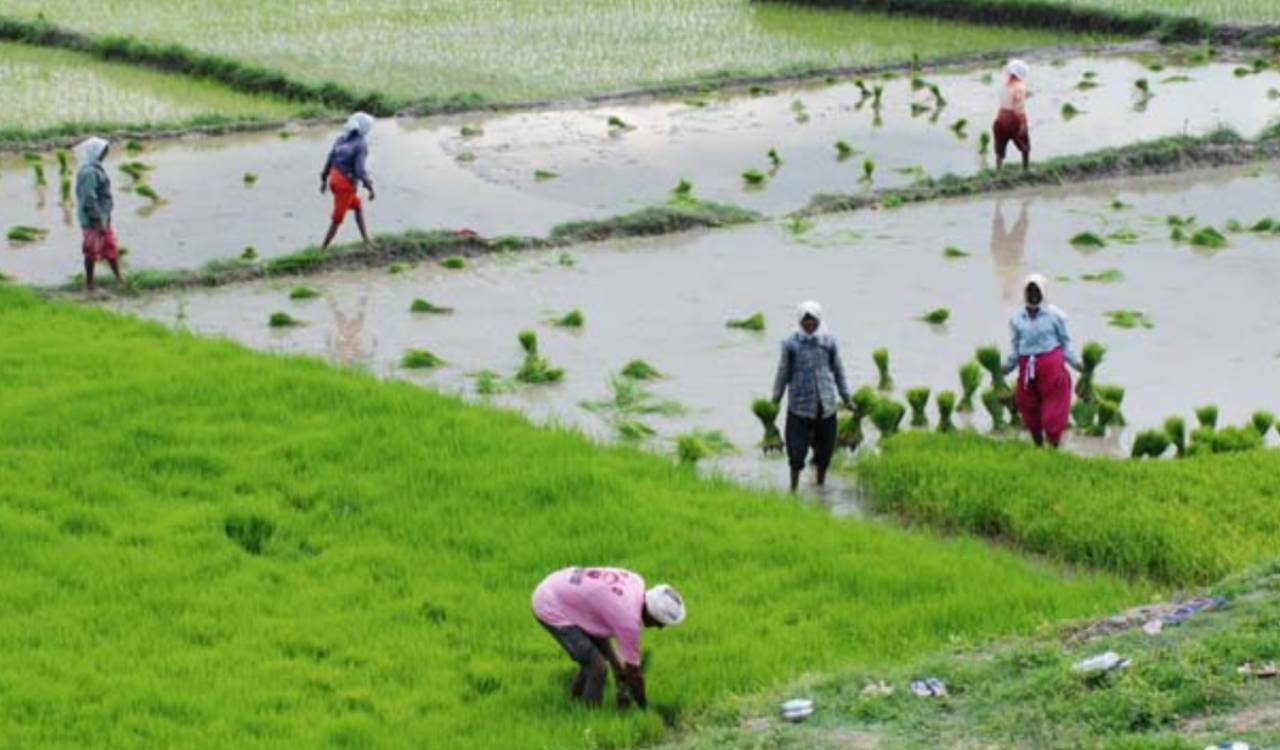
Amid concerns over the impact of El Nino and possible groundwater depletion during the Yasangi season, farmers in Siddipet district’s Yellareddypet cluster are gradually shifting from water-intensive crops such as paddy and maize to horse gram.
Published Date – 14 November 2026, 10:52 PM
Siddipet: As the El Nino effect and the possibility of groundwater depletion during the Rabi (Yasangi) season are expected to make things worse for the farming community, farmers in the Yellareddypet cluster of Thoguta mandal are gradually shifting towards low-cost, water-efficient crops like horse gram to minimise crop failure risks and ensure sustainable farm income.
Traditionally, farmers in the region used to cultivate paddy and maize during the Yasangi season, which are water-intensive crops and require investments. However, considering the uncertainty over the availability of irrigation water, farmers are exploring horse gram cultivation as a promising alternative this year.
Farmers of the village are being encouraged to adopt horse gram cultivation as a climate-resilient crop by Agriculture Extension Officer (AEO) T Nagarjun.
Speaking to Telangana Today, Nagarjuna said that horse gram is a drought-tolerant pulse crop that requires comparatively less water and fewer cultivation inputs. With a short crop duration of approximately 100–120 days, it is a suitable alternative for farmers facing water scarcity.
Citing the success of the farmers who cultivated the crop previously, Nagarjuna said that farmer Kola Kankaiah cultivated horse gram in two acres of land during the previous Yasangi season. He invested approximately Rs 10,000 in cultivation and harvested about six quintals.
He sold the produce at Rs 7,000 per quintal, earning a gross income of Rs 42,000. After deducting the cultivation expenditure of Rs 10,000, he earned a profit of Rs 32,000 from the two acres under cultivation.
Encouraged by the economic returns and low cultivation costs, the farmer has recognised horse gram as a profitable alternative to conventional water-intensive crops.
Compared to crops requiring higher investments and assured irrigation, horse gram offers an opportunity to reduce financial risks, conserve groundwater and improve farm profitability under changing climatic conditions.
The Agriculture Department is encouraging farmers to adopt suitable alternative crops like horse gram to address climate-related challenges, promote crop diversification and strengthen the economic resilience of farmers in Thoguta mandal. This year, at least 25 farmers from Yellareddypet have planned horse gram cultivation across 80 acres.