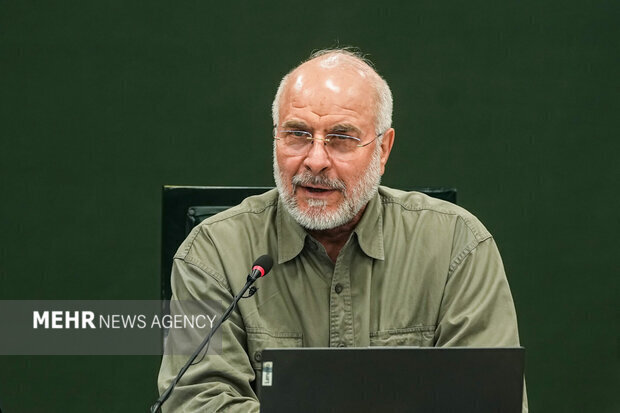
In an exclusive interview with Al Jazeera, as reported by Press TV, Ghalibaf, who heads Iran’s negotiating team, said Tehran’s response addressed the legitimate rights of the Iranian people, who have faced US and Israeli aggression, threats and crimes.
“The ball is now in the US’s court; it must make a decision and announce it,” he said, referring to the seven conditions Iran had laid out as prerequisites for further negotiations.
Ghalibaf said Tehran remained ready to reach an agreement if Washington honored its previous commitments and abandoned its excessive demands.
He identified the lack of trust in the United States as the main obstacle to an agreement, pointing to Washington’s record of hostility toward Iran and its repeated failure to honor commitments.
“The main obstacle to an agreement is this lack of trust,” Ghalibaf said, adding that the US could not expect Tehran to agree to all its demands.
He also rejected US criticism that Iran’s demands were “unreasonable,” stating that they concerned basic rights rather than additional concessions.
Ghalibaf said Tehran’s demands include an end to the US naval blockade of Iranian ports, an end to interference in the Strait of Hormuz, the withdrawal of additional US forces deployed to the region following the war, and the lifting of sanctions.
He described the naval blockade as “a brutal act of war under international law,” saying it had obstructed food supplies, trade and healthcare services and disrupted people’s lives.
“These are the minimum conditions we have set so that, if they are fulfilled, we can continue negotiations,” he added.
The seven-point framework also includes an end to the war on Iran and the resistance front, as well as a ceasefire in Lebanon and the withdrawal of Israeli forces from the Lebanese territory, Ghalibaf said.
He said Qatar and Pakistan were acting as the main mediators between Tehran and Washington, while Russia, China and other regional countries were also seeking to bring the two sides closer.
Ghalibaf said US officials had approached Russian President Vladimir Putin during a visit to Moscow and asked him to speak with Iran to facilitate direct negotiations. Tehran had subsequently conveyed its position and demands to Moscow, he added.
Mediators had discussed implementing the required measures within two days, Ghalibaf said, but stressed that progress depends on Washington’s response.
He dismissed reports of changes to Iran’s negotiating team, saying he remains in charge of the six-member delegation and continues to oversee the talks.
Ghalibaf said Iran was determined to end the state of “no war, no peace” and establish sustainable deterrence, stressing that this goal did not necessarily have to be achieved through negotiations.
He said that the Islamic Republic does not necessarily need to “negotiate just to avoid war. We believe we must move toward establishing sustainable deterrence in the country.”
“We are not warmongers, we are not seeking war, and we do not want the war to continue,” Ghalibaf said, warning that Iran would firmly respond if the United States or the Israeli regime launched another attack on the country.
Ghalibaf further stated that the US military presence in the West Asian region had contributed to insecurity rather than stability, urging regional countries to work together to establish lasting security without outside interference.
The chief negotiator also said Iran would not accept an arrangement that excluded the Strait of Hormuz from the negotiations. The waterway’s future status, he noted, should be determined through an understanding between its two coastal states, Iran and Oman, in accordance with international law.
Following the US-Israeli war of aggression launched on February 28, Iran imposed strict maritime restrictions on the Strait of Hormuz, requiring vessels to obtain prior authorization and use designated northern corridors for transit. Southern routes have been declared unauthorized and heavily mined.
Tehran says only vessels complying with its regulations can pass safely through the strategic waterway, warning that ships serving the interests of the aggressors will face consequences.
The Islamic Revolution Guards Corps (IRGC) has repeatedly dismissed US promises to escort and protect vessels passing illegally from the southern routes, saying such assurances have failed to prevent ships from being halted or destroyed.
MNA