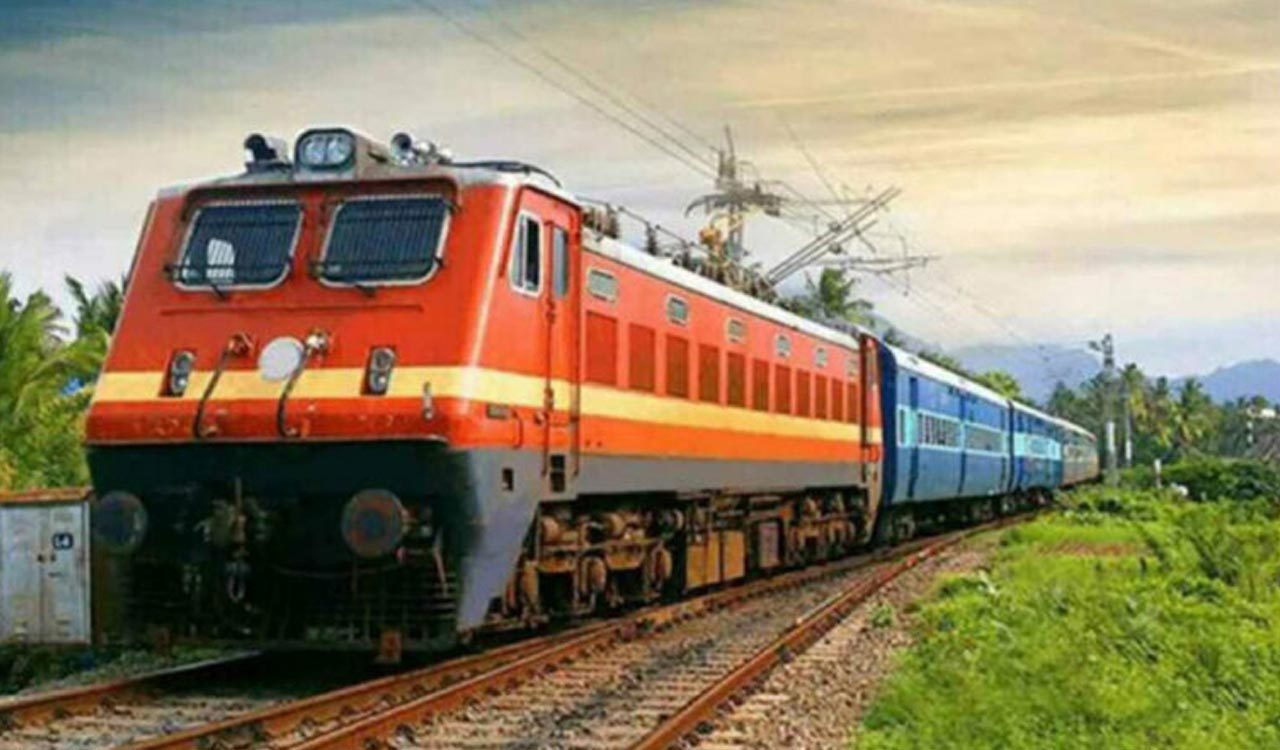
Strategic railway expansion and smarter train services can transform the State into a national logistics and passenger transit hub
Published Date – 8 November 2026, 02:00 PM
By Dr Sreeramulu Gosikonda
India’s transition towards a multidirectional logistics grid places Telangana at the geographic crossroads of the subcontinent. Due to its strategic position connecting Northern, Southern, Eastern, and Western corridors, the state is uniquely suited to serve as the central transit engine of national freight and passenger movement. While South Central Railway has achieved 100 per cent broad gauge electrification, completing key pending lines and expanding train services remain essential to eliminate freight bottlenecks and connect untapped agricultural, industrial, and spiritual hubs. Recent Union capital commitments, including developmental packages worth over Rs 9,400 crore, underscore the strategic importance of expanding rail logistics and multi-tracking freight corridors across the state.
Regional Network Expansion and Interior Connectivity
At the forefront of regional network expansion is accelerating sanctioned lines such as the 151-kilometre Manoharabad to Kothapalli project, designed to link Hyderabad directly through the textile hub of Sircilla, the temple town of Vemulawada, and Karimnagar. Completing these interior routes connects agricultural and commercial districts directly to Hyderabad and external industrial markets, lowering transport costs for local farmers and supporting rural commerce. With major stretches up to Siddipet already operational, construction continues on remaining sections to fully integrate Northern Telangana into the mainline grid. Equally critical for interstate trade is the 246-kilometre Mahbubnagar to Munirabad line, linking Southern Telangana directly to Northern Karnataka and unlocking vital transit routes for agricultural commerce.
Integrating Cultural Landmarks and Tribal Corridors
This intra-state track enhancement simultaneously integrates Telangana’s rich spiritual and cultural landscape into the national rail network. Speeding up the MMTS Phase II extension to Yadadri will provide affordable suburban rail transit for pilgrims visiting the Sri Lakshmi Narasimha Swamy Temple shrine. Similarly, completing broad gauge links to Bhadrachalam, home to the historic Sitarama Swamy Temple, situated near major tribal heartlands and revered as South Ayodhya, opens trade corridors for forest and mineral produce while encouraging cultural tourism.
A major breakthrough in this direction is the Union Cabinet approval of the 173-kilometre Malkangiri to Pandurangapuram line via Bhadrachalam, which seamlessly integrates these tribal regions across Odisha, Andhra Pradesh, and Telangana into the national network. Towards the eastern frontier, the 151-kilometre Bhadrachalam Road to Kovvur line remains a long-pending priority, with its detailed project report finalised to connect this mineral-rich tribal heartland directly with coastal Andhra Pradesh. Furthermore, integrating the famous Sri Raja Rajeshwara Swamy Temple at Vemulawada into the national railway grid is essential to spur pilgrimage traffic and boost the local socio-economic ecosystem.
The Hasanparthy Road to Karimnagar Game Changer
The proposed 62-kilometre railway line connecting Hasanparthy Road to Karimnagar via Huzurabad, estimated at an outlay of approximately Rs 1,116 crore, represents a transformational infrastructure link for both regional and national logistics. By providing a direct diagonal bypass between Warangal and Karimnagar, this short line creates an efficient East-to-West inland corridor connecting the Eastern Coastal belt directly with Western India.
First, it functions as a high-capacity bypass around the saturated Secunderabad bottleneck. Passenger and freight services originating in Coastal Andhra (such as Visakhapatnam, Kakinada, Vijayawada, and Guntur) travelling toward Western India currently route through Secunderabad Junction or execute complex reversals, causing severe urban congestion. Routing trains directly via Hasanparthy Road, Huzurabad, Karimnagar, Nizamabad, Nanded, and Manmad allows them to reach Shirdi, Pune, and Mumbai without entering Secunderabad, freeing up crucial suburban capacity.
Second, it eliminates the circuitous Peddapalli detour. Under the existing track layout, trains moving between Warangal and Karimnagar must travel north along the Grand Trunk route up to Peddapalli before taking a sharp branch line westward, covering 110 kilometres. Constructing the direct 62-kilometre link via Huzurabad cuts the distance by nearly 50 kilometres, drastically reducing transit times and energy consumption.
Third, this line establishes a strategic freight engine linking deepwater maritime ports in Coastal Andhra directly with Western India’s prime economic hubs, including Pune’s automotive and technology belts, the Marathwada industrial zone, and Mumbai’s commercial ports. It also accelerates exports of Karimnagar granite, coal, agricultural produce, and textiles. Furthermore, it opens direct pilgrim routes from Coastal Andhra toward Sainagar Shirdi and the Jyotirlinga shrines in Maharashtra, while establishing a secondary Northern Telangana transcontinental trunk route that safeguards national supply chains during emergencies.
Strengthening Trunk Corridors and Manufacturing Infrastructure
Parallel to new line construction, addressing severe capacity constraints along operational corridors and expanding industrial capability are urgent priorities. The 270-kilometre Secunderabad to Nizamabad, Mudkhed, and Nanded corridor currently operates as a heavily congested single-line stretch despite being fully electrified. Doubling this key northern gateway is necessary to separate high-speed express passenger trains from heavy freight traffic moving towards Marathwada and Central India. On a broader scale, completing the Akola, Khandwa, and Indore gauge conversion and doubling project serves as the vital missing link bridging South Central Railway with Western Railway, providing the foundation for a seamless inland logistics spine.
Complementing mainline track projects are targeted industrial initiatives that strengthen regional economic self-reliance. Industrially, upgrading the Kazipet Railway Manufacturing Unit from a Periodic Overhauling workshop into a Rs 521 crore wagon production facility represents a cornerstone project aimed at enhancing local manufacturing capacity and regional employment. Swiftly executing these pending new lines, track doubling stretches, and industrial nodes will elevate Telangana into a high-capacity, fully integrated logistics hub.
Optimising Passenger Timetables and Sacred Express Corridors
Track infrastructure expansion must be accompanied by intelligent timetable planning that optimises travel times and connects local communities directly with major spiritual destinations across Northern India. First, Indian Railways should introduce a direct express train from Secunderabad to Karimnagar via Kazipet and Peddapalli. The current operational service running via Nizamabad covers a circuitous route that consumes excessive time, rendering it inefficient for daily commuters and business travellers. Launching a dedicated service along the direct Peddapalli chord line will drastically reduce travel duration and offer a fast connection between the state capital and Karimnagar.
Second, establishing specialised weekly pilgrim trains will integrate Telangana’s rich cultural heritage with India’s sacred corridors. Operating a weekly service named the Kashi Vemulawada Sangamam Express from Nizamabad to Varanasi via Karimnagar and Peddapalli will link pilgrims visiting the Sri Raja Rajeshwara Swamy Temple at Vemulawada directly with Kashi. Similarly, launching the weekly Anantha Padmanabha Swamy Express from Vikarabad to Varanasi via Charlapalli will cater to devotees from Western Telangana. To further enhance national cultural integration, running a special service called the Basara Saraswati Express from Nizamabad to Ayodhya via Charlapalli and Kazipet will connect the sacred Gnana Saraswati Temple region at Basara directly with the Lord Ram Temple at Ayodhya. Combining completion of pending line projects with strategic passenger routing will fulfil long-standing regional demands, boost cultural tourism, and provide affordable, high-speed connectivity across Telangana and the nation.
Realising Telangana’s potential as India’s central transit engine requires synchronised track expansion and service planning. Completing regional lines like Manoharabad to Kothapalli alongside strategic bypasses like Hasanparthy Road to Karimnagar relieves Secunderabad’s congestion and unlocks direct East-to-West freight corridors. Simultaneously, upgrading the Kazipet unit turns the state into an active manufacturing hub, while direct pilgrim expresses to Kashi, Ayodhya, and Shirdi honour cultural heritage. Ultimately, bypassing overcrowded urban junctions provides vital supply chain redundancy, transforming Telangana into an indispensable engine of economic growth and spatial equity.
(Dr Sreeramulu Gosikonda is Assistant Professor, Department of Sociology, Banaras Hindu University, Varanasi. Views expressed are personal)