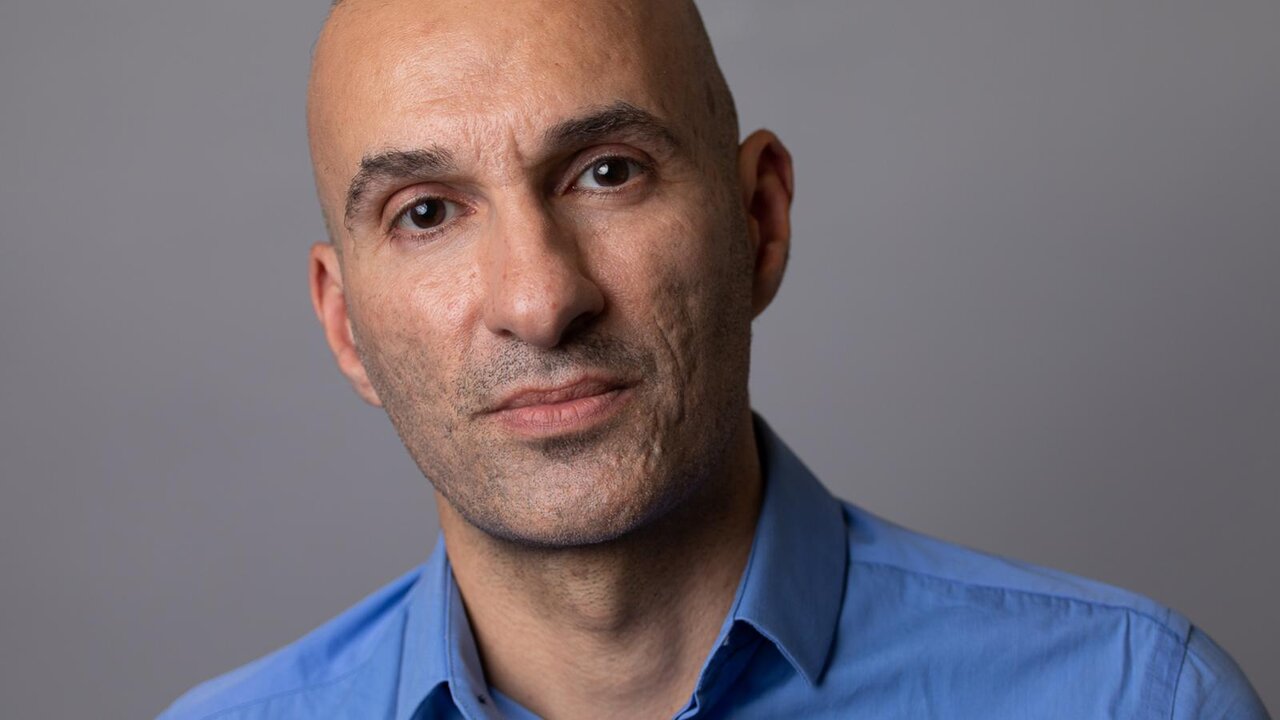
Following the publication of a collective statement in Le Monde on October 27, 2026, titled “The Iranian People Must Not Pay the Price of Political and Military Objectives,” Arshin Adib-Moghaddam, one of the signatories, has called for greater international attention to the protection of Iranian civilians, warning that emerging automated weapons systems pose an increasingly serious threat to civilian populations.
In an interview with Mehr News Agency, the Professor of Global Thought and Comparative Philosophies at SOAS University of London describes this emerging threat as “post-human warfare,” pointing to the growing role of automated military technologies.
Addressing the wider consequences of the conflict, Adib-Moghaddam highlights the interconnected nature of regional and global crises, from the Persian Gulf and the Strait of Hormuz to Palestine, Yemen, Iraq and Lebanon. He argues that lasting peace and national security require the empowerment of Iranian civil society, greater international engagement with Iranian culture, and a more active role for cultural diplomacy. In his view, “national security is a bottom-up process” that begins with the people.
Automated warfare and the growing threat to civilians
Adib-Moghaddam describes the collective declaration published in Le Monde as unique and, in many respects, historical because of the composition of its signatories. He also acknowledged the longstanding efforts of colleagues who, he said, have demonstrated considerable courage in their campaigns for peace.
Turning to the humanitarian risks facing civilians, he pointed to the attack on the school in Minab, which he described as “a real war crime,” saying it clearly illustrated the dangers confronting civilians in Iran and elsewhere in the world.
In his view, one of the most serious threats comes from what he called “post-human warfare,” referring to increasingly automated weapons systems. He warned that these technologies are expanding beyond conventional battlefields, reaching into space through the establishment of a new military unit within the US military command structure, while further developments are also being pursued for operations beneath the Earth’s surface.
Adib-Moghaddam pointed to the development of autonomous tunnelling platforms designed for underground warfare, comparing their intended movement through the Earth’s crust to the way submarines travel underwater. He noted that a defence start-up backed by Silent Ventures, Lux Capital and other investors is developing such platforms, with involvement from individuals associated with former Israeli tunnel-detection units and engineers from Anduril and SpaceX.
He warned that these emerging weapons technologies are likely to be tested in current battlefields, identifying their potential deployment as the greatest threat to civilians.
International law and Iran’s cultural diplomacy
Discussing the protection of civilians under international humanitarian law, Adib-Moghaddam stressed that the effectiveness of international law is closely tied to the diplomatic influence and capabilities of individual countries.
He said Iran’s diplomatic room for manoeuvre was severely constrained, not only by the hostility of Israel and the Trump administration, but also by shortcomings in Iran’s own diplomatic outreach.
Adib-Moghaddam argued that Iran had not established an effective public relations strategy through its overseas embassies. He described the country’s diplomatic representations abroad as dysfunctional, arguing that they had made little systematic or strategic effort to engage with international media and had shown virtually no initiative in cultural diplomacy.
He contrasted this with the efforts of a small group of intellectuals, activists, artists and others who had spent years advocating peace, promoting a better understanding of Iran and calling for the protection of civilians.
“These are the real ambassadors of Iran,” he said.
The regional and global consequences of the war
Adib-Moghaddam stressed that the consequences of the war cannot be understood in isolation, underlining that political, economic and social developments across the world are closely interconnected.
He linked demonstrations by Generation Z, which he said he had witnessed firsthand in Hamburg, Berlin, Barcelona and elsewhere, to the cost-of-living crisis. In his assessment, rising oil prices and inflationary pressures on other commodities, intensified by developments in the Persian Gulf and particularly the closure of the Strait of Hormuz, were among the factors connecting the regional conflict to everyday life in other parts of the world.
He also identified Yemen, Palestine, Iraq and Lebanon as major flashpoints within this interconnected geopolitical landscape.
The war, he noted, had implications extending beyond the West Asia region and could also reshape domestic political developments in other countries. Referring to the US midterm elections, Adib-Moghaddam described President Donald Trump’s defeat as an ironic example of the war’s wider political consequences. “This is a historic event, too and it has a lot to do with the minute connections that are so important to understand in order to survive contemporary world politics.”
Civil society and cultural diplomacy as foundations of national security
Turning to the steps needed to prevent future military confrontations and establish lasting regional peace, Adib-Moghaddam placed the empowerment and international engagement of Iranian civil society at the centre of his argument.
“First and foremost: Activate and connect Iranian civil society,” he said, describing the Iranian people as one of the greatest assets any country could possess.
He said that Iranians should be given a stronger voice and a greater opportunity to establish their identity and presence internationally. In his view, national security cannot be secured solely through military or state institutions; it must also be built from within society.
“National security is a bottom-up process,” he said, adding that the state has a responsibility to create opportunities for Iranians to develop their talents, pursue their aspirations and participate in the wider world, particularly in the emerging global artificial intelligence era.
Adib-Moghaddam also called for a fundamental change in the way Iran conducts its diplomacy abroad, urging the country’s embassies and diplomatic corps to focus more actively on cultural diplomacy.
He said that diplomatic missions should help promote Iranian culture internationally through sustained cultural engagement and global “content creation” for Iran. As one example, he proposed establishing institutes dedicated to Hafez and Iranian cultural heritage, with programmes introducing the country’s rich literary and cultural traditions to international audiences.
“A people with a global voice translates into a people with global security,” he said, adding that cultural diplomacy could serve as the first line of defence against future wars.
Arshin Adib-Moghaddam is widely recognised as one of the leading intellectuals of his generation. Currently, he is a Professor in Global Thought and Comparative Philosophies at SOAS University of London. The Editor of two leading book series for Cambridge University Press and Manchester University Press, Adib-Moghaddam Co-Directs the Centre for AI Futures and the Centre for Iranian Studies at SOAS. His most recent book is “The Myth of Good AI: A Manifesto for Critical Artificial Intelligence” (Manchester UP, 2025).
MNA