A sense of optimism following the restoration of an elected government in February this year appears to be fizzling out, giving way to despondency once again in the northeastern State
Published Date – 30 September 2026, 10:28 PM
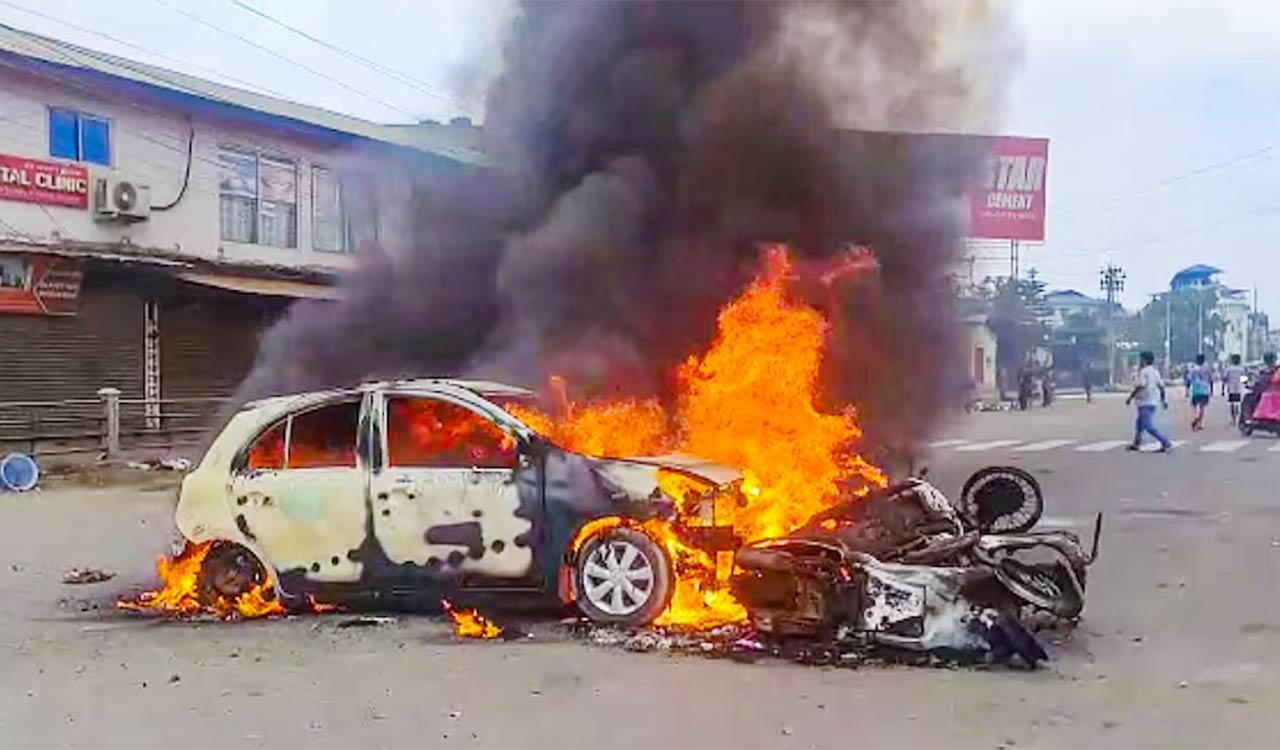
The spiralling violence in Manipur comes as a grim reminder of the widespread ethnic fault lines in the sensitive region that could flare up at any time. The crisis in the turbulent north-eastern State can no longer be seen as a battle confined to two communities—Meiteis and Kukis—but as a longer and widespread conflict. The latest bout of violence involves Nagas and Kukis and has spread across Ukhrul, Kamjong, Senapati and Kangpokpi, opening a new and more difficult front for the administration. Unlike the relatively clear geographical separation of Meitei and Kuki people, Naga and Kuki communities remain interspersed across the hills. Roads and highways pass through these mixed settlements, making both civilian movement and security management more challenging. Optimism about the restoration of popular government in February this year appears to be fizzling out, giving way to despondency once again. Recent attacks in Senapati and Kamjong have claimed the lives of many innocent civilians. Manipur is inhabited by several divergent ethnic groups, including the three major ones —Meitei, Naga and the Kuki-Zo. More than 260 people have been killed since ethnic violence between Meitei and Kuki-Zo first erupted in the State in May 2023. The trigger was provided by the demand by the Meitei community, a majority of them Hindus, for Scheduled Tribe status and a strong pushback by Kukis, a majority of them Christians who inhabit the hilly regions. The Manipur crisis reflects a deep and protracted ethnic breakdown that has transformed into a multidimensional conflict with severe human costs.
What began primarily as a severe confrontation between the Meitei and Kuki-Zo communities has increasingly absorbed other regional dynamics, including periodic Naga-Kuki hostilities. More than three years of unrest have resulted in hundreds of deaths, tens of thousands of displaced persons living in relief camps, and deep territorial and social segregation between the hills and the valley. The State remains heavily fractured into invisible borders and fortified ethnic zones, making day-to-day reconciliation exceedingly difficult. While security deployments can temporarily suppress isolated outbreaks, law enforcement alone cannot address the underlying socio-political grievances. There is an urgent need for a proactive role from the Union Home Ministry to bring all ethnic and political stakeholders into structured dialogue. Concerted efforts should also be directed at improving conditions, healthcare, and security for internally displaced persons (IDPs) to pave the way for their safe rehabilitation. Long-term stability requires resolving land, tribal rights, and representation disputes strictly within India’s constitutional boundaries. Since the government led by Chief Minister Y Khemchand Singh took charge in February this year, more than 50 people have died in the Naga-Kuki clashes. Political leaders must resist treating the restoration of peace as merely a security operation. Manipur needs much more than the management of violence. It needs sustained political dialogue, accountability, protection for vulnerable communities, and conditions that allow displaced people to return safely.