Despite the influence the two superpowers wield over global geopolitics, the Washington summit produced little beyond an agreement to keep talking
Published Date – 29 September 2026, 11:33 PM
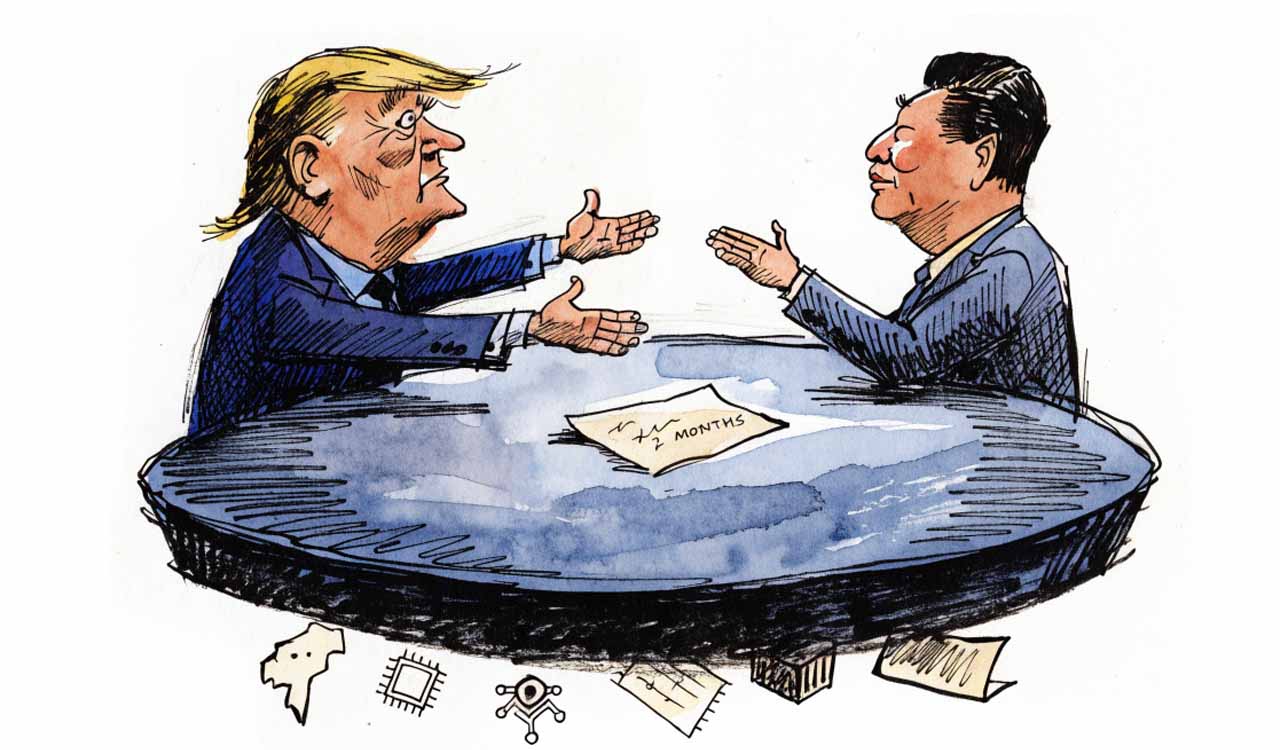
The much-hyped meeting between US President Donald Trump and his Chinese counterpart Xi Jinping was high on spectacle and symbolism but low on substance. Given the scale of influence the two superpowers wield in global geopolitics and the unresolved bilateral issues, one would have expected a reasonable outcome from the Washington summit. But, in the end, they have essentially agreed to keep talking. A two-month extension of the trade-war truce was the only important takeaway, even though the period fell short of expectations. Both sides issued separate accounts of the meeting, indicating that despite the Trump-Xi personal chemistry and promise of warmer ties, Washington and Beijing remain wary of each other. The post-summit statements agreed on only a handful of points, leaving many contentious issues unaddressed. The two countries agreed to hold an AI dialogue within the next two months, and establish a communication channel for AI-related incidents. Both Presidents signalled some alignment on limiting Iran’s nuclear weapons capabilities, and agreed “no country or institution can be allowed to impose tolls on international waterways.” Also, they formalised Board of Trade and Board of Investment plans, and agreed to reduce tariffs on $30 billion worth of goods from the other. Trump gave Xi a lavish welcome, unusually travelling to meet the “strong, vibrant and fit” Chinese leader off the plane. While Xi argued that the two countries could work together internationally, there was nothing concrete on the table.
Though Indo-Pacific nations will be relieved that Trump did not take Xi’s bait on changing the US policy on Taiwan, many worry that treating China so well in return for so little undermines US credibility and deterrence. The Trump administration is getting increasingly frustrated over the failure to secure peace in the Middle East and in the Russia-Ukraine war. China is Iran’s and Russia’s biggest international supporter. China is likely to help Iran rebuild its conventional military. Despite a welcome extension of the economic ceasefire, the summit leaves unanswered the questions about the strategic goals of America’s China policy today. The separate statements indicate that no substantive agreement has been reached on many of the advanced technologies that both countries are most concerned about, leaving many of the underlying issues in the relationship unresolved. A reciprocal reduction in tariffs on nonsensitive imports could have some positive impact for consumers. But the move is also likely to raise concerns among other trading partners of the US who will find their own tariff rates to be higher or comparable to those of China, a country many blame for fueling global trade imbalances through its domestic economic policy. Despite both congressional pressure and the bipartisan history of US presidents pressing Beijing on human rights and the repression of its Uyghur minority, the topic did not figure on the agenda.