When citizens’ names are at risk of being deleted from voter lists, administrative convenience cannot take precedence over accessibility, transparency and due process
Published Date – 28 September 2026, 11:36 PM
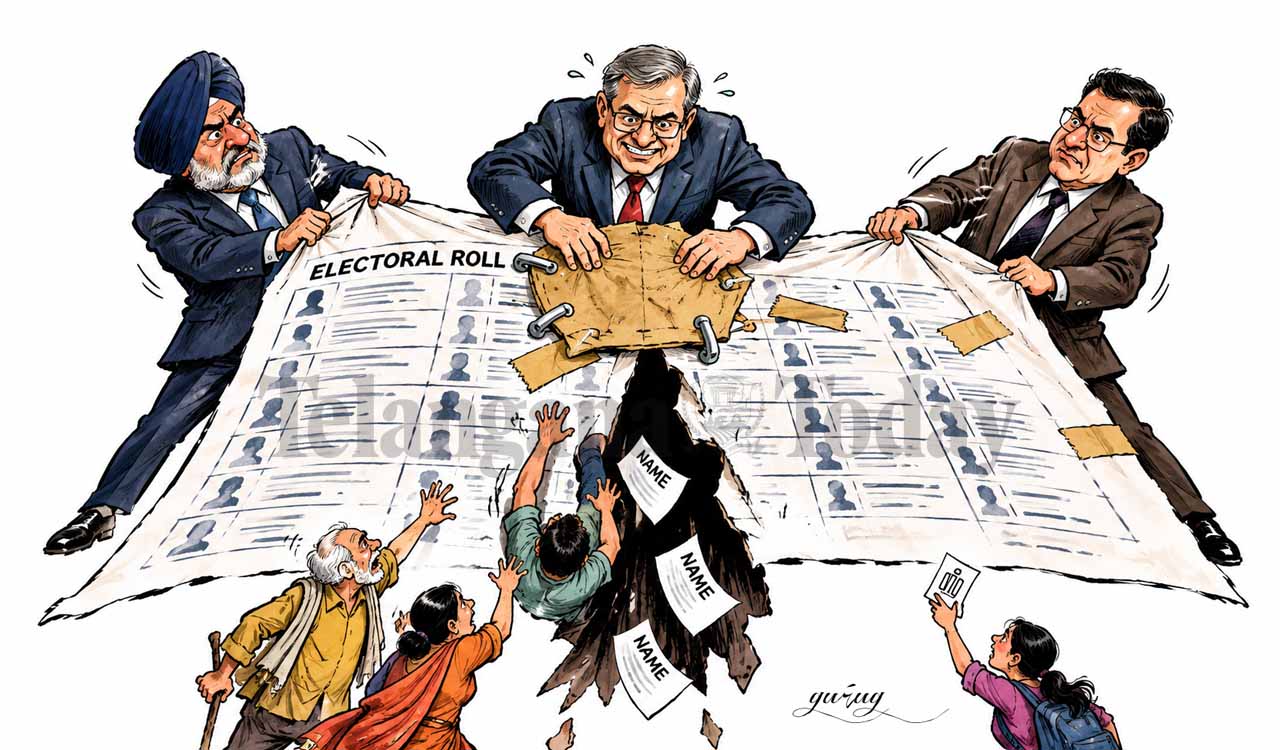
The damage-control exercise initiated by the Election Commission in the wake of widespread criticism over its handling of the revision of electoral rolls falls short of public expectations. The show of unity put up by the poll panel—Chief Election Commissioner Gyanesh Kumar and Commissioners Sukhbir Singh Sandhu and Vivek Joshi—by holding an all-member meeting and later issuing a slew of clarifications has not adequately addressed the issues pertaining to the Special Intensive Revision (SIR) of electoral rolls across the country. The core issue is whether the electoral process is being conducted transparently, in accordance with the law, and with adequate safeguards against the wrongful exclusion of eligible voters. The EC has not come up with a satisfying response to the question of fixing accountability for the severe hardships inflicted on citizens by the whimsical and authoritarian acts at the behest of the ruling dispensation. Not surprisingly, the opposition parties and rights activists are persisting with their demand for the resignation of the CEC and a halt to the SIR process, which has already been completed in 20 States and Union Territories. The poll panel came under intense scrutiny following media reports revealing that the two Commissioners—Sandhu and Joshi—had objected on record at least 14 times over 10 months to decisions and orders concerning the SIR exercise, including changes to the statutory Form 6, the handling of additions and deletions from electoral rolls and centralised control over the electoral roll database. Apparently bowing to public pressure, the EC has announced a slew of measures, including stopping physical hearings for unmapped voters or those with logical discrepancies in their enumeration forms.
It is a positive sign that the poll panel has decided to allow those left out during the SIR or thereafter to apply to the electoral registration officer (ERO) concerned for inclusion of their names in the electoral rolls. A special drive will immediately be launched for their enrolment. A voter who receives a notice need not undergo a bureaucratic ordeal merely to prove a democratic entitlement. If officials can collect documents at citizens’ homes and process applications online, those mechanisms should be accessible, reliable and adequately staffed. When citizens’ names are at risk of being deleted from voter lists, administrative convenience cannot take precedence over accessibility, transparency and due process. The Commission has announced home visits by Booth-Level Officers, help-desks and special camps for vulnerable groups, online hearings in exceptional cases and extensions for filing claims and objections in Delhi and Maharashtra. These steps could reduce the burden on voters, particularly labourers, homeless citizens, and the poor, who cannot navigate complicated procedures. The decision to allow authorised family members to participate in hearings is similarly practical. However, implementation is a litmus test for the poll body. The right to vote is too fundamental for citizens to be left to the mercy of the administrative machinery.