United Nations: Leaders from Asia, Africa, Europe and the Caribbean have urged the United Nations to move beyond responding to wars and humanitarian disasters and invest more heavily in diplomacy that can prevent crises before they erupt.
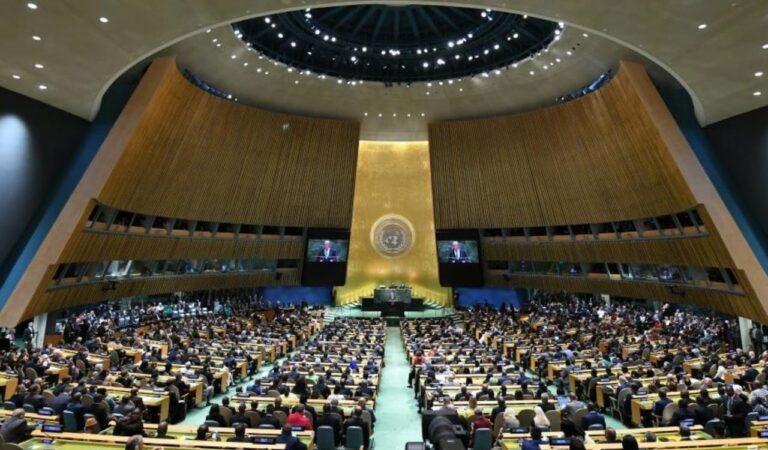
The demand emerged repeatedly during the General Assembly debate as countries questioned whether the UN had become more effective at managing the consequences of conflict than stopping violence.
Malaysian Foreign Minister Mohamad Hasan delivered one of the sharpest assessments. He said the UN too often responded “only after disaster has arrived. We count the dead. We deliver supplies.”
The international community would then rebuild what had been destroyed while waiting for another crisis, he said. “We must move from reaction to prevention,” Hasan said, describing Gaza as the most urgent example. Malaysia said preventive action required stronger institutions, early diplomacy and a willingness to address the political conditions that produced repeated violence. Rwanda raised a similar concern about the conflict in the eastern Democratic Republic of the Congo.
Prime Minister Justin Nsengiyumva said the crisis showed that the UN was more effective at responding to emergencies than anticipating them.
“The roots of the conflict in eastern (Democratic Republic of the Congo) are political,” he said, citing longstanding grievances, exclusion and failures of governance. The solution must therefore be political, he added.
Rwanda called on the Security Council and other international actors to support peace initiatives already under way. Congo presented a sharply different account of responsibility for the fighting, accusing Rwanda of conducting a war of aggression through the AFC/M23 armed movement.
Prime Minister Judith Suminwa Tuluka said the Security Council had already established a path towards peace. “We do not need new texts to replace those which have already been adopted,” she said. “What we need is their implementation.”
Gambia said its experience chairing the General Assembly’s Economic and Financial Committee demonstrated that countries could make progress even when they disagreed deeply. “Multilateralism does not require unanimity on every issue,” Vice President Muhammed Jallow said.
It required governments to remain at the negotiating table, listen, compromise and continue working through differences, he said. The same political courage should be applied to preventing and resolving wars.
Finnish President Alexander Stubb urged countries to renew their commitment to international law. “We must not grow indifferent to wars and human suffering,” he said, calling for greater investment in conflict prevention, human rights and sustainable economies.
Switzerland said dialogue should continue even when governments held opposing positions. “Our experience has also taught us that dialogue is not a sign of weakness,” Swiss President Guy Parmelin said.
Switzerland would continue providing places where parties that were no longer speaking could eventually resume contact, he added.
Dominica President Sylvanie Burton said the UN should be judged not only by its response after people had suffered but also by whether countries could work together to prevent that suffering. The UN Charter calls on countries to settle disputes through negotiation, mediation, arbitration and other peaceful means.
The organisation can also deploy envoys, peacekeeping missions, sanctions and humanitarian operations, depending on mandates approved by member states. India has repeatedly supported dialogue and diplomacy in addressing international conflicts and is a longstanding contributor to UN peacekeeping.
The prevention debate is also relevant to New Delhi’s warning that developing countries often bear the food, energy and economic costs of wars in which they have little influence.