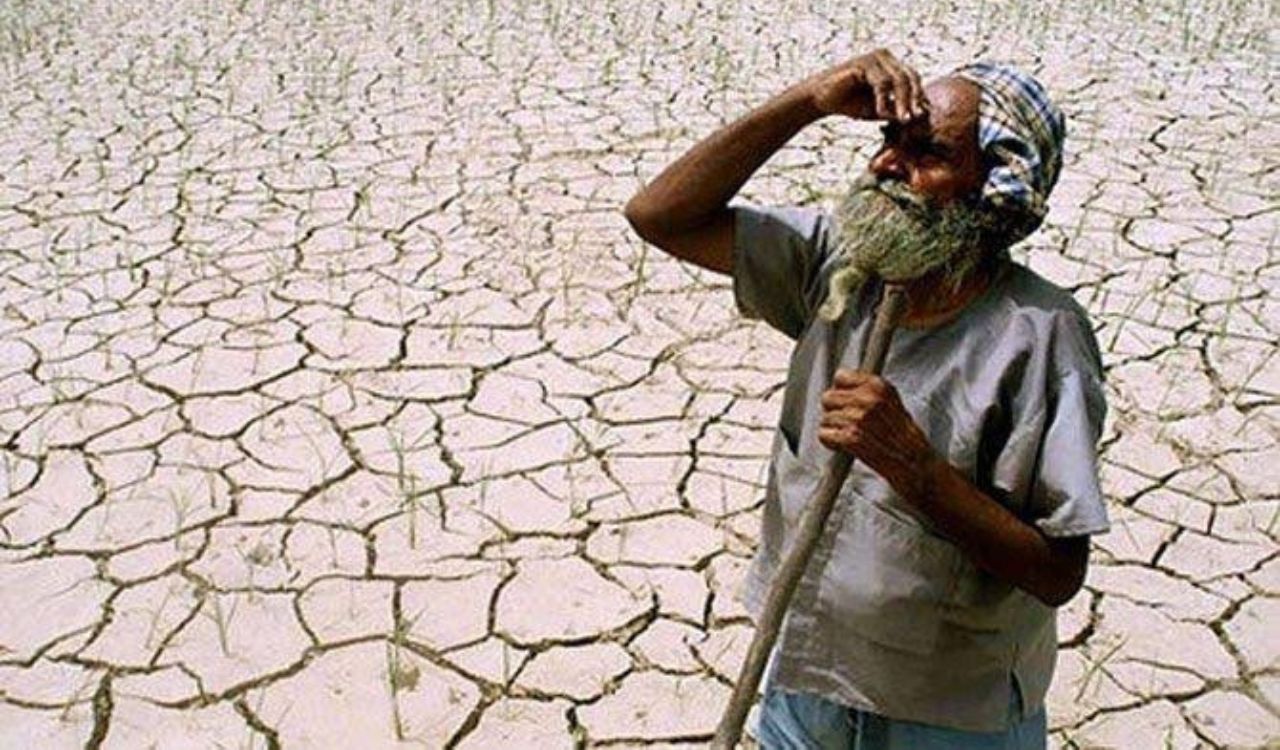
Maharashtra has declared 265 of its 358 talukas drought-affected amid rainfall deficits and prolonged dry spells. Opposition parties and the Kisan Sabha have urged swift implementation of relief measures, including crop loan restructuring, financial assistance and compensation for farmers
Published Date – 26 September 2026, 06:22 PM
Mumbai: After the Maharashtra government declared 265 of the state’s 358 talukas drought-affected amid a rainfall deficit and prolonged dry spells, the Opposition on Saturday demanded swift implementation of relief measures for farmers facing crop losses and other affected people.
The government declared 265 talukas drought-affected and announced relief measures, including restructuring of crop loans and deferment of recovery of agriculture-related loans. Akashvani News
According to a government resolution issued late on Friday, the drought declaration covers 74 per cent of the state. Most of the affected talukas are in Solapur, Ahilyanagar, Nashik, Latur, Beed, Buldhana, Amravati, Yavatmal, Nagpur and Chandrapur.
Shiv Sena (UBT) leader Aaditya Thackeray, while touring drought-hit areas of Marathwada, said his party had been demanding that drought be declared and maintained that the decision should have been taken earlier.
Referring to the activation of “Trigger One” by the government, the Congress said the ground situation was already worse than what was prescribed under “Trigger Three”.
Trigger One is the first stage in the state’s drought framework and is activated when there is a rainfall deficit of more than 25 per cent combined with a prolonged dry spell of 21 days.
“Now that the drought has been declared, the government should ensure that every farmer gets whatever assistance is provided under the complete drought relief package,” Thackeray told reporters after inspecting damaged crops at Khanapur village in Tuljapur tehsil of Dharashiv district.
He said the Sena (UBT) had been continuously demanding that drought be declared earlier. “Karnataka declared it before Maharashtra,” he added.
The former state minister, however, said the focus should now shift from the declaration to implementation of relief measures.
Congress spokesperson Atul Londhe said Chief Minister Devendra Fadnavis had earlier accused the Opposition of politicising the drought issue.
“Now you have declared a drought under Trigger One, but the ground situation is already worse than what is prescribed under ‘Trigger Three’,” he said.
He said the government should ensure effective implementation of drought-relief measures, including restructuring of crop loans, and fulfil its election promise to provide relief to farmers from agricultural debt.
Londhe also demanded an employment-oriented scheme to provide income to farmers during the drought.
He questioned the government’s earlier claim of spending Rs 49,000 crore to meet the state’s water requirements.
Meanwhile, the Kisan Sabha demanded a special financial package for drought-affected farmers.
The farmers’ body alleged that the move lacked adequate measures to provide direct relief to affected farmers.
It demanded that farmers affected by two consecutive failed kharif seasons be provided concrete financial assistance, including loan waivers and compensation based on crop insurance coverage.
“With no production and income, while cultivation and household expenses and the burden of loans continue, the government should announce a special financial package for drought-affected farmers,” the Kisan Sabha said.
It demanded that farmers whose loans became overdue after 2025 also be covered under the loan waiver scheme. It also sought a loan waiver or relief of at least Rs 2 lakh for farmers who have regularly repaid their loans, instead of limiting assistance to Rs 50,000.
The Kisan Sabha said assistance under National Disaster Response Fund (NDRF) norms would not adequately compensate farmers for their losses.
“The crop insurance sum assured for the concerned crop be treated as the minimum basis for compensation in cases of substantial crop loss due to drought. If the actual loss is higher, the state government should take responsibility for providing additional compensation accordingly,” it said in a release.