The United States had expected Iran to surrender after deploying military forces to the Persian Gulf, but instead encountered a different form of Iranian resistance, he underlined.
The official was referring to at least 100 waves of decisive and successful retaliatory strikes that the Iranian Armed Forces staged in the face of the latest unprovoked American-Israeli aggression as well as the servicemen’s reprisal against the American violations that were committed after Washington was forced to announced a ceasefire.
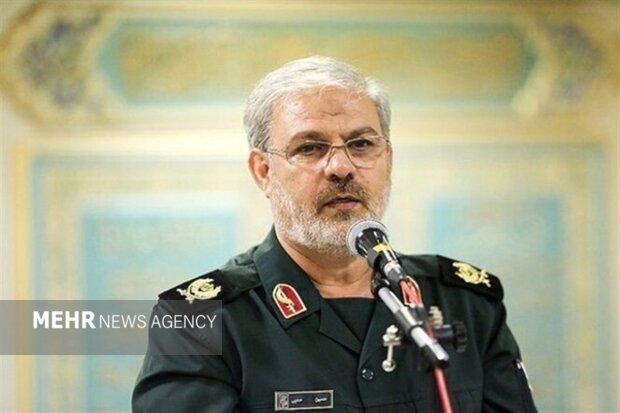
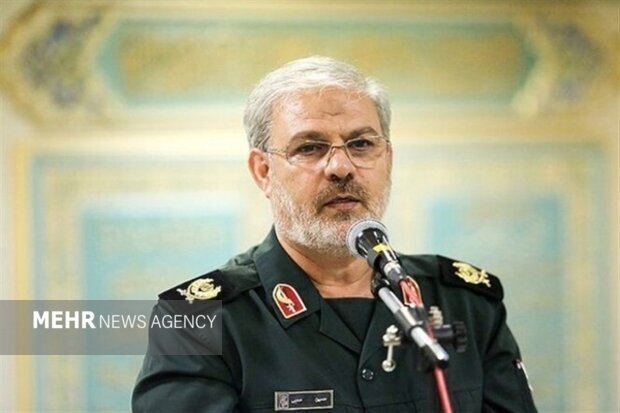
The IRGC spokesman described Iran as the victor of the recent war and said the Islamic Republic was converting that victory into “permanent strategic deterrence,” apparently pointing to Iran’s closing the strategic Strait of Hormuz in retaliation and refusing to reopen the chokepoint as long as violations persisted.
Mohebbi identified freedom of navigation through the strait as one of the US’s stated objectives, arguing that Washington had failed to achieve that objective during the aggression.
“Despite having the world’s largest navy, the United States was unable to keep the Strait of Hormuz open even for a few hours,” he said.
The spokesman added that the United States claimed the strait was open in order to prevent oil prices from rising, while control of the waterway was in the hands of the IRGC’s naval forces.
According to Mohebbi, before the war, dozens to more than 100 vessels passed through the strait each day, but currently, only oil tankers belonging to Iran’s trading partners were permitted to pass, and only with Tehran’s permission.
Mohebbi also addressed US claims of military and technological superiority, saying Washington had used propaganda to try to project an image of capability.
However, during the recent war, advanced US air, naval, and ground equipment came under retaliatory attacks by Iran’s Armed Forces, he said, asserting that the Islamic Republic would not stop punishing the US until its seven conditions were fulfilled, and expressing confidence in Iranian missiles’ capability to destroy multilayered American air-defense systems.
Recently, Secretary of Iran’s Supreme National Security Council, Mohsen Rezaei said the country had declared its conditions for renewed talks with the United States, saying that Washington should agree to Tehran’s terms if it wanted to escape the quagmire of its war of aggression against the Islamic Republic.
MNA