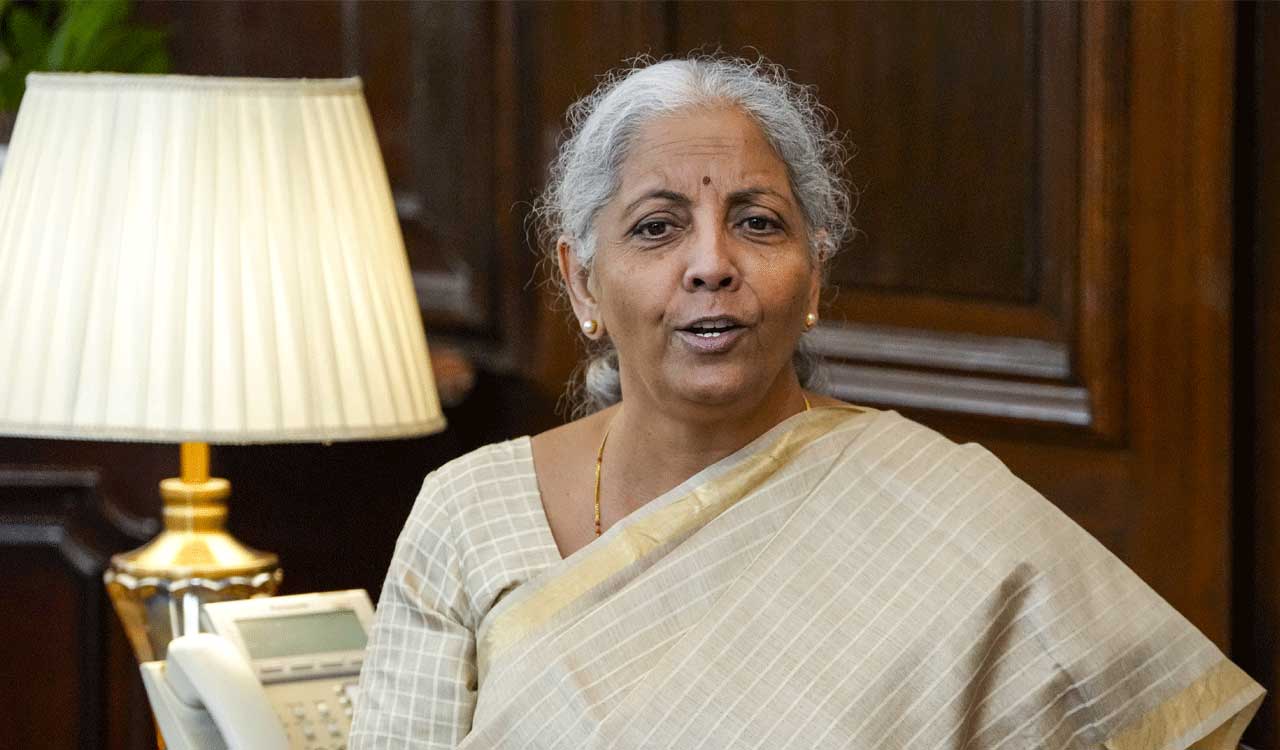
Finance Minister Nirmala Sitharaman said the proposed 0.4 per cent MDR on select UPI transactions above Rs 2,000 is not a tax or surcharge, with collections staying within the payment ecosystem and consumers not bearing the charge
Published Date – 25 September 2026, 01:18 PM
New Delhi: The proposed Merchant Discount Rate (MDR) on select high-value UPI transactions is neither a tax nor a cess or surcharge, and the collections will not accrue to the government, Finance Minister Nirmala Sitharaman said, rejecting criticism from Opposition parties.
Sitharaman said the MDR is a charge within the digital payments ecosystem and is levied on merchants by entities facilitating UPI transactions, including payment service providers, merchant banks and other ecosystem participants.
“This is not a tax, this is not a cess, this is not even a surcharge. And the collection is not coming to the Consolidated Fund of India,” Sitharaman told PTI.
Of the total MDR collected, 40 per cent will go to customers’ banks, 30 per cent to the payment gateway, 20 per cent to the UPI app and the remaining 10 per cent to the sponsoring bank of the UPI app.
She assured that the MDR will not be passed on to consumers and will be borne within the merchant payment ecosystem.
The National Payments Corporation of India (NPCI) has announced a 0.4 per cent MDR on specified person-to-merchant (P2M) UPI transactions above Rs 2,000 from October 15. Transactions up to Rs 2,000 and person-to-person transfers will continue to remain free.
Sitharaman said the charge would be shared among multiple participants in the payment ecosystem to help maintain technology infrastructure and support improvements and innovation in digital payments.
“This is not at all anything to do with the government,” she said, adding that the MDR mechanism involved NPCI, merchants, banks, aggregators and other service providers.
The Finance Minister also pointed out that merchants already pay MDR on transactions made through credit and debit cards and said the new framework should not be viewed as a charge on consumers.
She further said that RuPay transactions would remain free and that no MDR would apply to UPI payments below Rs 2,000.
It is estimated that approximately 96 per cent of person-to-merchant UPI transactions will remain unaffected by the new framework.
The Finance Minister’s remarks come amid criticism of the proposed MDR, with concerns being raised over its potential impact on merchants and the possibility of charges being passed on to consumers.
Effective October 15, a 0.4 per cent MDR will be paid by merchants, not consumers, and the fee has been capped at Rs 300 for transactions of Rs 75,000 or more.
Payments between individuals, as well as the vast majority of everyday merchant payments, will remain free.
Essential services such as railways, telecom, fuel and insurance will attract a flat Rs 5 fee per transaction above Rs 2,000. Capital market transactions, including mutual funds and stockbroking, will attract a lower 0.02 per cent rate, also capped at Rs 300.
Small merchants collecting up to Rs 1 lakh a month via UPI QR codes will remain fully exempt from the new charge, leaving about 96 per cent of merchant transactions unaffected.
The NPCI, which operates the UPI platform, issued a circular on September 15 providing for MDR on certain UPI transactions, with the move aimed at creating a sustainable revenue framework for the digital payments ecosystem.
A dedicated fund for promoting the use of UPI by small merchants will be set up, with a contribution of 5 per cent of total MDR collections. The initiative is aimed at expanding UPI acceptance, encouraging sustained usage and accelerating the inclusion of small businesses in India’s digital payments ecosystem.