Telangana’s El Nino contingency plan has come under scrutiny as farmers protest for irrigation water and consumers report persistent power outages despite the government’s preparedness measures. Questions are being raised over the implementation of recommended contingency measures, particularly in irrigation and power supply management.
Updated On – 25 September 2026, 06:17 PM
Hyderabad: The State government’s El Nino contingency plan prepared for the Vanakalam 2026 season has come under the scanner, with farmers demanding water supply and domestic consumers complaining about power outages.
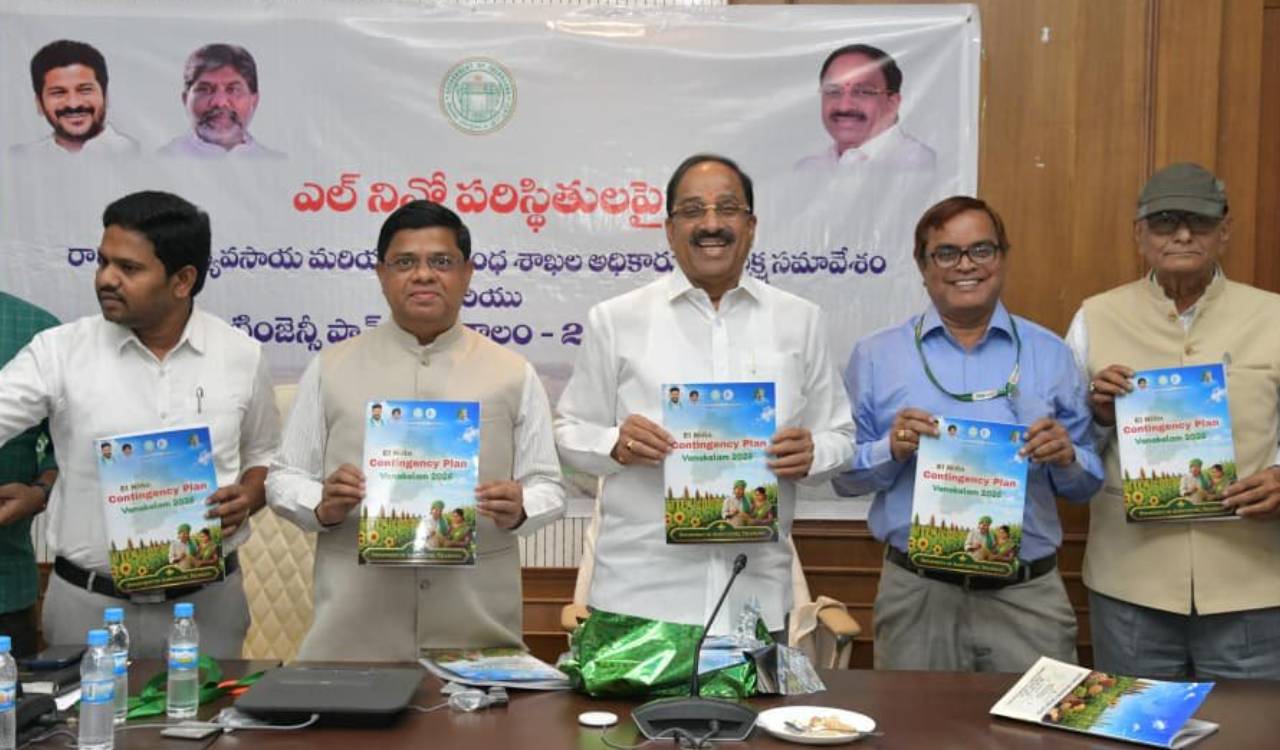
Three months after the Central government and the India Meteorological Department cautioned about the impact of El Nino, the State Irrigation and Agriculture departments initiated a contingency plan in July to deal with the challenges.
Similarly, the expert panel constituted by the Telangana government to study the impact of El Nino submitted its report for the current Vanakalam season. It recommended a Rs. 802.92 crore contingency package to mitigate the situation. It specifically insisted on implementing contingency measures to protect agriculture, safeguard farmers’ interests and livelihoods, besides ensuring drinking water and fodder security.
Against this backdrop, the State government’s commitment to implementing the contingency plan has now come under the scanner. Farmers in several parts of the State, particularly those from Chief Minister A Revanth Reddy’s home district of Palamuru, have been taking to the streets demanding the release of water from various projects.
Farmers under the Jurala Project ayacut, Koilsagar ayacut and other medium irrigation projects have been staging protests for the past few days, demanding water to save their standing crops.
At this juncture, farmers’ associations are questioning the initiatives taken by the government. Though Congress Ministers and MLAs from erstwhile Palamuru met Karnataka Chief Minister DK Shiva Kumar seeking release of 5 tmcft of water, there has not been any official announcement on the water release. Since the last two days, average inflows of about 5,000 cusecs a day have been recorded at the project, providing much-needed relief to the farmers.
“But why did the government not initiate talks with the Karnataka government beforehand to secure water release to protect crops. Was this not planned as part of contingency measures,” asked a member of the Telangana Farmers Federation.
Interestingly, Andhra Pradesh Chief Minister N Chandrababu Naidu recently claimed that his government was supplying Krishna water all the way from Srisailam to his constituency, Kuppam, covering a distance of 660 km. This has raised questions over the Congress government’s preparedness in initiating measures for judicious use of water between Andhra Pradesh and Telangana. In the wake of the El Nino impact, it has also brought the State government’s commitment to safeguarding Telangana’s interests under scrutiny, a member of the Telangana Farmers Federation observed.
Congress MLAs complain about power supply issues in Assembly
The challenges are not confined to the irrigation sector. Farmers have been staging protests at substations across the State over inadequate power supply, a concern that several Congress MLAs also admitted to in the Assembly last week. Farmers dependent on borewells to cultivate crops are complaining about damage to pumpsets due to erratic and poor-quality power supply.
Likewise, domestic consumers are also complaining about power outages and frequent disruptions. The unscheduled power cuts are leaving consumers fuming.
In July, Deputy Chief Minister Mallu Bhatti Vikramarka directed officials to ensure maximum power generation at TGGENCO thermal power stations in view of the El Nino impact.
Citing deficient rainfall this season and its adverse impact on hydel power generation, he said measures should be initiated to ensure adequate and uninterrupted supply of quality coal to all thermal stations. Despite these plans, complaints of power outages continue to pour in from the farming community as well as domestic consumers.