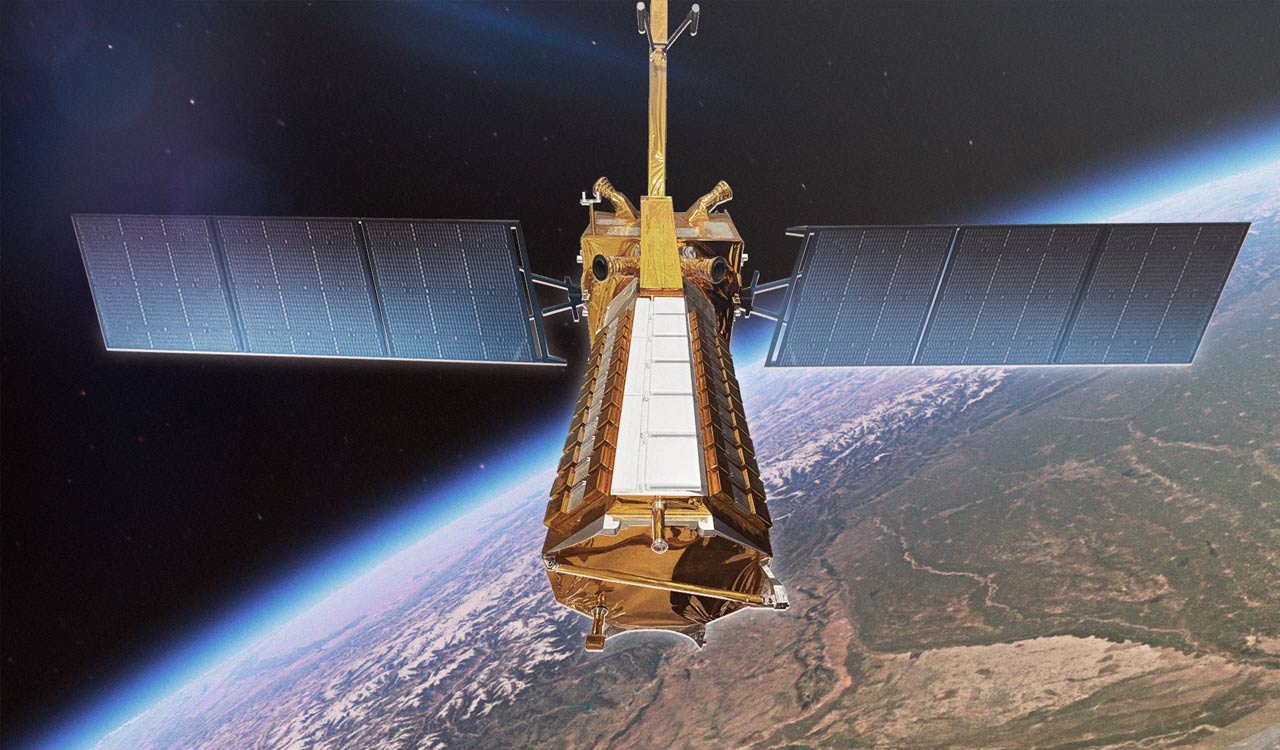
NASA senior official Amit Kshatriya praised the agency’s collaboration with ISRO and expressed interest in expanding cooperation in science and human spaceflight. He highlighted the NISAR mission and Artemis Accords, while astronauts Peggy Whitson and Charles Bolden praised India’s space achievements
Published Date – 20 September 2026, 10:27 AM
New York: NASA has an “incredible” partnership with ISRO and is looking forward to more collaboration, the US agency’s Indian-American senior official Amit Kshatriya has said.
“We already have incredible collaboration with ISRO,” Kshatriya, NASA’s Associate Administrator and Chief Engineer, told PTI in an exclusive conversation at the iconic Intrepid Museum.
“The capability that ISRO is developing, both in science missions as well as in human spaceflight, is incredible to watch, and we are looking forward to a lot more collaboration,” Kshatriya, who is the highest-ranking civil servant at NASA and chief operating officer, said.
He referred to NISAR (NASA-ISRO Synthetic Aperture Radar), the partnership between the National Aeronautics and Space Administration and the Indian Space Research Organisation on the Earth-sensing orbiter launched in July 2025 with the objective of measuring and understanding changes in Earth’s land, ice, water, and vegetation.
“That benefitted from joint endeavour,” he said of the NISAR initiative.
Kshatriya added that NASA partners a lot on endeavours such as the human space programme and shares lessons learned with ISRO, underlining the value of international cooperation in space exploration and missions.
“It’s important…for America to be the leader there, but we want to lead with our values. It’s not just about who has the most machines there. It’s about our norms and standards for exploration,” he said.
Noting that India signed the Artemis Accords, the set of non-legally binding principles to guide civil space exploration, along with over 70 other nations, Kshatriya said, “That’s a commitment that we’re going to explore in a way that respects each other’s integrity and our values as democracies. That’s fundamental too. ISRO has been an incredible partner.”
Kshatriya was in the city to address a panel discussion hosted at the Intrepid Museum, named after the World War II aircraft carrier, to commemorate the 50th anniversary of the public rollout of ‘Enterprise’, NASA’s prototype orbiter that paved the way for the space shuttle programme.
Kshatriya was joined by former NASA Administrator and astronaut Charles F. Bolden Jr and record-breaking astronaut and Axiom Space Director of Human Spaceflight Peggy Whitson.
Whitson spoke about her collaboration with Group Captain Shubhanshu Shukla who was the pilot for Axiom Mission 4, which she had commanded.
“I was actually very pleased to have Shubhanshu Shukla on my mission for AX4. From everything he’s told me, I think the country is very excited about the future and the potential of space in general, but human spaceflight also. I’m very proud of him,” she said.
Lucknow-born Shukla, a decorated pilot in the Indian Air Force (IAF) and Ashoka Chakra awardee, served as the pilot for the Axiom Mission 4 (Ax-4) to the International Space Station.
He became the first Indian to visit the research station orbiting about 250 miles above the Earth and only the second Indian astronaut to go to space in over 40 years, after Wing Commander Rakesh Sharma flew aboard Soyuz T-11 in April 1984 as part of the Soviet Interkosmos programme.
Launched in June 2025, the Axiom Mission 4 included Whitson as commander, Shukla as pilot and mission specialists Sławosz Uznański-Wiśniewski of Poland and Tibor Kapu of Hungary. The crew had docked with the International Space Station for 18 days of research activities.
Whitson, America’s most experienced astronaut, has accumulated 695 days in space after the Ax-4 mission, more than any other American astronaut or woman astronaut in the world.
She holds the distinction of being the first female commander of the International Space Station.
Highlighting India’s contribution to the global space program, Bolden said, “All you need to do is look at who was the first nation to reach Mars on their first attempt. And the answer to that is the Indians.”
India’s first interplanetary mission to planet Mars, Mangalyaan or the Mars Orbiter Mission (MOM), was launched on board PSLV-C25 in November 2013. ISRO became only the fourth space agency to successfully send a spacecraft to Mars orbit.
While the designed mission life was six months, MOM completed seven years in its orbit in September 2021.
Highlighting the close cooperation with NASA during the Mars mission, he said, “We provide the Deep Space Network, which enables us to work with all of our partners to help every once in a while and make recommendations on navigation. Both India and the UAE became the only nations in the world to ever get there on their first attempt,” he said.
The Orbiter was being tracked by the Indian Deep Space Network (IDSN), located outside Bangalore, whose antennas were complemented by NASA – Jet Propulsion Laboratory Deep Space Network.