The Congress marked the fourth anniversary of Rahul Gandhi’s Bharat Jodo Yatra, calling it a decisive turning point in Indian politics. Jairam Ramesh said the 4,080-km march sought to hear public concerns, challenge political polarisation and inspire renewed hope
Published Date – 7 September 2026, 10:32 AM
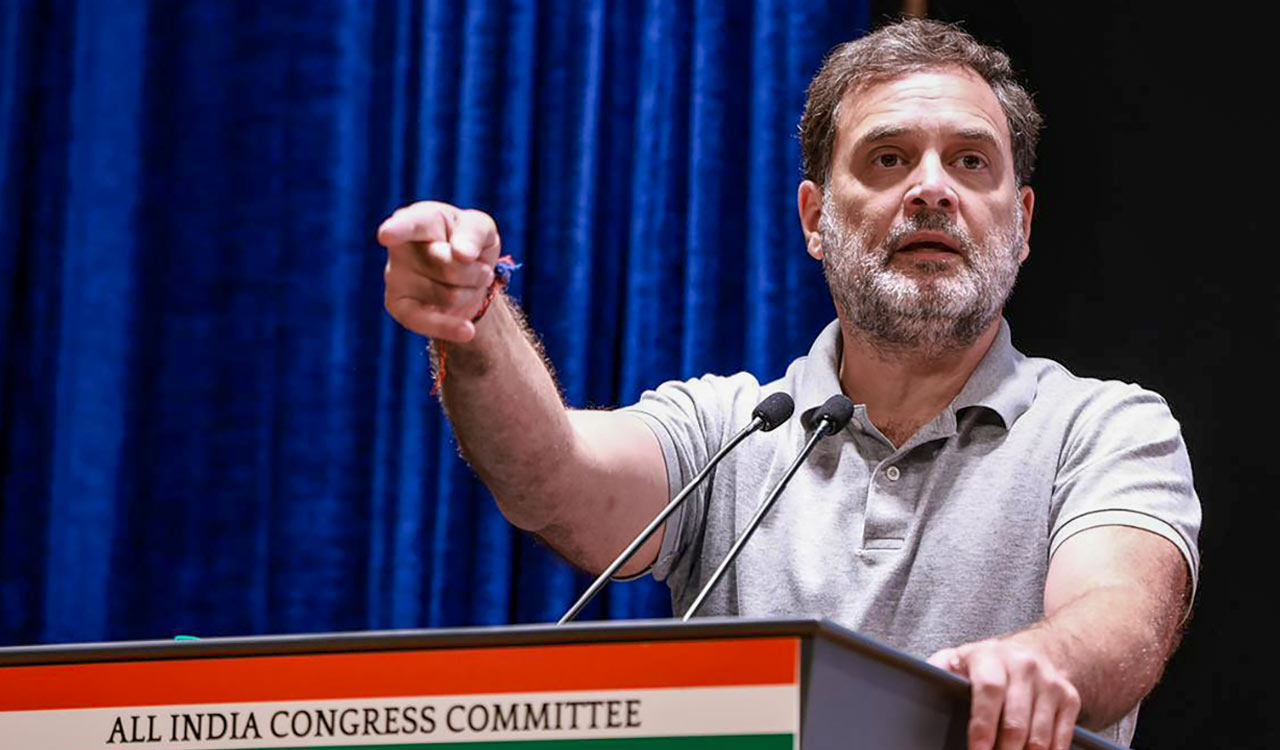
New Delhi: The Congress on Monday hailed the Rahul Gandhi-led Bharat Jodo Yatra as a “decisive turning point” that infused new hope, and said it was not to sermonise a “Mann ki Baat” but to listen to “Janta ki Chinta”.
Congress general secretary in-charge communications Jairam Ramesh said today is the fourth anniversary of the launch of the truly historic Bharat Jodo Yatra under the leadership of Gandhi, who visited the Vivekananda Memorial at Kanyakumari before embarking on the “epic journey” with around 120 other Bharat Yatris.
“This padyatra was a transformational event in contemporary Indian politics that started in Kanyakumari and covered 4080 km through 12 states and 2 UTs over a period of 145 days before culminating in a rousing rally in Srinagar,” Ramesh said on X.
It drew support and sustenance from millions of Indians concerned with sharpening economic inequalities, increasing social polarisation and growing political authoritarianism, he said.
The padyatra’s basic thrust was an ideological challenge to the “systematic RSS/BJP assault” on Constitutional principles, provisions, practices and procedures, the Congress general secretary said.
It was not to sermonise a Mann ki Baat but to listen to Janta ki Chinta, Ramesh said.
“Today we recall that decisive turning point that infused new hope, imparted new energy and inspired a new resolve,” he added.
During the course of the march, Gandhi addressed 12 public meetings, more than 100 street corner meetings and 13 press conferences. He had over 275 planned walking interactions and more than 100 sitting interactions.
With more than 4,000 km under his belt, Gandhi managed to catch the attention of his supporters as well as detractors. The march witnessed participation from a cross-section of society, including film and TV celebrities such as Kamal Haasan, Pooja Bhatt, Riya Sen, Swara Bhasker, Rashami Desai, Akanksha Puri and Amol Palekar.
Besides, writers and military veterans, including former Army chief Gen (Retd) Deepak Kapoor and ex-Navy chief Admiral (Retd) L Ramdas, and noted people such as former Reserve Bank of India governor Raghuram Rajan and ex-finance secretary Arvind Mayaram also participated in the yatra.
Opposition leaders such as the National Conference’s Farooq Abdullah and Omar Abdullah, People’s Democratic Party’s Mehbooba Mufti, Shiv Sena (UBT) leaders Aaditya Thackeray, Priyanka Chaturvedi and Sanjay Raut, and Nationalist Congress Party (SP) leader Supriya Sule also walked alongside Gandhi at various points during the march.