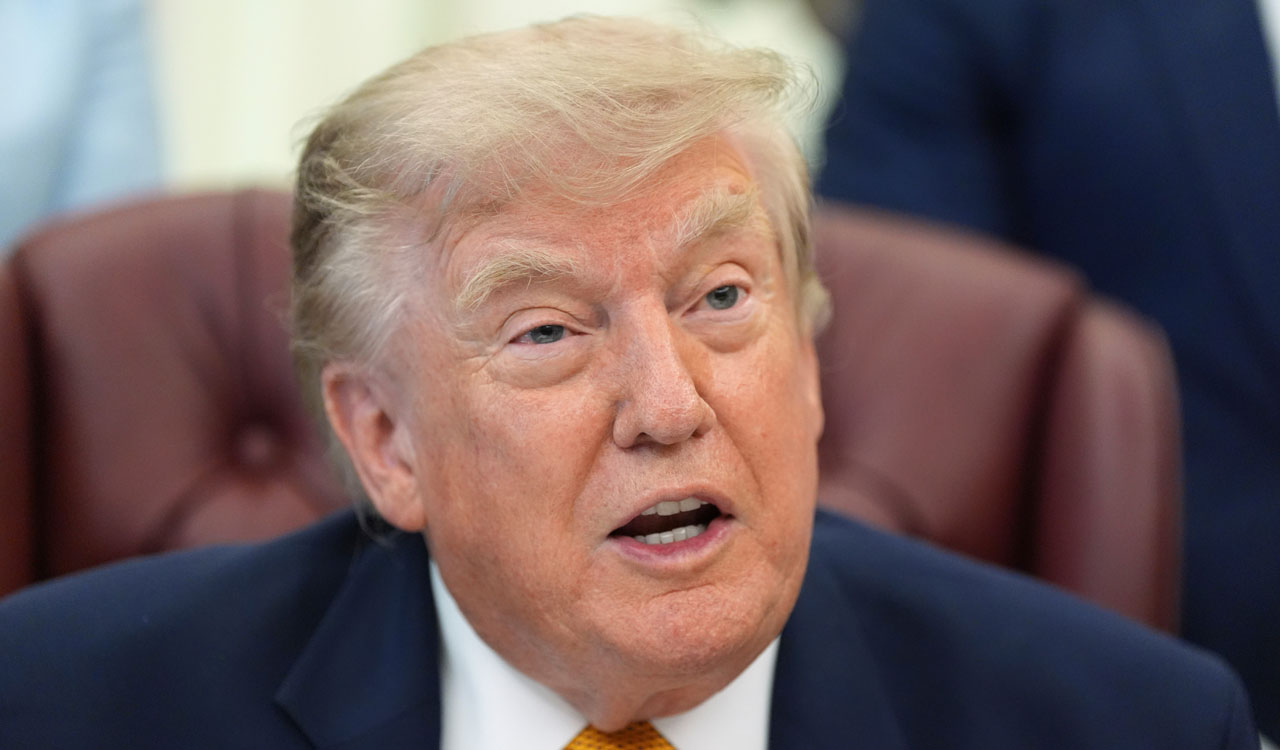
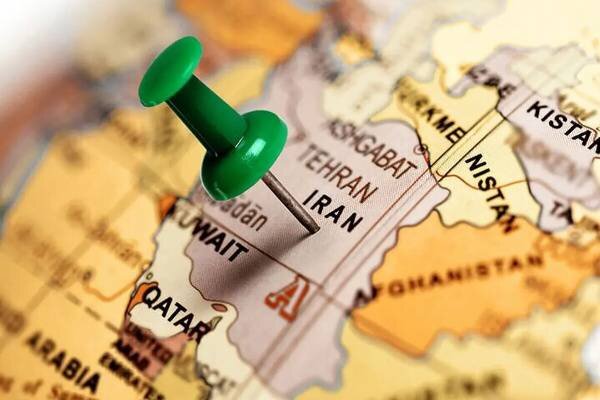
In his latest remarks, the US Treasury Secretary has once again presented an exaggerated picture of Washington’s ability to collapse Iran’s economic network, claiming that by sanctioning a Turkish bank, the United States has cut “Iran’s vital financial arteries”—a claim that, rather than reflecting a decisive development in Iran’s economy, reflects the Donald Trump administration’s effort to instill the impression that sanctions are on the verge of completely paralyzing Iran’s economy.
Scott Bessent, the US Treasury Secretary, announced on Friday that Washington has sanctioned the investment bank “Golden Global” and two of its subsidiaries in Turkey. The US Treasury Department claims that this group has played a role in transferring Iran’s oil revenues from China to Turkey and converting part of these resources into cash and gold, and has also provided banking services to some Iranian entities. At the same time, Bessent warned that another bank may be targeted by sanctions next week and even spoke of continuing this process until other countries stop economic cooperation with Iran.
The sanction itself is, of course, a reality and cannot be denied. The United States has placed a financial institution based in Turkey on its sanctions list, and this action severely restricts its access to the dollar-based financial system. But there is a very large gap between “sanctioning a bank” and “cutting a country’s financial arteries.” That gap is precisely where the Trump administration’s propaganda rhetoric enters the scene.
Iran has been under the harshest US sanctions regime for years and has redesigned an important part of its financial and trade network to cope with these very pressures. Tehran is not dependent on a single bank, a single money transfer route, or a single country to continue its foreign trade. Exchange networks, indirect trade, barter, the use of non-dollar currencies, intermediary companies, and cooperation with various trading partners are part of the mechanisms that have been developed over recent years to reduce the impact of sanctions. Therefore, even if one channel is closed, it does not mean that all of Iran’s financial flows have stopped.
More importantly, the very sanctioning of Golden Global shows that Washington is still identifying and targeting Iran’s financial “channels”; that is, if all of Iran’s financial arteries had truly already been cut, there would have been no need to discover and sanction new routes. The fact that the US Treasury Department goes after new banks, companies, and intermediaries every week actually shows that Iran’s trade and resource-transfer network remains active, and Washington is trying to restrict it step by step.
On the other hand, another part of Bessent’s remarks about oil prices is also significantly out of step with market reality. He predicted that an increase in global supply could bring crude oil prices down to the range of $40 to $50. But with military and geopolitical tensions in the Middle East continuing, the oil market is not currently confirming such a picture. Brent crude traded at around $95 in Friday’s trading and rose more than 6 percent over the course of a week. More simply, the current market is not only not in the $40 to $50 range, but is almost double the level the US Treasury Secretary is talking about.
This gap between claim and reality is highly significant. The Trump administration is trying to convey two messages at the same time: first, that US economic pressure against Iran is choking the country’s economy; and second, that Washington is capable of sharply lowering oil prices by increasing energy supply. But the oil market is not subject to the decisions of a single government. War, geopolitical risk, shipping routes, the security of the Strait of Hormuz, the export volumes of major producers, and market expectations all play a role in determining oil prices.
Even from a political perspective, the claim of “cutting Iran’s financial arteries” is more of a threatening message to foreign banks and companies than a report on the collapse of Iran’s economy. The United States wants to convince banks and financial institutions in Turkey, the UAE, China, and other countries that cooperating with Iran will come at a heavy cost. In fact, the main goal of secondary sanctions is precisely this: Washington wants to extend the power of its sanctions beyond US borders and force companies in other countries to choose between trading with Iran and access to the US financial system. This policy undoubtedly creates costs for Iran, and the effects of financial and banking sanctions cannot be minimized. The narrowing of money transfer routes, the increase in the cost of foreign trade, the greater difficulty of repatriating export revenues, and the increased risk for banks and companies doing business all create real pressure. But economic pressure is not the same as economic collapse, and sanctioning one bank is not equivalent to destroying a country’s financial network.
Even inside Iran, economic officials have emphasized in recent days that the country’s economy, despite the pressure of sanctions and restrictions caused by the war, still has resources and tools for managing the foreign exchange market. The governor of the Central Bank of Iran has also announced that the country has sufficient foreign exchange resources and that the central bank is ready to intervene to manage the market. Of course, these statements do not mean there are no economic problems; rather, they show that the image of a “collapsed economy” raised in Washington’s rhetoric is far from the complex reality of Iran’s economy.
Ultimately, what Bessent calls an “economic isolation operation” should be seen more as a maximum-pressure campaign and a continuous economic war against Iran, rather than a final blow intended to disable the country’s economy. The United States can raise the cost of trading with Iran, sanction banks, and target financial routes one after another; but to conclude from these measures that “Iran’s financial arteries have been cut” is a claim far larger than the reality that the available evidence shows.
The main problem with such claims is that, through repetition, economic pressure is mistaken for strategic success. Washington may be able to remove a bank from the dollar financial system, but it still has to prove that it can disable all of Iran’s networks of trade, exports, resource transfers, and economic relations with foreign partners. Until that happens, phrases like “cutting Iran’s vital arteries” are more a part of the Trump administration’s psychological operation to display the power of sanctions than an accurate description of Iran’s economic situation.
MNA