A former Pakistani ambassador says US President Donald Trump’s latest economic pressure campaign against Iran could prove ineffective, citing Washington’s multiple strategic miscalculations concerning the Islamic Republic.
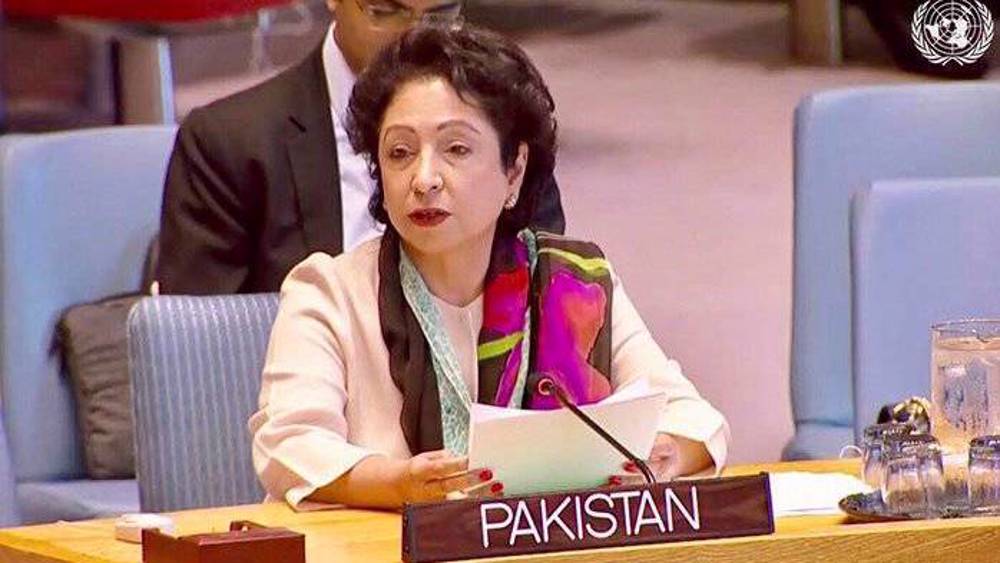
In an article that appeared on Pakistan’s Dawn newspaper on Saturday, Maleeha Lodhi, a former envoy to the US, the UK, and the United Nations, said Trump’s declaration of his so-called “economic war” against Iran “is likely to backfire just like his bombing campaign failed to force Iran to surrender.”
Her remarks concerned US Treasury Secretary Scott Bessent’s announcing new coercive economic measures last week under what Washington had termed as “Economic D-Day.” The announcement, Lodhi added, “also exposed the limits of US military options.”
The announcement came after the failure of the United States’ and the Israeli regime’s wholesale unprovoked aggression against Iran from February 27 to April 7, and similar frustration of the US’ subsequent violations of a ceasefire and a Pakistan-mediated memorandum of understanding.
Lodhi noted that the sanctions were announced as diplomatic contacts were also taking place. Trump had earlier telephoned Pakistan’s chief of defense forces, Field Marshal Asim Munir, asking him to persuade Iran to resume negotiations, with Munir subsequently traveling to Tehran for talks with Iranian officials, she wrote.
According to officials cited by Lodhi, Pakistan urged Trump to allow time for diplomacy to produce results. Lodhi said the simultaneous diplomatic outreach and attempts at economic escalation indicated that Washington had not abandoned efforts to find a negotiated off-ramp.
The former envoy pointed to Iran’s outright rebuttal of the latest US pressure campaign, citing Foreign Minister Abbas Araghchi as dismissing Trump’s threats and saying ironically, “We have seen this movie before.”
She additionally referenced Iranian officials’ assertion that the country was “fully prepared” to counter the sanctions as well as their warning of halting all oil flows from the Persian Gulf and delivering an “earthquake-like” retaliation if Washington proceeded with its threats.
Lodhi additionally noted that Washington had not identified potential targets for secondary sanctions or specified penalties or an enforcement timetable, besides failing to taking any immediate action against Iran’s largest trading partners.
The article went on to point to the global resistance in the face of the campaign, including Qatar’s describing the sanctions as unilateral and calling for mediation and China’s rejection of Washington’s approach. A Chinese foreign ministry spokesman said Beijing “will take all necessary measures to firmly safeguard its own interests” from “illegal unilateral sanctions” and warned of retaliation if such sanctions were imposed, it mentioned as a case in point.
“The US expectation that countries will fall in line assumes they will give preference to ingratiating themselves with Washington over their own economic interests. This will turn out to be another miscalculation,” she wrote.