By Syed Zafar Mehdi
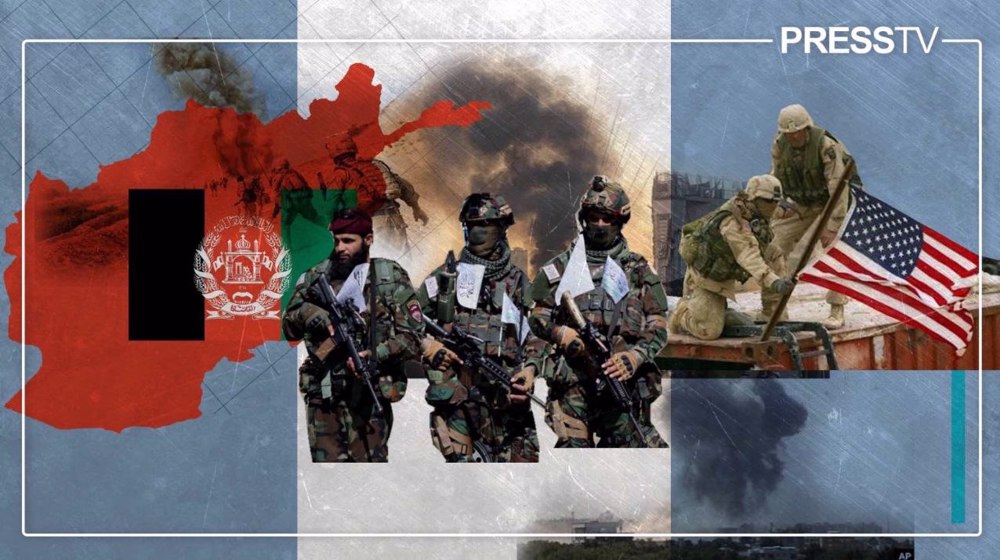
Five years ago, around this time, the Taliban overran Kabul, bringing to a dramatic close America’s longest and most disastrous war after nearly two decades.
The images from those final days remain among the most enduring symbols of a failed and costly military intervention – desperate Afghans crowding Kabul airport, American aircraft evacuating personnel under chaotic conditions, and Taliban fighters entering the capital as the puppet government planted and funded by Washington collapsed almost overnight.
One photograph captured the moment with almost cinematic clarity. Major General Chris Donahue, the last American soldier to leave Afghanistan, appeared silhouetted against the darkness as he boarded a military aircraft at Kabul airport on August 30, 2021.
It was the image of a dying Empire leaving in a humiliating manner and reaffirmed what locals keep repeating – Afghanistan has been the graveyard for the most powerful Empires in history.
The United States invaded and occupied Afghanistan nearly two decades earlier with overwhelming military force and a declaration that it would destroy al-Qaeda and the Taliban and bring Osama bin Laden, the alleged mastermind of the September 11 attacks, to justice.
Yet after 20 years of brutal military occupation, trillions of dollars spent and enormous human suffering resulting from the US-led coalition’s horrendous war crimes, the occupiers have not achieved a political settlement or eliminated the forces it had vowed to defeat.
The Taliban, armed largely with light weapons and relying on guerrilla warfare, survived the full force of the most powerful military alliance on earth. And Afghanistan once again demonstrated why it has earned the ominous historical epithet: the “graveyard of empires.”
A war that began with vengeance and ended in defeat
The American invasion began on October 7, 2001, less than a month after the September 11 attacks killed 2,977 people in the United States. Washington presented the foolhardy military adventure as the opening battle in a so-called global “war on terror.”
President George W. Bush vowed to destroy al-Qaeda and the Taliban that had – in his words – provided sanctuary to the plotters of the 9/11 attacks. The initial assault was devastating. Taliban positions collapsed rapidly, and the group was driven from power within weeks.
That should have been the moment for Washington to reassess its mission and pull out. Instead, it stayed because the US military-industrial complex wanted to profit from the misery of Afghans. The American war machine thrives on wars abroad.
What began as a so-called “counterterrorism” operation gradually evolved into a far-reaching occupation project. Washington claimed that its mission was to prevent terrorism, yet it created a governing structure that was a recipe for disaster as the country became heavily dependent on US military, financial, and political support.
The broader objective was to keep Afghanistan politically and strategically subservient to Washington, preventing the country from developing into a truly independent state.
Hamid Karzai, who was chosen as Afghanistan’s first president following the overthrow of the Taliban, was initially portrayed as the blue-eyed boy of the US-led coalition, a convenient Afghan partner who could lend legitimacy to a project designed and directed from Washington.
In later years, as Karzai became increasingly aware of the limits placed on Afghan sovereignty and the extent to which governments in Kabul were being instrumentalized to serve broader US strategic interests, he grew increasingly critical of his former patrons.
Washington claimed to be building a sovereign, democratic Afghanistan while simultaneously exerting enormous influence over its political institutions, security apparatus, and economic lifelines – even determining who would govern the country and in what capacity.
Botched exit, lost war
The consequences were predictable. The February 29, 2020 agreement between the Trump administration and the Taliban finally acknowledged what successive US administrations had been reluctant to admit: there was no military victory to be won. The agreement paved the way for a US withdrawal, although the timetable was subsequently modified by President Joe Biden.
On April 14, 2021, Biden announced that American forces would leave Afghanistan. By the summer, Taliban fighters were advancing rapidly across the country. Provincial capitals fell one after another, while Afghan government forces, despite years of training and billions of dollars in military assistance, frequently offered little resistance.
Ashraf Ghani, the US-backed president, fled the country with his family and close aides. Government institutions collapsed. The Afghan security forces disintegrated. And thousands of desperate Afghans rushed toward the airport in Kabul to catch a flight out of the country.
The war that the US launched 20 years ago with overwhelming military force ended with a frantic evacuation. The country was handed over to the same Taliban the American war machine sought to eliminate.
America’s colossal defeat in Afghanistan cannot be explained merely by Taliban battlefield tactics. The deeper failure was political. For two decades, Washington claimed to build a state and a government that could survive after the departure of its foreign sponsor.
The Afghan state was weakened by rampant corruption, political factionalism, dependence on foreign assistance and the empowerment of local warlords and strongmen. At the same time, US and NATO military operations across the country repeatedly caused civilian casualties and generated anger and resentment that the Taliban eventually exploited.
Ledger of US war crimes
Airstrikes and night raids became part of everyday life in many Afghan communities. Civilian killings were reported after almost every US operation across the country, including the 2008 bombing in western Afghanistan, the 2009 fighting in Farah province and the 2015 US airstrike on a Doctors Without Borders hospital in Kunduz and the list goes on.
These incidents were not isolated public-relations disasters. Afghans realized that foreign occupation forces were imposing their will on the country with brutal savagery.
The United States also relied heavily on notorious local allies, including warlords and militia commanders involved in serious human rights abuses. Rather than eliminating the conditions that had helped fuel insurgency, Washington empowered actors whose conduct deepened public distrust of the Kabul government.
The Taliban did not need to convince every Afghan that its own system was desirable. It only needed to convince enough people that the alternative was intolerable. That was one of America’s fundamental strategic failures, and consequently, the US-backed Ghani government in Kabul collapsed before the Taliban even fired a shot.
The dramatic fall of Kabul also exposed the fragility of the government Washington had spent years propping up. Ghani’s flight became one of the most humiliating episodes of the collapse. He had repeatedly insisted that he would not abandon his country and had publicly expressed confidence that Afghan forces could withstand the Taliban advance.
But when Kabul finally stood on the brink, he left. Karzai later said Ghani’s sudden and unannounced departure disrupted efforts to negotiate a political settlement with the Taliban. According to accounts from Afghan officials, discussions over a possible power-sharing arrangement were underway as the Taliban approached the capital. Whatever the precise circumstances, the political collapse was astonishingly swift. Nobody was prepared for it.
The Afghan government did not merely lose a war, but it also lost the confidence of the institutions that were supposed to sustain it. That raises a fundamental question: What exactly had two decades of American military occupation accomplished?
The United States had trained hundreds of thousands of Afghan security personnel, spent vast sums on military equipment and poured billions into reconstruction. Yet once the foreign military umbrella disappeared, the structure collapsed with extraordinary speed.
The answer is uncomfortable, but it is also something you cannot avoid. Washington had built an Afghan state that was heavily and purposely dependent on Washington.
The human cost of the “war on terror”
The consequences of the US invasion and occupation of Afghanistan that lasted two decades extended far beyond the battlefield.
Afghan civilians endured two decades of US and NATO airstrikes, brutal night raids, cold-blooded killings, displacement, poverty, militant attacks, corruption and political instability. The Taliban also committed grave abuses, and so did the Daesh terrorist group.
The hallucinatory “war on terror” produced a paradox that should forever haunt American policymakers – terrorism was supposed to be eradicated, yet two decades later al-Qaeda remained present and Daesh had established a firm foothold in Afghanistan.
The August 2021 suicide bombing at Kabul airport, which killed more than 170 Afghans and 13 US service members, was a particularly grim illustration of that spectacular failure.
America claimed to have spent 20 years fighting “terrorism” in Afghanistan, only to leave behind a country where terrorist groups could stage a devastating attack during the American evacuation. That’s how successful the 20-year mission was.
The International Criminal Court’s efforts to investigate horrendous war crimes committed by the US and its allies in Afghanistan also encountered fierce US opposition. The larger lesson is difficult to escape: foreign invaders can kill civilians, destroy infrastructure, overthrow governments but it simply cannot create legitimate political institutions, reconcile rival communities or manufacture public trust.
Five years later, Afghanistan remains in crisis
The Taliban’s dramatic return did not solve any of Afghanistan’s grinding problems. Five years on, the war-ravaged country continues to face severe economic and humanitarian challenges, mostly driven by US sanctions and confiscation of the country’s assets.
Poverty remains widespread, unemployment is high and Afghanistan’s financial system remains fragile. Millions of Afghans continue to depend on humanitarian assistance.
The international community’s decision to freeze Afghan assets and impose sanctions after the Taliban takeover only compounded the economic crisis. Washington also froze billions of dollars in Afghan central-bank reserves, sparking protests inside and outside Afghanistan.
Afghans who fled five years ago have since found themselves scattered across the world, with many still living in limbo, waiting for asylum or resettlement. The United States, meanwhile, abandoned thousands of Afghans who had worked alongside its military over those two decades, failing to uphold promises made to those who had assisted the US and its allies. Many Afghans who had supported NATO-ISAF forces were left stranded in neighboring countries, particularly Pakistan, with no clear path to safety or resettlement.
Yet the post-2021 record also contains developments in some areas that deserve acknowledgement. The Taliban have significantly reduced the cultivation of opium poppies after imposing a nationwide ban on narcotics production. The resulting decline in cultivation represents an important development for international counter-narcotics efforts.
For Iran, which shares a long border with Afghanistan and has historically been deeply affected by narcotics trafficking, the issue is particularly significant. Tehran has repeatedly called for greater cooperation with Kabul against drug trafficking.
The Taliban have also presided over a marked reduction in some forms of corruption that characterized the previous political order, where US agencies tolerated and encouraged corrupt practices as a means of maintaining influence over local institutions.
However, none of this excuses the Taliban’s authoritarian rule or its harsh restrictions on fundamental rights, particularly the denial of education to women and girls. Their exclusion from schools and universities remains one of the most deeply troubling aspects of Taliban rule and has drawn widespread international condemnation.
The Taliban’s biggest political challenge remains international recognition. It has been isolated because of its treatment of women and girls, restrictions on civil liberties, and exclusionary political policies. Whatever its achievements in improving security or curbing narcotics, the denial of education to girls remains a major obstacle to international normalization.
At the same time, international policy toward Kabul is changing slowly and gradually. Russia’s recognition of the Taliban government represents a significant diplomatic shift, while China, Qatar and the United Arab Emirates have maintained engagement with Kabul.
This does not mean the Taliban have achieved broad international legitimacy. It means the world is beginning to recognize a practical reality: the Taliban are in power, and Afghanistan cannot be understood, or stabilized, without dealing with them.
Isolation alone is unlikely to transform Afghanistan. Engagement, however, should not mean surrendering demands for basic rights. The international community must find a difficult middle ground between normalization without conditions and isolation without results.
The real lesson of Afghanistan
The fifth anniversary of the Taliban’s return to power should not be reduced either to a celebration by the Taliban or a condemnation of the Afghan people. It should be an occasion to examine, honestly and critically, the failure of foreign intervention in Afghanistan.
Afghanistan was invaded in the first place because Washington believed that overwhelming military force could solve a fundamentally political problem. Twenty years later, the same Taliban movement was back in Kabul – and five years on, it remains in power.
The United States possessed the world’s most advanced satellites, missiles, drones, bombers, special forces, and intelligence networks, backed by the military might of NATO allies. The Taliban possessed none of these. Yet they outlasted the world’s most powerful military alliance.
Why? Because wars are not won by technological superiority alone. They are won through political legitimacy, strategic clarity, and an understanding of the society in which the war is being fought. Washington never developed a convincing answer to the most basic question: what, exactly, was Afghanistan supposed to become with the war of aggression?
Was it a counterterrorism mission? A war against the Taliban? A democracy-building project? A campaign for women’s rights? An attempt to contain regional rivals? Or was it, ultimately, an occupation project that ended in spectacular strategic failure?
Twenty years of reckless war produced no satisfactory answer, and the Taliban’s return to Kabul five years ago exposed the consequences of that failure.
Afghanistan’s history is littered with the ruins of foreign ambitions – from Alexander the Great and the British Empire to the Soviet Union and, finally, the United States. The country has absorbed the heaviest of bombs, sanctions, displacement, economic collapse, and political upheaval left in the wake of successive foreign interventions.
That is why the central lesson of America’s Afghan debacle should not be that Afghanistan is somehow uniquely impossible to govern. The lesson is that even the world’s most powerful countries cannot indefinitely impose political solutions on societies they neither understand nor genuinely trust.
Americans left behind an economy struggling under the weight of war and sanctions, millions of displaced Afghans and a political system that collapsed dramatically. The Taliban’s return therefore represented two stories at once. For them, it was a victory over a foreign occupation. For Afghanistan, it was another chapter in a much longer history of war. And for the United States, it was a strategic reckoning – a failure of colossal proportions.
Five years later, the most important question is not whether the Taliban deserve praise or condemnation. They deserve scrutiny, like any ruling establishment. The more important question is whether the world has learned anything from the catastrophe the US wreaked.
Five years later, the most important question is not whether the Taliban deserve praise or condemnation. They deserve scrutiny, like any ruling establishment. The more important question is whether the world has learned anything from the catastrophe the United States inflicted on Afghanistan for 20 long years.