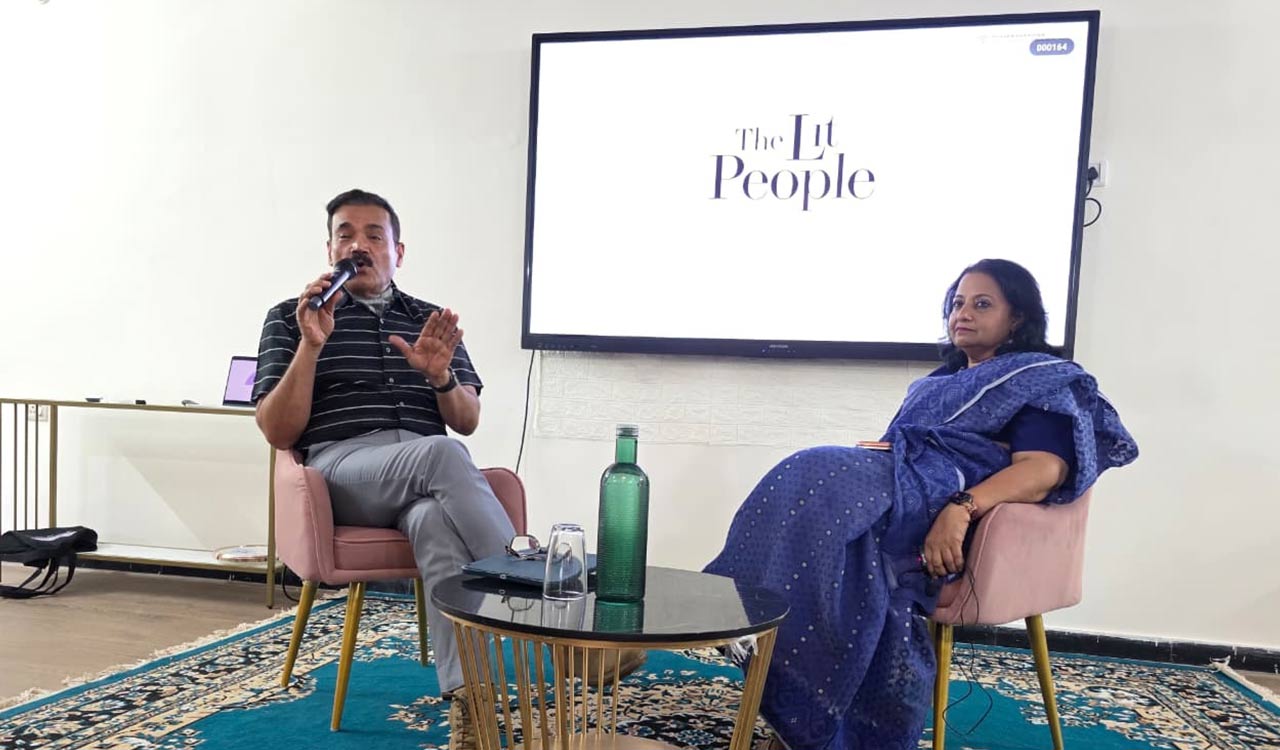
Former Telangana DGP Anjani Kumar discussed changing crime patterns, technology-driven policing and civic responsibility at a Hyderabad event on Patrick Radden Keefe’s London Falling. He highlighted the rise of cybercrime, digitised policing initiatives and the need for citizens to actively oppose criminal behaviour
Published Date – 30 August 2026, 10:48 AM
Hyderabad: The evolving nature of crime, the role of technology in policing and the importance of civic responsibility came into focus during a discussion on Patrick Radden Keefe’s London Falling, featuring former Telangana DGP and former Hyderabad Commissioner of Police Anjani Kumar.
The conversation was organised by The Lit People, a book club founded by Kalpana Sinha and Unnati Ved, and explored how themes from the book’s depiction of London’s criminal underworld resonate with changing patterns of crime in cities such as Hyderabad.
Drawing on his decades-long experience in policing, Kumar observed that the fundamental nature of crime remains broadly similar across major cities, including Hyderabad, New York and Paris, although its scale and methods may vary.
He noted that Hyderabad has witnessed a significant transformation in its crime landscape, moving from conventional offences such as petty theft towards increasingly sophisticated forms of cybercrime, largely driven by rapid technological advancement.
Kumar also highlighted several technology-driven initiatives undertaken by the Hyderabad Police, including digitised traffic management and automated fine systems designed to minimise human intervention and improve efficiency.
Emphasising that crime prevention cannot be left to the police alone, Kumar said society has a collective responsibility to condemn criminal behaviour, including harassment, molestation, assault and digital fraud.
He stressed that when citizens speak up and maintain sustained pressure, institutions and governments are compelled to take action.
The discussion brought together literature, policing and questions of civic responsibility, underscoring how books can serve as a starting point for conversations about crime, governance and the changing realities of the cities people live in.