By Iqbal Jassat
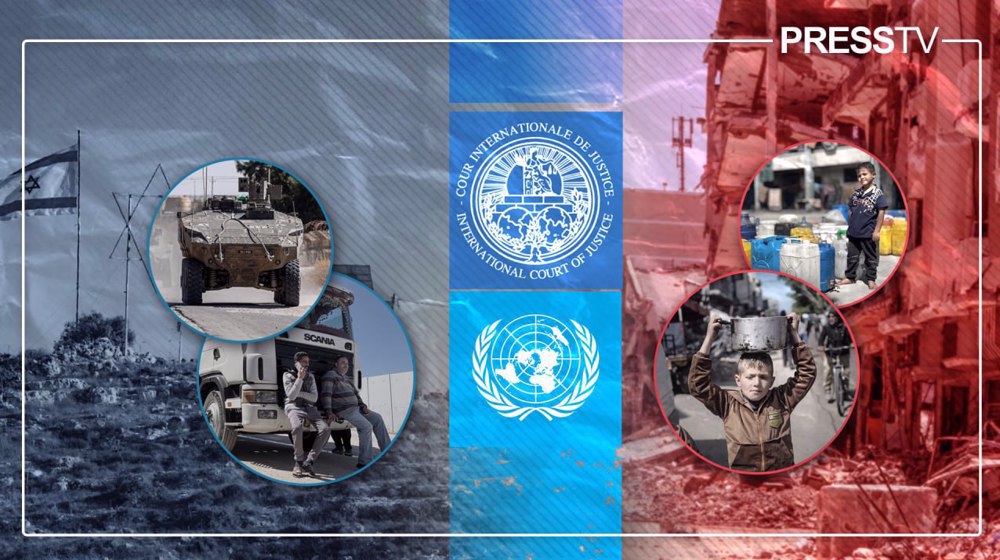
South Africa has officially submitted a substantial dossier to the International Court of Justice (ICJ), detailing Israel’s continued non-compliance with legally binding provisional measures.
The submission, formally handed over on 25 August 2026, serves to assist an ICJ committee of judges tasked with monitoring the implementation of the court’s orders in Gaza.
According to the Department of International Relations and Cooperation (DIRCO), Israel’s non-compliance directly undermines the protective functions of international justice.
Hence, the submission is a vital milestone in the struggle for global accountability. By formally documenting Israel’s refusal to adhere to the court’s binding provisional measures, Pretoria is doing far more than advocating for Palestinian survival.
It is actively defending the fraying credibility of the international legal order. At a time when powerful states treat global treaties as optional recommendations, this dossier demands that international law mean what it says.
When the World Court issues emergency interventions, those orders must carry consequences. South Africa’s latest submission provides the ICJ monitoring committee with the precise, devastating metrics of non-compliance.
By all accounts, the human cost is staggering, but beyond the sheer numbers, the dossier exposes a deliberate, systemic collapse of civilian life.
Pretoria’s evidence meticulously tracks the engineered reality on the ground: artificial starvation, the targeted destruction of healthcare infrastructure, and the mass internal displacement of millions trapped under bombardment.
Crucially, the dossier highlights the informational blockade shrouding these acts. By barring independent foreign journalists and UN-mandated investigative bodies, Israel has attempted to prevent a formal, verifiable archive of its operations.
South Africa’s legal intervention ensures that this defiance does not happen in the shadows, creating an unassailable record for global scrutiny.
For decades, nations across the Global South have watched the West champion a so-called “rules-based international order” while applying its principles with staggering selectivity.
Double standards have eroded the legitimacy of global governance, fostering deep cynicism. South Africa’s persistence directly challenges this hierarchy.
By consistently working within the ICJ framework, Pretoria forces a fundamental question onto the world stage: Do international laws apply universally, or do they exist only to shield the powerful and punish the weak?
This case is a litmus test for global justice. If the highest court in the world can be ignored with impunity, the entire post-WWII legal architecture collapses into irrelevance.
South Africa is refusing to let that happen without a fight, leveraging its own historic legacy against institutionalised oppression to demand systemic fairness.
Filing this dossier cannot be treated as the final destination; it must serve as the catalyst for immediate, concrete enforcement.
The ICJ’s judges possess immense legal authority, but they do not command armies, deploy peacekeepers, or control international trade. They provide the legal truth, but the political willpower to enforce that truth must come from the global community.
Third-party states can no longer hide behind comfortable expressions of “concern” while binding orders are systematically trampled.
This dossier gives the ICJ committee of judges the factual ammunition required to act. It keeps the pressure on the global legal system to enforce its own rulings.
True justice requires persistent tracking, relentless exposure, and unwavering moral clarity. South Africa has delivered exactly that.
Iqbal Jassat is an executive member of the Media Review Network, Johannesburg, South Africa.
(The views expressed in this article do not necessarily reflect those of Press TV)