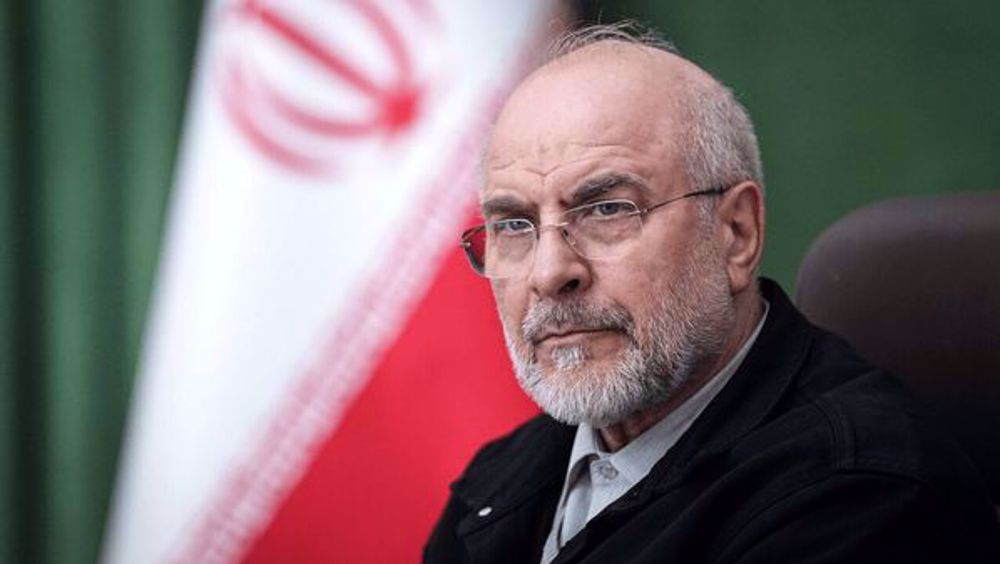
Iran’s Parliament Speaker Mohammad Baqer Qalibaf says the outcome of unity among Muslims has been the defeat of their enemies, stressing that regional security dependent on the presence and intervention of extra-regional powers is inherently fragile.
In a message marking Unity Week, Qalibaf said Iran is a land of peaceful coexistence among different ethnic groups and religious communities, describing Sunni-Shia unity as more than a symbolic slogan.
“Today, Sunni-Shia unity in Iran is not merely a ceremonial slogan, but one of the foundations of national power and one of the country’s major assets for security and development,” he said.
He pointed to the solidarity of different religions and denominations during the first, second and third imposed wars, saying all communities had stood together within the framework of Iran against foreign enemies.
Qalibaf said the Muslim world was now facing a historic choice, adding that developments in the region in recent years had shown that Muslim nations and governments were increasingly recognizing that foreign powers and enemies of Islam could neither provide lasting security for the region nor genuinely seek to establish such security.
“Security built on the presence and intervention of extra-regional powers is fragile and dependent, whereas security based on the will of Muslim nations and fraternal cooperation among regional countries can be stable, dignified and lasting,” he said.
The Parliament speaker said signs of this awakening could be seen in the emergence of new regional alliances, cooperation and arrangements.
“New regional alliances and arrangements can herald the beginning of a new phase in which Muslim neighbors rely on their own capabilities instead of outsiders and choose the path of cooperation and brotherhood rather than exhausting rivalries,” Qalibaf said.
He added that the outcome of Muslim unity, particularly in recent developments, had been “making the enemy taste defeat” and achieving successive victories by pushing back against what he called the hegemonic powers’ positions and ambitions.
Qalibaf expressed hope that the Muslim world would return more strongly to its shared identity, while closer bonds of brotherhood would be forged among Muslim nations.
He said he hoped the region would witness “the dawn of a new era of Islamic unity, independence, security and dignity,” in which Muslims would determine their own destiny and no foreign power would be able to create divisions among them.