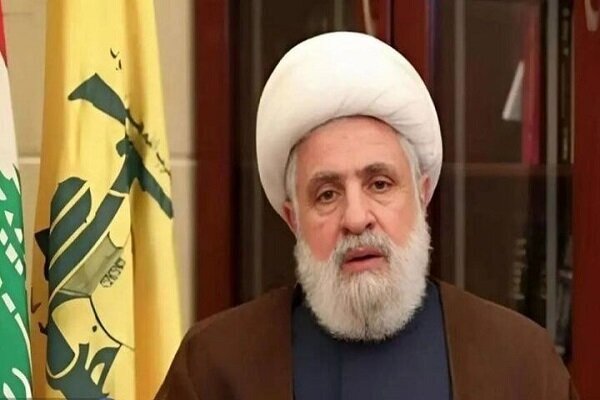
Speaking on the occasion of the Prophet Muhammad’s birth anniversary and Islamic Unity Week, Qassem said unity should lead to the power of Muslims and to integration and cooperation between governments and peoples. It meant liberating the Islamic nation from subjugation and overcoming sectarian, religious and political differences, he said.
He said the unity sought by Muslims meant confronting “the divisive projects of America and Israel aimed at fragmenting our region,” and focusing on the true enemy while moving beyond internal disputes. It would produce two results: preventing division and achieving unity, and extending that unity to national and human unity. “We will unite around the central issue of Palestine, which reflects the future of the whole region,” he said.
The Palestinian cause was not sectarian but an “Islamic, national, Arab and human cause,” Qassem said. He called on Arab and Islamic countries not to stand idle while their brothers suffered and enemies entered the region.
“The time has come for our region to be secured through understanding among its countries and for an end to arrogance,” he said.
Qassem said the great sacrifices in Palestine, Lebanon, Iran, Yemen and Iraq had halted the U.S.-Israeli project against the region. “We have made many sacrifices and we will not be defeated. Real defeat would only come if we surrender and hand everything over to the enemy,” he said.
He criticised the Lebanese government for abandoning the October 27 agreement and entering direct talks with the enemy. “These negotiations did not stop the war, they legitimised it. They are a humiliating surrender to the enemy without gaining anything,” he said.
He said Hezbollah opposed the “framework agreement” and called for its cancellation, calling it illegitimate, illegal and humiliating, destroying Lebanon’s sovereignty without recovering any rights.
MNA