The deputy chief of Iran’s Judiciary and secretary of the High Council for Human Rights has condemned double standards in the international community’s response to terrorism, saying the lives and rights of Iranian victims must be treated with the same importance as those of victims elsewhere in the world.
Speaking at a ceremony commemorating victims of terrorism on Saturday, Nasser Seraj said thousands of Iranian citizens — including children, women, men and the elderly, as well as ordinary people, officials, scientists, military and law enforcement personnel, clerics, workers and students — have been killed in terrorist operations.
Seraj said Iran has been a victim of terrorism for decades and has paid a heavy price as a result of numerous attacks.
“If a terrorist attack occurs in a European country, it immediately becomes a global issue. But when the victim is Iranian, reactions are sometimes very limited,” he said, adding that this is the double standard that must be addressed openly.
He stressed that human rights must be applied universally if they are genuinely universal, noting that the value of human life should not depend on a person’s nationality.
“An Iranian child, a Palestinian child, a European child, an African child and an Asian child are all children. An Iranian mother who loses her child experiences the same suffering as a mother anywhere else in the world,” he added.
Addressing the issue of state terrorism and the responsibility of governments, Seraj said the international fight against terrorism should not focus solely on non-state groups.
“The fight against terrorism must not be directed only at non-state groups. The international community must take a unified position against any organized use of violence against civilians, regardless of the identity of those responsible,” he noted.
He added that military power, political alliances or claims of fighting terrorism cannot justify attacks on civilians or violations of human rights.
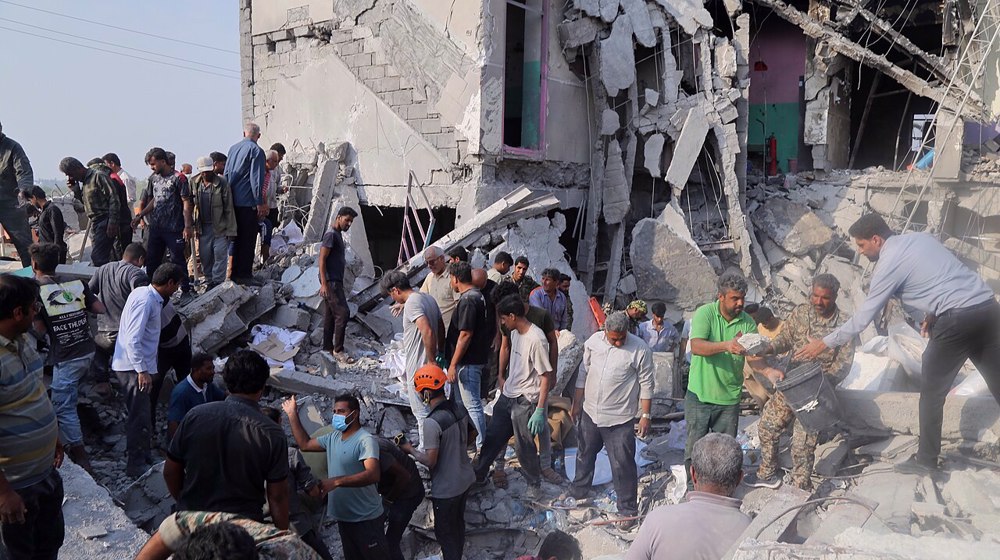
Seraj also referred to civilian casualties in recent wars on Iran, saying ordinary people, families, children, women and elderly people had been exposed to insecurity and attacks during the 12-day war, the subsequent 40-day US-Israeli aggression and the Hormuz war.
He said the issue was not merely the number of casualties but also the need to uphold fundamental principles of international humanitarian law during armed conflicts.
“The principles of proportionality and taking necessary precautions to protect civilians are not principles that can simply be set aside under any circumstances.”
Referring to the killing of children at Shajareh Tayyebeh School in Minab, southern Iran, in a US-Israeli attack, he said schools should be places of education and hope rather than sites of violence against children.
“Regardless of the political or military disputes involved, when a child becomes a victim of violence at school, humanity faces a tragedy. No political ideal, geopolitical dispute or military objective should undermine the dignity and safety of children.”
On February 28, the first day of the criminal US-Israeli aggression against Iran, Shajareh Tayyebeh primary school in Minab was deliberately targeted in an attack, killing 73 boys, 47 girls, 26 teachers, 7 parents, a school bus driver, and a pharmacy technician at the clinic next to the school.
Seraj called on the international community to investigate such incidents, establish the facts and, where violations of international humanitarian law are established, pursue accountability for those responsible.
“We expect the international community to apply a single standard in combating terrorism. There should be no distinction between ‘good’ and ‘bad’ terrorism, or between Eastern and Western terrorism. State and non-state terrorism cannot be defined according to political interests.”
He warned that accepting double standards would undermine justice.
“Terrorism is condemned wherever it occurs and whoever commits it. Human lives are not subject to political bargaining, victims’ rights must not be discriminated against, and no power should consider itself beyond responsibility for human lives,” he stated.