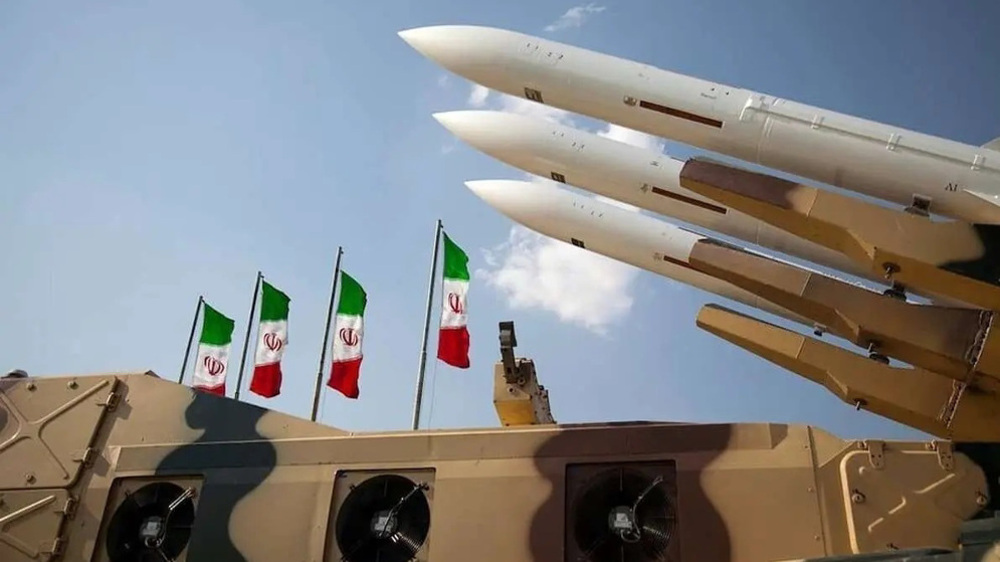
Iran’s Defense Ministry spokesman says production of some strategic defense products and war necessities increased by more than threefold during the 40-day imposed war.
Speaking in a televised special news program on Friday, Brigadier General Reza Talaei-Nik outlined the missions, position and role of the Ministry of Defense and Armed Forces Logistics in shaping Iran’s national and defense power.
Talaei-Nik described the Islamic Republic of Iran as a country that resists domination and stressed that the only way to confront foreign powers is to strengthen and enhance national power.
He said Iran’s defense industry has made clear and significant progress compared with the eight-year war imposed on Iran by the Iraqi Ba’athist regime in the 1980s, adding that the country’s current defense capabilities cannot be compared with those of the past.
“One of the prominent features of our defense industry is the speed and capability to produce defense products. To the extent that weapons and ammunition are used on the battlefield, they are replaced at the same speed.
“In other words, while indigenous Iranian weapons and equipment are being used, production is simultaneously continuing,” he said.
Talaei-Nik said the country’s defense production had increased significantly over the past year, from July last year to July this year, particularly following the 12-day war.
He further said the increase in defense production during the recent US-Israeli aggression had demonstrated the importance of sustainable production capacity within Iran’s national ecosystem.
“Despite claims by US and Israeli officials, including [US President Donald] Trump and the Israeli prime minister [Benjamin Netanyahu], we achieved a twofold increase in the production of weapons, equipment and ammunition over the past year.”
He added that production of some strategic and priority items required on the war fronts had increased by more than three times compared with production levels during the war.
According to Talaei-Nik, this achievement was among the main factors behind the enemy’s repeated strategic failures in its attempts to wage war against Iran.
He also described the economic efficiency of defense production as one of the major achievements of Iran’s defense industry, saying that the cost of producing some weapons and military equipment in Iran is significantly lower than that of foreign equivalents.
“The economic efficiency of our defense production and defense industry is the result of indigenization, knowledge-based production and the extensive network across the country and, thankfully, everyone is contributing to this production effort.”
The US and Israel launched another round of aggression against Iran on February 28, some eight months after carrying out unprovoked attacks on the country.
Iran swiftly retaliated by launching barrages of missiles and drones at the Israeli-occupied territories, as well as US bases and interests across the region.
A ceasefire took effect on April 7, and on June 18, the presidents of Iran and the United States signed a memorandum of understanding (MoU) to end the war and begin a 60-day diplomatic process to resolve the differences.
However, renewed US strikes a few weeks after signing the MoU once again triggered Iranian retaliation.